










QUICK SUMMARY
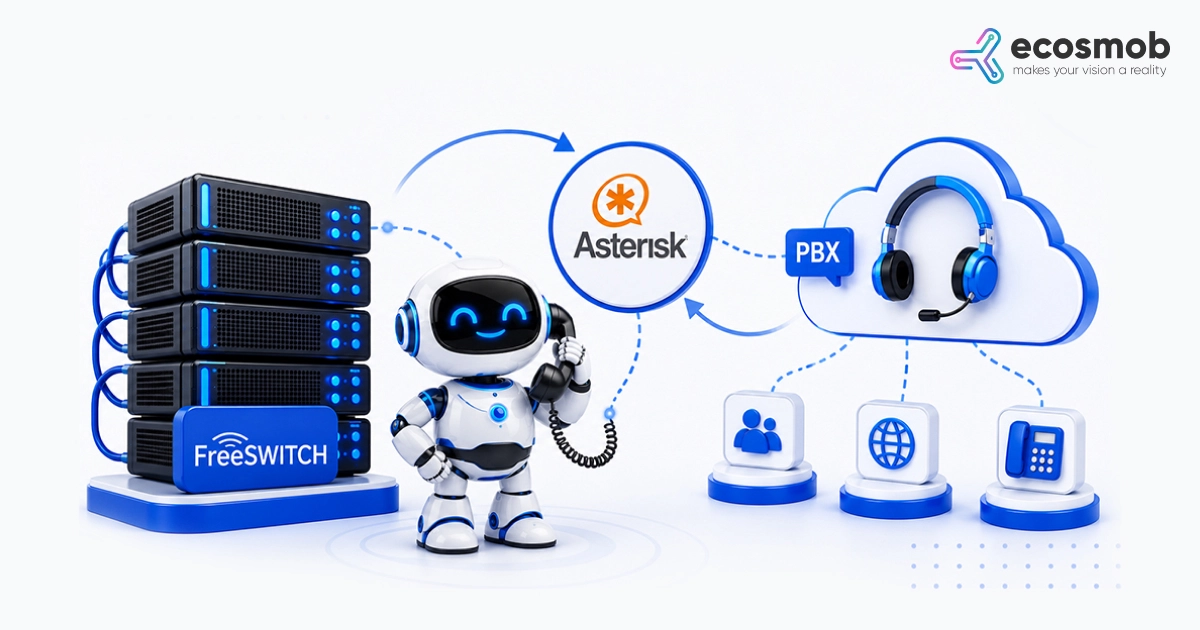
Building an AI voice platform requires more than choosing between FreeSWITCH and Asterisk. This guide explores what modern AI voice applications really need, how FreeSWITCH handles real-time media processing, and where Asterisk still fits. You’ll also learn how latency, AI integrations, and scalability shape every conversation, along with a practical framework to help you choose the right platform for your AI roadmap.
You’re no longer choosing between two PBX platforms. You’re choosing the foundation that determines whether your AI voice platform feels fast, natural, and ready to scale, or struggles as call volumes and AI workloads grow.
If you’re building AI voice agents, it’s easy to focus on the AI model itself. But the platform handling your media streams has just as much impact on response time, barge-in, and real-time conversations. That’s why many engineering teams evaluating FreeSWITCH vs Asterisk for AI voice end up making a different choice than they would for a traditional telephony system.
In this guide, you’ll learn why AI voice platforms often choose FreeSWITCH over Asterisk, when Asterisk remains the right fit, and how the right FreeSWITCH development services can support your long-term AI goals.
Start with what your AI voice platform needs to handle in every conversation.
Why AI Voice Platforms Prefer FreeSWITCH Over Asterisk
If you’re modernizing your communications stack for AI, FreeSWITCH is often the preferred choice thanks to its real-time media streaming, high-concurrency voice processing, and flexible call control. These capabilities make FreeSWITCH AI modernization a practical path to building AI voice agents that deliver fast, natural conversations at scale.
1. AI Voice Requirements
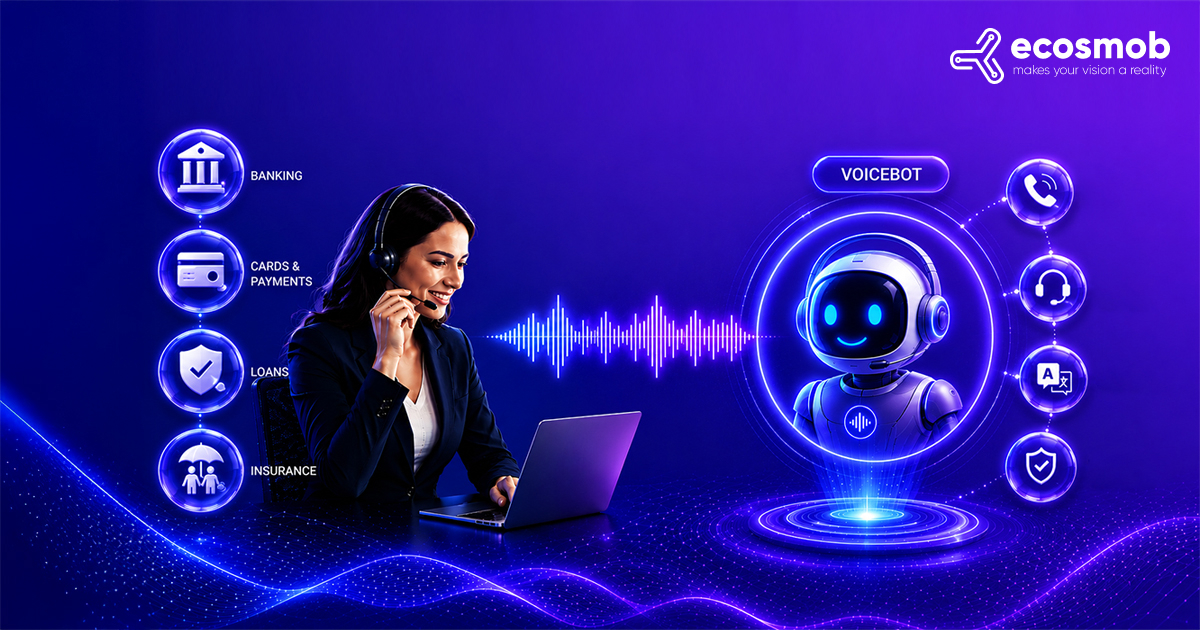
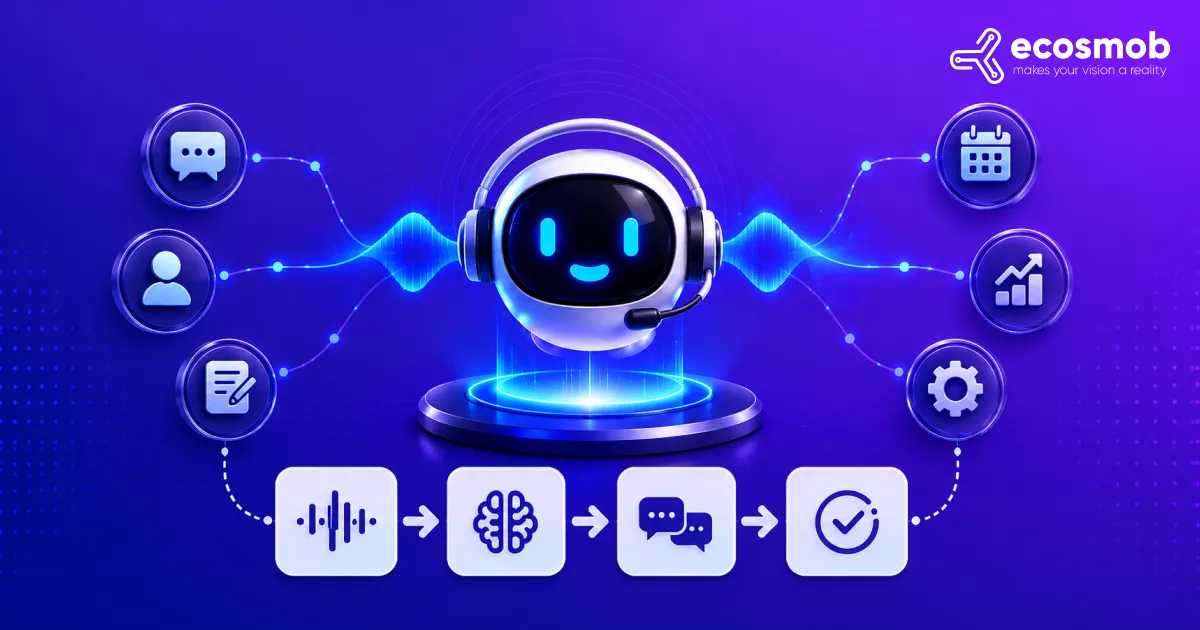
Your AI voice platform has a very different job than a traditional phone system. Instead of simply routing calls, it needs to stream live audio to a speech-to-text engine, send transcripts to an LLM, receive a response, convert it back to speech, and play it to the caller, all while the conversation is still happening.
That means your platform must process audio continuously, respond with minimal delay, and handle interruptions naturally. If it can’t, even the most advanced AI model will struggle to deliver a smooth customer experience.
2. FreeSWITCH Architecture
FreeSWITCH was designed with media processing at its core, making it well-suited for AI-first voice applications. Its architecture supports continuous audio handling, efficient call control, and high levels of concurrent media sessions, helping your platform keep conversations responsive even as traffic grows.
This becomes especially valuable when your AI voice agents need to stream audio to external STT, LLM, and TTS services without introducing noticeable latency or disrupting the flow of the conversation.
3. Asterisk Considerations
That doesn’t mean Asterisk is the wrong platform for AI. If you’re extending an existing PBX, adding AI to IVRs, or deploying voice automation for moderate call volumes, Asterisk can still be a practical and effective choice.
The difference is that once your goal shifts from adding AI features to building an AI-first voice platform, the underlying media architecture becomes just as important as the AI itself.
FreeSWITCH becomes the stronger choice when your focus shifts from telephony to real-time AI conversations.
To see why, let’s first look at what your AI voice platform needs to handle.
Avoid rebuilding your AI voice platform later by making the right architectural decision today with Ecosmob.
What AI Voice Platforms Need Beyond Traditional Call Handling
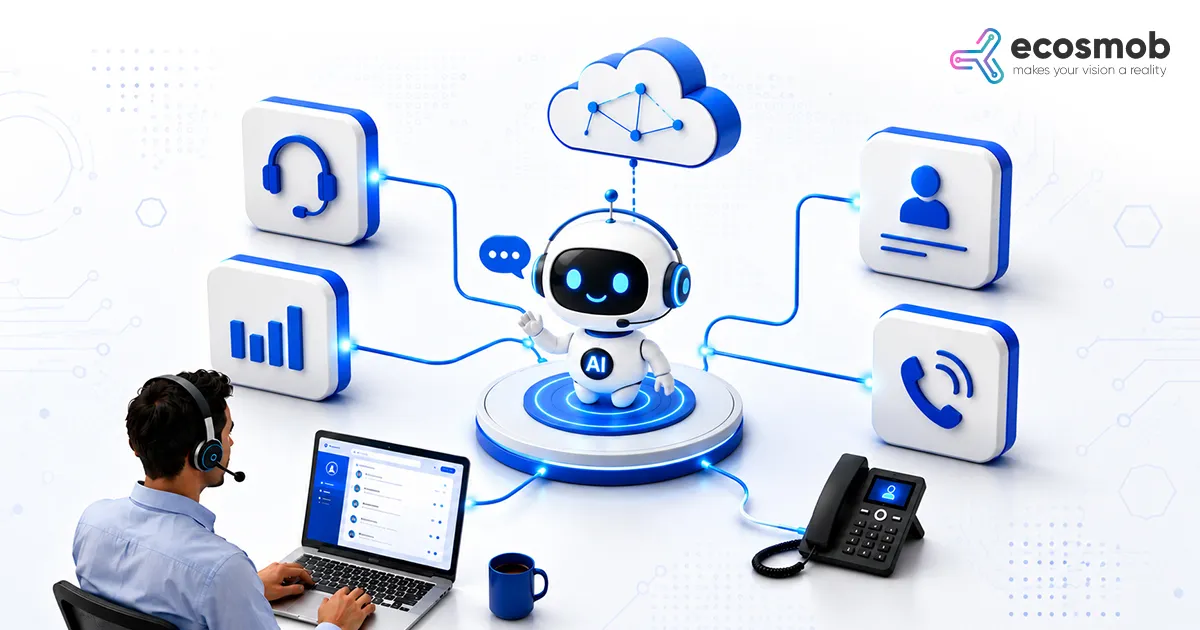
Modern AI voice platforms need much more than call routing. To deliver natural conversations, they must stream audio continuously, process speech in real time, coordinate with AI models, and maintain low latency as call volumes grow. That’s why many organizations building a FreeSWITCH PBX with AI smart call handling prioritize media capabilities alongside traditional telephony features.
- Media Streaming
The moment someone starts speaking, your platform has to do far more than carry their voice from one endpoint to another. It needs to stream audio continuously to speech recognition while preparing AI-generated responses to flow back just as quickly.
That continuous media flow is what allows your AI voice agent to keep the conversation moving naturally instead of waiting for one task to finish before starting the next.
- Low-Latency Processing
Every delay becomes noticeable in a live conversation. Even if your AI produces accurate answers, slow responses can make callers hesitate, repeat themselves, or talk over the system.
Keeping latency low across speech recognition, language processing, and speech synthesis helps your conversations feel immediate and effortless.
- Scalability
As more callers interact with your AI voice platform, performance should remain consistent. Your platform needs to handle growing numbers of concurrent conversations without increasing response times or reducing audio quality.
Scalability isn’t only about supporting more calls. It’s about ensuring every caller receives the same experience, regardless of traffic.
- Call Control
Conversations don’t always follow a script. A caller may interrupt the AI, switch topics, or request a live agent at any time.
Your platform should be able to react instantly by controlling media streams, managing call events, and coordinating every stage of the AI conversation in real time.
These capabilities form the foundation of every reliable AI voice platform. The next step is understanding how FreeSWITCH delivers them in practice.
How FreeSWITCH Handles Real-Time AI Voice Processing
FreeSWITCH handles real-time AI voice processing through live media streaming and seamless STT, LLM, and TTS integrations. Its architecture helps you scale FreeSWITCH while maintaining high concurrency and call stability for faster, more natural conversations.
- Media Pipeline
Every AI conversation follows a sequence of events behind the scenes. As your caller speaks, FreeSWITCH captures the audio and streams it to an STT engine, which converts speech into text. The transcript is then passed to an LLM to generate a response, while a TTS engine converts that response back into speech before it’s played to the caller.
Because this happens continuously throughout the call, your users experience a conversation instead of a series of disconnected requests and responses.
Caller → FreeSWITCH → STT → LLM → TTS → Caller
- Audio Streaming
Real-time AI depends on continuous audio streaming rather than recorded files. Instead of waiting for a caller to finish speaking, FreeSWITCH can stream audio while the conversation is still in progress, allowing your AI to process and respond much sooner.
Today, this is commonly achieved using mod_audio_stream, which has become the preferred approach for streaming media to external AI services. If you’ve come across older implementations using mod_audio_fork, it’s worth knowing that mod_audio_stream is now the actively maintained and recommended option for new AI voice deployments.
- AI Integration
Your AI stack will likely evolve over time, whether you’re using cloud-based AI services, self-hosted models, or a hybrid deployment. FreeSWITCH gives you the flexibility to integrate with different STT, LLM, and TTS providers without redesigning your entire voice platform.
That flexibility makes it easier to experiment with AI models, improve response quality, and scale your platform as your requirements grow.
FreeSWITCH is designed to keep your AI voice pipeline fast and responsive. Now let’s compare it with Asterisk for AI voice workloads.
Build an AI voice platform that's ready for tomorrow's demands. Ecosmob helps you get there.
FreeSWITCH vs Asterisk for AI Voice Applications
In an Asterisk vs FreeSWITCH comparison for AI voice, both platforms support AI applications but serve different priorities. FreeSWITCH is often the stronger choice for AI-first experiences, while Asterisk remains ideal for extending existing telephony systems with AI.
- Architecture Comparison
The biggest difference lies in how each platform approaches voice processing. FreeSWITCH was built around media handling, making it well suited for applications that continuously stream audio between callers and AI services. Asterisk, on the other hand, has traditionally focused on PBX functionality and call routing, making it a natural fit for business telephony and AI-enhanced communication systems.
As your AI workloads become more demanding, these architectural differences start to influence both performance and development flexibility.
- Performance Comparison
Real-time AI conversations require your platform to process audio with minimal delay while supporting many simultaneous sessions. FreeSWITCH is designed to manage these media-intensive workloads efficiently, helping maintain conversation quality as concurrency increases.
Asterisk can also support AI voice agents, but achieving similar capabilities may require additional components or custom implementation depending on your architecture and performance goals.
| Capability | FreeSWITCH | Asterisk |
| Real-time media streaming | Built for continuous media processing | Supported with additional implementation |
| High-concurrency AI workloads | Well suited | Best for moderate AI workloads |
| AI integration flexibility | High | Good, depending on architecture |
| Traditional PBX features | Strong | Excellent |
- Best Fit
The right choice depends on what you’re building today and where your platform is headed. If you’re modernizing an existing PBX or adding AI to established call flows, Asterisk may be the practical path. If you’re designing an AI voice platform where real-time conversations are the core experience, FreeSWITCH is typically the better long-term foundation.
The better platform is the one that matches your AI architecture, not just your feature list. One reason this distinction matters is latency, which directly shapes every AI conversation.
Why Low Latency Matters in AI Voice Conversations
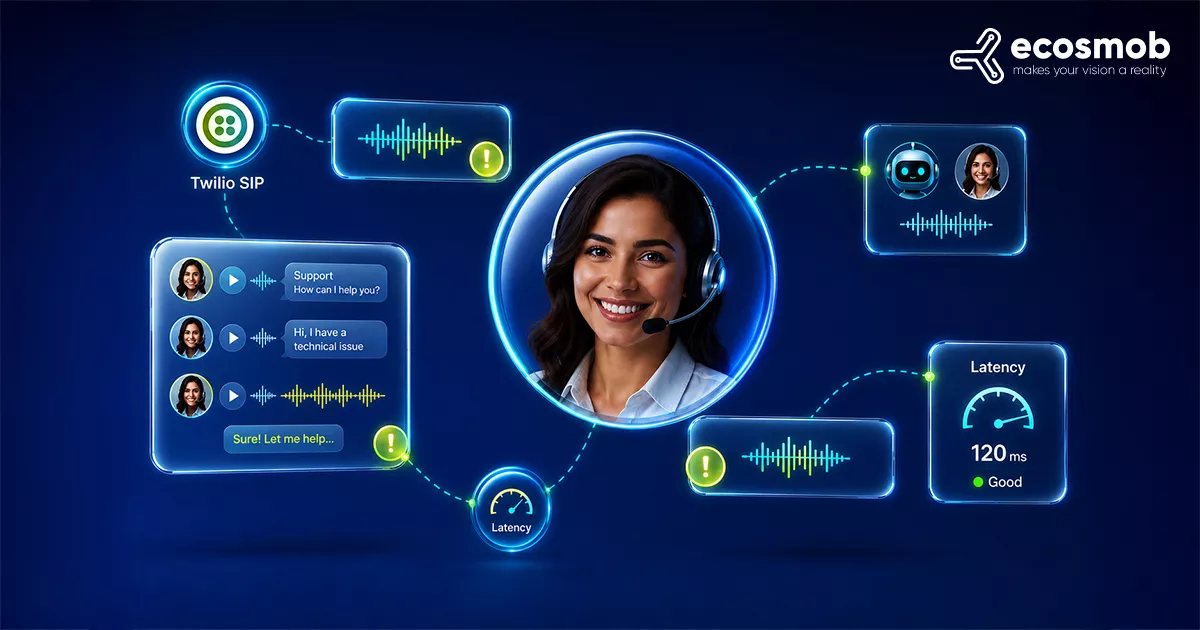
Low latency keeps AI voice conversations natural. To fix voicebot latency in real-time voice AI, your platform must process speech and respond quickly, as even small delays can disrupt the caller experience.
- Response Time
When someone speaks to your AI voice agent, they expect an immediate response. Behind the scenes, however, every interaction passes through multiple stages, including speech recognition, language processing, and speech synthesis.
If any of these stages introduce unnecessary delay, your callers are more likely to pause, repeat themselves, or assume the conversation has stalled.
- Conversation Flow
Natural conversations aren’t built on perfect answers alone. They’re built on timing. People interrupt, change their minds, and respond instinctively without waiting several seconds between each exchange.
Your AI voice platform should keep pace with that behavior. The lower the end-to-end latency, the easier it becomes to support features such as barge-in and uninterrupted, full-duplex conversations.
- User Experience
Your users won’t measure latency in milliseconds, but they’ll notice how the conversation feels. A responsive AI voice agent builds confidence, while delayed replies make even accurate responses seem less reliable.
As your platform scales, maintaining low latency becomes just as important as supporting more concurrent calls. Delivering both consistently is what turns an AI voice system into a production-ready customer experience.
Lower latency leads to faster, more natural AI conversations. Achieving that speed also depends on how your platform connects with AI services.
How FreeSWITCH Integrates With STT, LLM, and TTS Services
The effectiveness of your AI voice platform depends on how efficiently it connects with STT, LLM, and TTS services. FreeSWITCH provides the flexibility to integrate these components into a real-time voice pipeline, allowing your AI voice agents to listen, understand, and respond without interrupting the conversation.
- Speech-to-Text (STT)
The first step in every AI conversation is converting speech into text. As your caller speaks, FreeSWITCH streams the audio to an STT engine, which transcribes the conversation in real time instead of waiting for the call to end.
This gives your AI voice agent immediate access to what the caller is saying, reducing delays before the next stage begins.
- Large Language Models (LLMs)
Once the transcript is available, it is sent to an LLM to interpret the caller’s intent and generate an appropriate response. Whether you’re using a cloud-based model or deploying one on your own infrastructure, FreeSWITCH can fit into your preferred AI architecture without locking you into a specific provider.
That flexibility allows you to refine prompts, switch models, or expand your AI capabilities as your requirements evolve.
- Text-to-Speech (TTS)
After the LLM generates a response, a TTS engine converts it into natural-sounding speech and sends it back through FreeSWITCH to the caller.
Because this process happens continuously during the conversation, your AI voice agent can deliver responses that feel immediate rather than delayed.
- Media Orchestration
Connecting individual AI services is only part of the challenge. Your platform also needs to coordinate audio streams, call events, and AI responses while keeping everything synchronized.
FreeSWITCH acts as the orchestration layer that keeps these components working together, helping you build AI voice applications that remain responsive as call volumes and integrations grow.
With the right integrations, your AI voice platform can deliver faster, more natural conversations. Even with these capabilities, FreeSWITCH isn’t the only option for every project.
Can Asterisk Still Be the Right Choice for AI Voice Projects?
Yes, Asterisk can still be the right choice for many AI voice projects. If you’re adding AI to an existing PBX, automating specific call flows, or deploying voicebots at a moderate scale, Asterisk provides a practical and cost-effective foundation without requiring a complete platform change.
- Ideal Use Cases
You don’t always need to build a new AI voice platform from scratch. If your organization already relies on Asterisk for business communications, extending it with AI capabilities can be the fastest path to deployment.
For example, you can integrate AI to automate IVRs, qualify callers, answer routine questions, or assist agents while continuing to use your existing telephony infrastructure.
- Deployment Considerations
Your decision should be guided by your long-term roadmap rather than your immediate requirements. If your AI initiatives are focused on improving customer interactions within your current PBX environment, Asterisk can meet those needs without adding unnecessary complexity.
However, if your roadmap includes high-concurrency AI voice agents, continuous media streaming, or advanced conversational experiences, it’s worth evaluating whether your current architecture can support those demands efficiently.
- Migration Factors
Migrating to a new platform isn’t always the right move. It involves planning, integration effort, and operational changes that should deliver measurable value in return.
Before deciding, consider how your AI workloads are expected to evolve, the number of concurrent conversations you plan to support, and whether your existing platform can continue meeting those expectations over time.
Asterisk remains a strong choice when it aligns with your AI goals. The next question is whether moving to FreeSWITCH is the right step for your platform.
Should You Migrate From Asterisk to FreeSWITCH for AI?
Migrating from Asterisk to FreeSWITCH makes sense when your AI voice requirements outgrow your current platform. If your roadmap includes real-time media streaming, large-scale AI voice agents, or higher concurrency, evaluating a migration can help you build a platform that’s ready for future demands.
- When to Migrate
A migration is worth considering when your AI voice platform starts pushing the limits of your existing architecture. As you introduce more advanced conversational AI, connect multiple AI services, or support growing call volumes, your platform should continue delivering fast and natural interactions without added complexity.
Rather than solving one limitation at a time, migrating can give you an architecture that’s better suited for long-term AI innovation.
- When to Stay
Not every AI project requires a new platform. If your Asterisk deployment is performing well, supports your current AI use cases, and aligns with your business goals, staying with your existing environment may be the smarter decision.
The best architecture is the one that meets your needs today while giving you room to grow tomorrow, not necessarily the newest one.
- Evaluation Checklist
Before deciding, ask yourself a few practical questions:
- Are you planning to deploy AI voice agents at a much larger scale?
- Will your platform need continuous audio streaming with low latency?
- Do you expect concurrency requirements to increase significantly?
- Are your current AI integrations becoming difficult to maintain or expand?
- Does your long-term roadmap focus on AI-first voice experiences rather than traditional telephony?
If you answer “yes” to most of these questions, it may be time to evaluate whether FreeSWITCH is the better foundation for your next phase of growth.
Your migration should be driven by your AI roadmap, not by the platform alone. The final step is choosing the platform that best fits your AI voice architecture.
Make every AI investment count with a voice platform built for long-term success.
How to Choose the Right Platform for Your AI Voice Architecture
The right platform depends on your AI voice architecture and long-term goals. If you’re building AI-first voice experiences, a FreeSWITCH development guide can help you understand why FreeSWITCH is often the stronger choice. Asterisk remains a practical fit for AI-enabled business telephony.
- Choose FreeSWITCH If…
FreeSWITCH is likely the better option if your roadmap focuses on conversational AI rather than traditional telephony. It provides the flexibility and media capabilities needed for AI voice platforms that must process conversations in real time.
Choose FreeSWITCH if you plan to:
- Build AI voice agents from the ground up.
- Stream live audio to STT, LLM, and TTS services.
- Support high volumes of concurrent AI conversations.
- Scale your platform without compromising response times.
- Continuously expand your AI capabilities over time.
- Choose Asterisk If…
Asterisk remains a practical choice when your focus is enhancing an existing communications platform instead of replacing it. It allows you to introduce AI where it delivers the most value while continuing to use the infrastructure you already trust.
Choose Asterisk if you want to:
- Add AI to your existing PBX or IVR.
- Automate routine customer interactions.
- Support moderate AI voice workloads.
- Extend your current telephony environment with minimal disruption.
- Adopt AI gradually without a full platform migration.
- Decision Framework
Instead of asking which platform is better, ask which one better supports your goals over the next few years. Think about the AI experiences you want to deliver, the scale you expect to reach, and how your architecture will evolve as those requirements grow.
Choosing the right foundation today can save you from unnecessary complexity, costly migrations, and performance bottlenecks later.
The best platform is the one that grows with your AI vision. Now that you’ve seen where each platform fits, let’s bring everything together.
The Bottom Line?
Choosing between FreeSWITCH and Asterisk isn’t about finding a universal winner. It’s about selecting the platform that best supports your AI voice architecture today while giving you the flexibility to scale tomorrow.
AI voice is rapidly moving from experimentation to production. Industry projections show the AI voice agents market growing at a 39.0% CAGR through 2033, making platform decisions today critical for long-term success.
If your roadmap centers on real-time AI conversations, continuous media streaming, and high-concurrency voice applications, FreeSWITCH often provides the stronger foundation. If you’re extending an existing PBX with targeted AI capabilities, Asterisk can still deliver the outcomes you need.
The right decision starts with understanding your voice workflows, AI goals, and future growth, not just comparing feature lists. That’s exactly how Ecosmob approaches every AI voice project, helping you design a solution that fits your architecture, integrates with your AI ecosystem, and evolves as your requirements change.
FAQs
Why do AI voice platforms often choose FreeSWITCH over Asterisk?
AI voice platforms often choose FreeSWITCH because it is designed for real-time media processing, continuous audio streaming, and high-concurrency workloads. These capabilities make it easier to build AI voice agents that integrate with STT, LLM, and TTS services while maintaining low-latency conversations.
Is FreeSWITCH better than Asterisk for AI voice applications?
FreeSWITCH is generally better for AI-first voice applications that require real-time media streaming, large-scale concurrency, and flexible AI integrations. Asterisk remains an excellent choice for AI-enabled PBXs, IVRs, and moderate-scale voice automation projects, so the right platform depends on your architecture and long-term goals.
Can Asterisk support AI voice agents?
Yes, Asterisk can support AI voice agents. You can integrate Asterisk with speech-to-text, large language models, and text-to-speech services to automate customer interactions. It is particularly well suited for organizations that want to add AI capabilities to an existing telephony environment rather than build a new AI voice platform.
How does FreeSWITCH integrate with STT, LLM, and TTS services?
FreeSWITCH integrates with STT, LLM, and TTS services by streaming live call audio to speech recognition, passing transcripts to an AI model, and returning synthesized speech to the caller in real time. This architecture helps AI voice agents deliver faster and more natural conversations.
Should I migrate from Asterisk to FreeSWITCH for AI?
You should consider migrating if your AI voice platform requires real-time media streaming, higher concurrency, or more advanced conversational AI capabilities than your current architecture can efficiently support. If your existing Asterisk deployment already meets your AI and business requirements, migration may not be necessary.