










QUICK SUMMARY
Most call centers struggle to connect their existing IP PBX systems with modern AI voicebots, forcing expensive infrastructure overhauls or complex workarounds. This guide reveals how Ecosmob’s Voicebot Connector creates seamless bridges between SIP-based telephony systems and AI automation, enabling real-time call automation. (Without breaking existing workflows or requiring complete system replacements!)
Your call center manager walks into Monday morning with a familiar problem: 400 incoming calls waiting in the queue, three agents already stressed from the weekend overflow, and a C-suite mandate to “automate everything” without breaking the Asterisk system that’s been running reliably for five years.
The frustration is real. Every voicebot vendor promises seamless integration, but their solutions require either expensive platform migrations or complex middleware that breaks your existing SIP logic. Meanwhile, your customers wait longer, your agents burn out faster, and your automation dreams get buried under integration nightmares.
Here’s what’s actually happening: standard voicebot platforms weren’t designed to work with real-world telephony infrastructure. They expect you to rebuild your entire call handling system around their requirements rather than fitting into the IP PBX/Asterisk/FreeSwitch deployments that already handle your business communications effectively.
The Challenge Behind Voicebot Integration
Here’s what most businesses don’t realize when they first explore voicebot automation: your IP PBX speaks SIP, but your AI voicebot speaks WebSocket. It’s like having two brilliant employees who can’t communicate because they speak different languages. Without a proper translator, you end up with:
- Audio delays that make conversations feel robotic
- Failed call transfers when customers need human help
- Integration nightmares that require rebuilding your entire phone system
- Voicebots that work perfectly in demos but crash under real call volume
Standard voicebot platforms expect you to route calls through their infrastructure, process audio through their APIs, and manage call control through their interfaces. This approach breaks the moment you need custom routing logic, specific SIP configurations, or VoIP integration with systems that your existing telephony setup already handles perfectly.
Your business already has a perfectly functional IP PBX handling calls day and night. Your AI voicebot can chat brilliantly over the web. But getting them to work together? That’s where most teams hit the wall.
Real-time call automation shouldn’t force you to choose between innovation and infrastructure stability.
And that is why we started building custom Voicebot Connector solutions!
What Is a Voicebot Connector?
Voicebot Connector solutions are essentially a real-time translator that sits between your IP PBX system and your AI voicebot platform. Think of it as a specialized piece of software that:
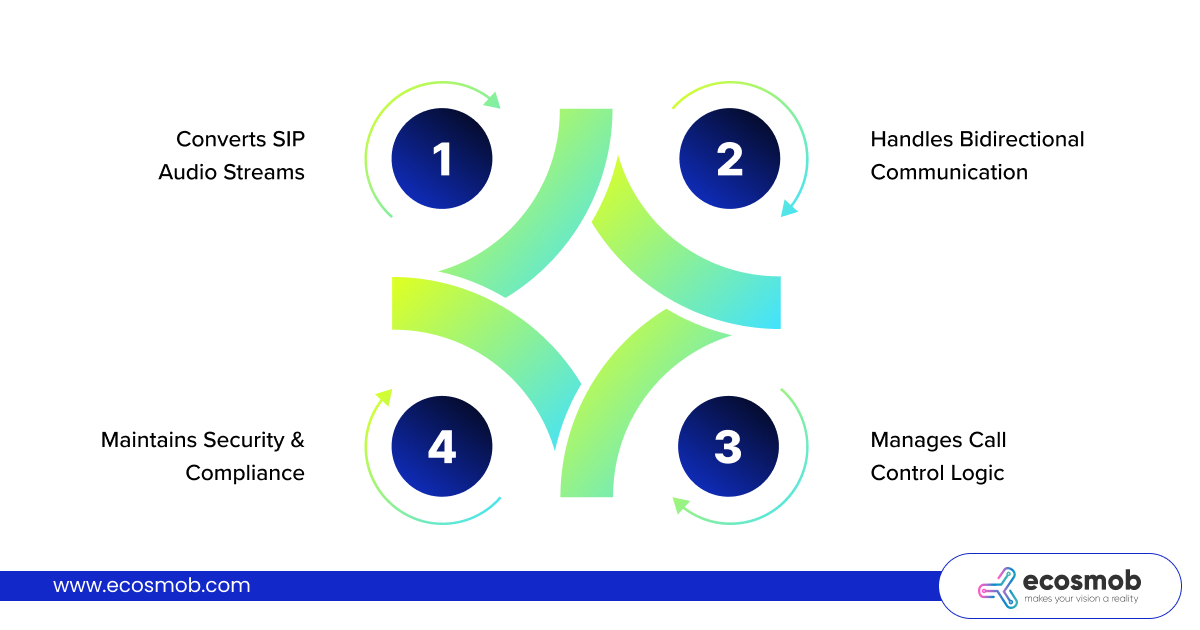
- Converts SIP audio streams from your phone system into WebSocket data that AI can understand. When a customer calls, the connector captures the live RTP audio packets flowing through your PBX and instantly streams them to your voicebot engine.
- Handles bidirectional communication by taking the voicebot’s responses and converting them back into audio that plays through your existing phone infrastructure. This happens in milliseconds, fast enough that conversations feel natural.
- Manages call control logic, including transfers to human agents, call recording triggers, and routing decisions without disrupting your established dial plans or SIP configurations.
- Maintains security and compliance by operating within your existing network architecture, ensuring sensitive customer data never leaves your controlled environment.
How Does The Voicebot Connector Work?
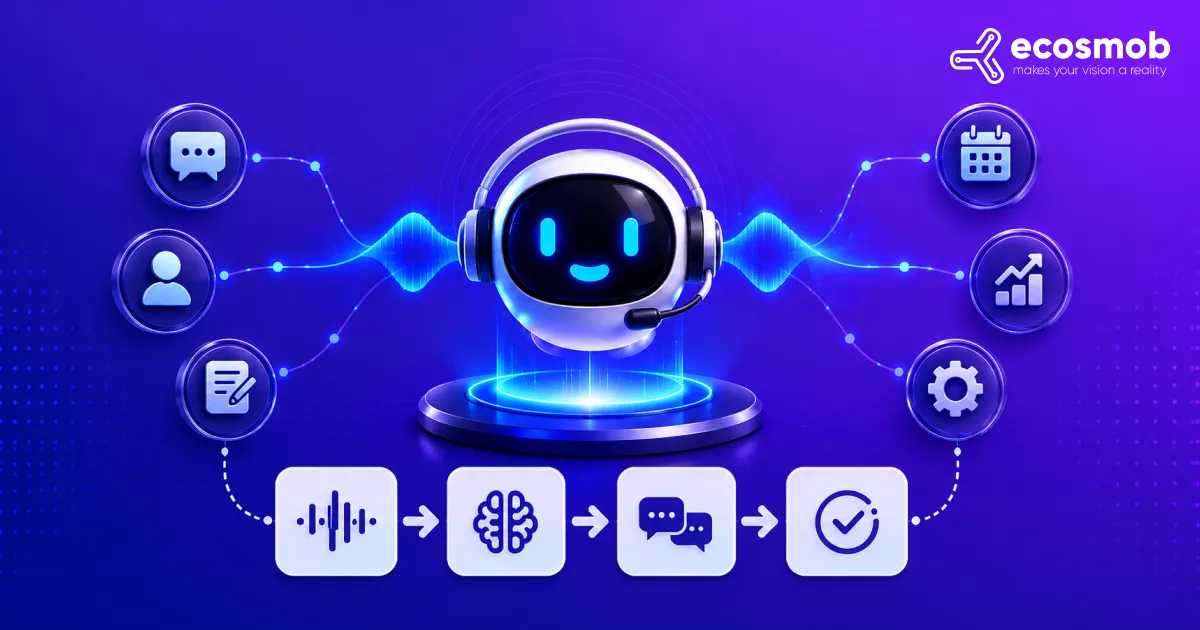
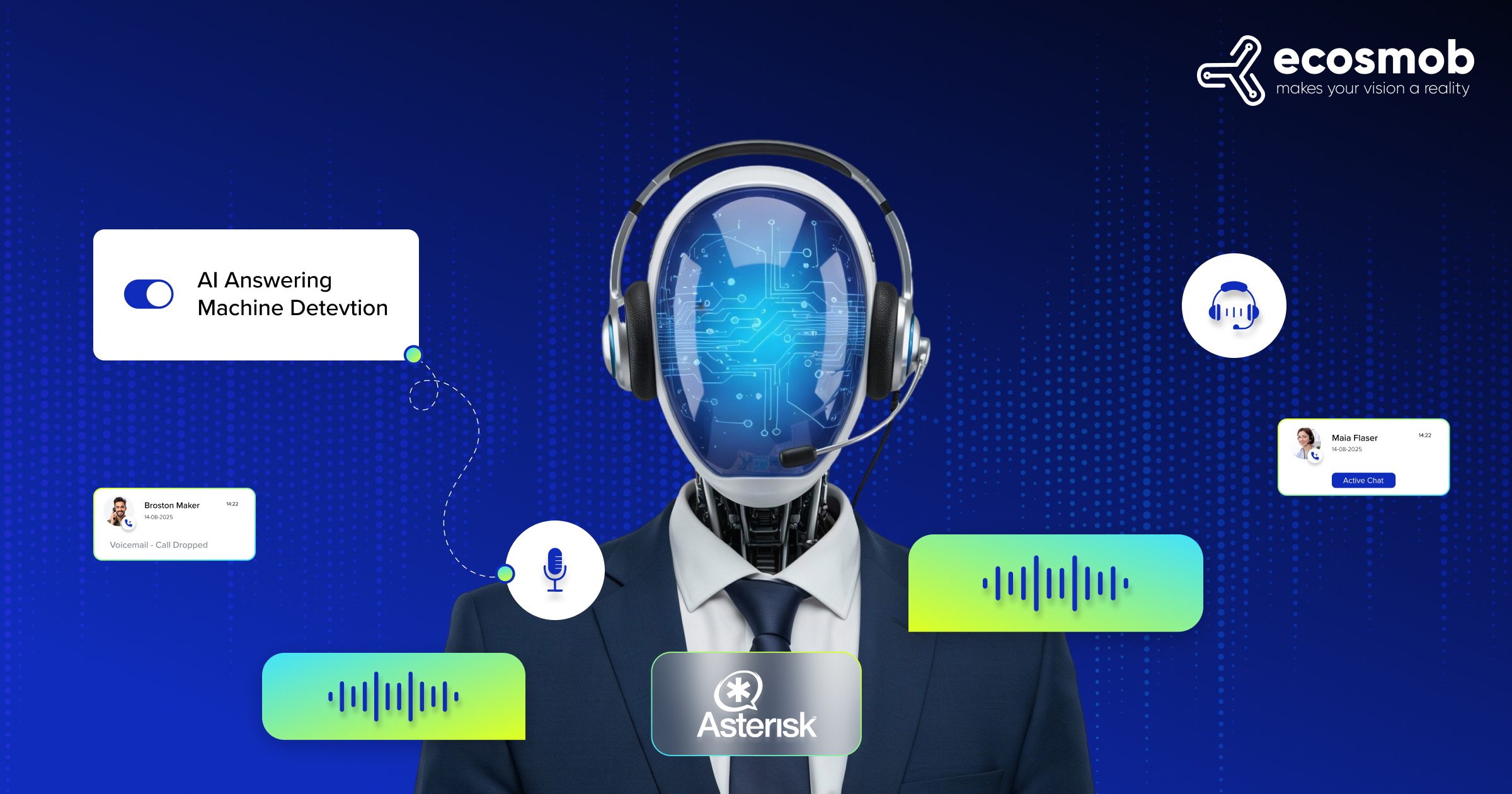
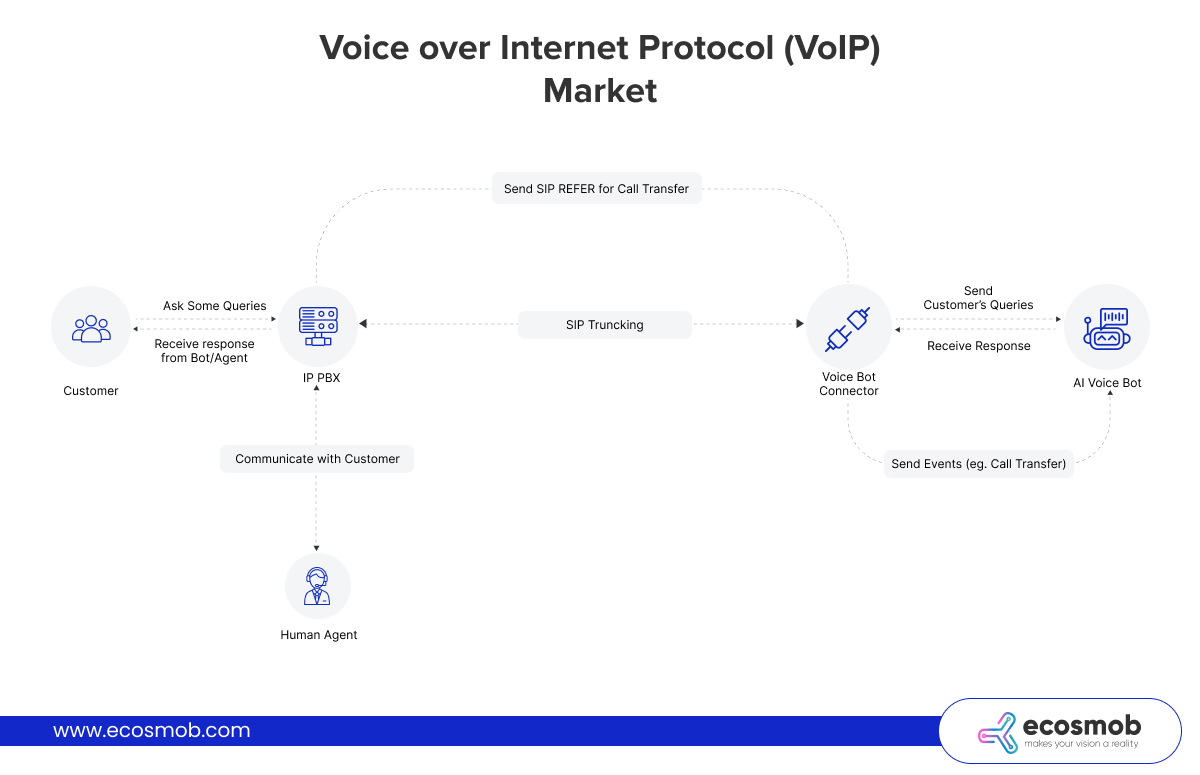
Behind the scenes, Ecosmob’s Voicebot Connector acts as the real-time interpreter between SIP and AI. When a call arrives, the PBX sends a SIP INVITE to the connector, which then streams RTP audio over WebSocket to the voicebot engine. Bot responses and event triggers are relayed back as WebSocket messages or JSON webhooks, allowing seamless playback or call transfers within your existing SIP logic.
 Inbound Call Flow:
- Call Arrival: Customer call hits your Asterisk/FreeSwitch server through normal SIP channels
- Connector Engagement: Your existing dial plan routes specific calls to the voicebot connector via SIP INVITE
- Real-Time Audio Streaming: Connector captures live RTP audio packets and streams them to the AI voicebot platform over WebSocket
- Instant Response Processing: Voicebot analyzes audio, generates a response, and sends it back to the connector
- Seamless Audio Playback: The Connector converts the AI response back to RTP format and plays it through your existing PBX infrastructure
Outbound Call Flow:
- Campaign Initiation: Your telephony system initiates outbound calls through existing dialing logic
- Call Answer Detection: Once the customer answers, the system sends a SIP INVITE to the voicebot connector
- Bot Interaction Management: Connector handles the entire voicebot conversation through your existing infrastructure
- Dynamic Call Routing: Based on conversation outcomes, the connector can trigger transfers, hangups, or callbacks through your standard routing rules
Our connector is built on a robust, open-source, and modern stack:
- OpenSIPS for SIP signaling control
- Python for RTP/WebSocket handling and business logic
- Secure WebSocket for low-latency audio transport
Ecosmob Expert Tip
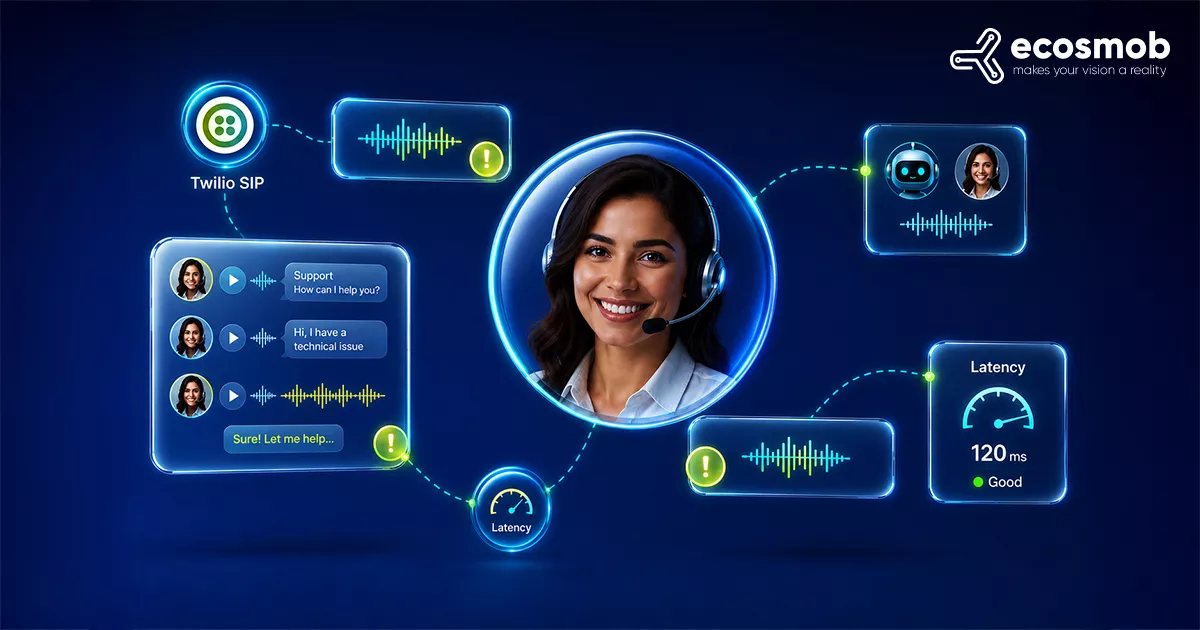
To maximize call automation efficiency, monitor RTP packet loss and jitter metrics directly within your SIP signaling logs. Early detection of network irregularities allows the Voicebot Connector to adjust buffer sizes dynamically, ensuring consistent audio quality and minimizing misinterpretation by the AI engine.
Voicebot Connector Key Features
With real-time call automation as the foundation, our Voicebot Connector offers a suite of capabilities designed for performance and control.
Here’s how our Voicebot Connector empowers you with:
- Inbound & Outbound Handling: Fully automate both call directions without altering your PBX dial plan.
- Real-Time Audio Streaming: Bi-directional RTP streams over WebSocket ensure crystal-clear, low-latency interactions.
- Dynamic Routing via Webhooks: Bot-generated JSON events can reroute calls mid-conversation.
- Human Escalation Triggers: Intelligently transfer callers to live agents using SIP REFER without losing context.
The Benefits of Voicebot Connectors
Adopting a Voicebot Connector creates immediate operational advantages that go well beyond simple cost savings.
- Cost Reduction: Deflect routine inquiries to bots and optimize agent workloads.
- Scalability: Handle call spikes seamlessly with AI-driven front-end processing.
- Preserved SIP Core: No disruptive dial-plan changes or system overhauls.
- Platform Agnostic: Integrate with any WebSocket-enabled voicebot or AI engine.
Stop patching together voicebot workflows. Build seamless real-time call automation.
Voicebot Connector Use Cases
Our custom Voicebot Connectors shine especially in scenarios where you need to augment legacy telephony with modern AI capabilities.
Retrofitting Voicebot Support
Legacy PBX deployments can add AI-powered self-service without ripping out existing hardware or rewriting dial plans.
- Integrate voicebot functionality into Asterisk/FreeSwitch systems
- Retain all call logging, recording, and compliance features
24/7 Automated Support
Ensure round-the-clock customer service by pushing IVR menus and common queries to the voicebot first.
- Automate FAQs, balance inquiries, and service requests
- Escalate only complex issues to live agents
High-Volume Call Deflection
During peak periods, the voicebot handles initial interactions, smoothing demand and reducing hold times.
- Scale instantly for marketing campaigns or product launches
- Seamlessly transfer to agents when necessary
Global Multilingual Outreach
Leverage AI language models to converse in regional dialects and languages.
- Support English, Spanish, Mandarin, Hindi, and more
- Localize prompts and responses without re-engineering the PBX
Voicebot Connector vs. Generic Voicebot Integrations
While many integrations promise “bot connectivity,” they often require hefty custom SIP scripting and risk breaking call flows.
| Feature | Voicebot Connector | Generic Bot-to-PBX Integrations |
| Plug-and-Play Setup | Yes, deploy alongside the existing SIP stack | Custom dial-plan changes needed |
| SIP Core Preservation | 100%; connector sits outside dial plan | Risk of call-flow disruptions |
| AI Platform Compatibility | Any WebSocket-enabled voicebot | Limited to select platforms |
| Escalation Handling | Real-time SIP REFER and webhook routing | Manual scripting or middleware |
Your voicebot needs automation that works with your existing infrastructure, not against it.
Future of Real-Time Call Automation
The voicebot connector landscape continues evolving rapidly:
- Advanced AI Capabilities, including emotion detection, personality adaptation, and predictive conversation routing, are becoming standard features.
- Integration Ecosystem Expansion means connectors will seamlessly integrate with broader business systems, including CRM, ERP, and marketing automation platforms.
- Global Language Support is expanding to cover regional dialects and cultural nuances, making voicebot automation accessible to truly global businesses.
- Proactive Customer Engagement will enable voicebots to initiate conversations based on customer behavior patterns and predictive analytics.
The path forward is clear: businesses that embrace intelligent call automation today will dominate customer experience tomorrow.
As AI capabilities mature and integration frameworks become more sophisticated, the companies investing in proper voicebot infrastructure now are positioning themselves for exponential operational advantages.
Voicebot Connectors aren’t just solving today’s staffing challenges; they’re building the foundation for tomorrow’s autonomous customer service systems.
Whether you’re handling 100 calls per day or 10,000, the question isn’t whether you need AI-powered call automation, but whether you’ll implement it correctly the first time.
Automating calls with AI only succeeds when telephony and AI layers speak the same language. And our custom Voicebot Connector solutions are that seamless bridge; no workarounds, no compromise, just reliable, scalable enterprise call automation solutions from Day One.
Ready to leave integration headaches behind?
Let’s start building your custom Voicebot Connector!
FAQs
How does real-time call automation help reduce costs for my call center?
Real-time call automation helps deflect routine inquiries to AI voicebots, minimizing agent headcount and overtime costs, leading to significant savings on staffing and infrastructure.
How does the Voicebot Connector handle high call volumes in real time?
Efficient RTP-to-WebSocket streaming and event-driven routing allow the voicebot connector to process thousands of simultaneous calls without blocking your PBX’s SIP threads.
Can Voicebot Connectors automate both inbound and outbound calls?
Absolutely. The connector fully supports inbound IVR replacement and outbound campaign flows with bot-first interactions and dynamic call routing.
Can a Voicebot Connector integrate without changing existing call flows?
Yes. It sits alongside your SIP infrastructure, streaming audio and events without modifying dial plans or call routing logic.
What network requirements are needed for reliable audio streaming?
You will need a stable connection with low latency (<50 ms round-trip) between PBX and the voicebot connector (plus firewall rules allowing SIP and WebSocket traffic).