











QUICK SUMMARY
The blog covers AI call handling, showing how voicebots, NLP, and speech recognition manage queries and calls 24/7. It explains why businesses need it in 2026 for better customer service, scalability, and efficiency, and guides adoption with practical steps using Ecosmob’s AI voicebot connector.
Would your business still survive if half of your customers had to wait more than two minutes to get support?
In 2026, patience is a luxury your customers don’t have, and that’s where AI call handling steps in.
Businesses are under constant pressure to deliver support that is faster, smarter, and always available. Long hold times❌ and inconsistent responses❌ can erode trust and revenue almost instantly.
AI Voicebot solutions are emerging as a game-changing way to meet these modern customer expectations. By combining artificial intelligence, automation, and intelligent routing, these solutions redefine customer support efficiency.
Let’s break down the key reasons driving adoption and why ignoring it could mean falling behind in customer experience and operational efficiency.
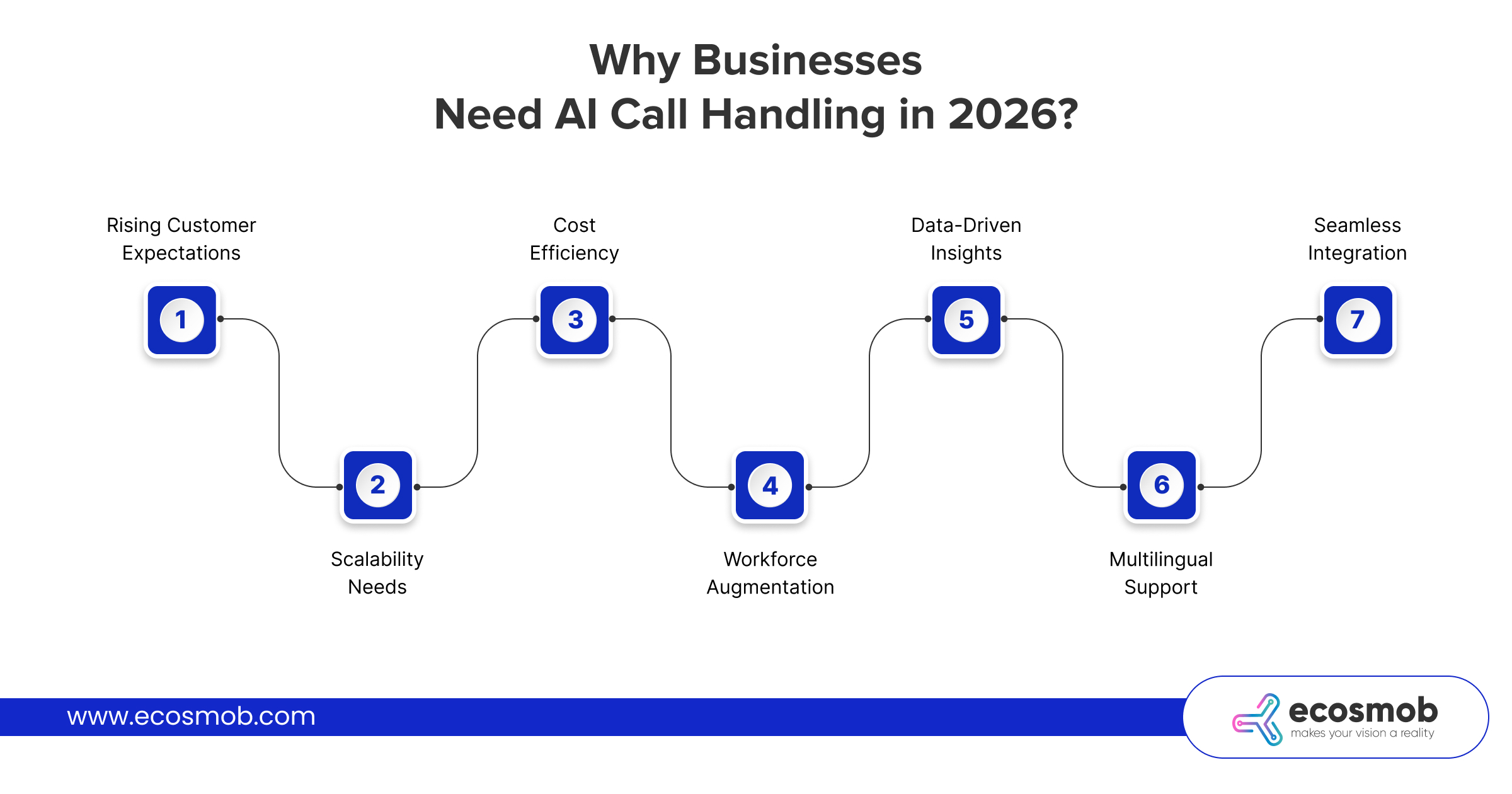
Why Businesses Need AI Call Handling in 2026?
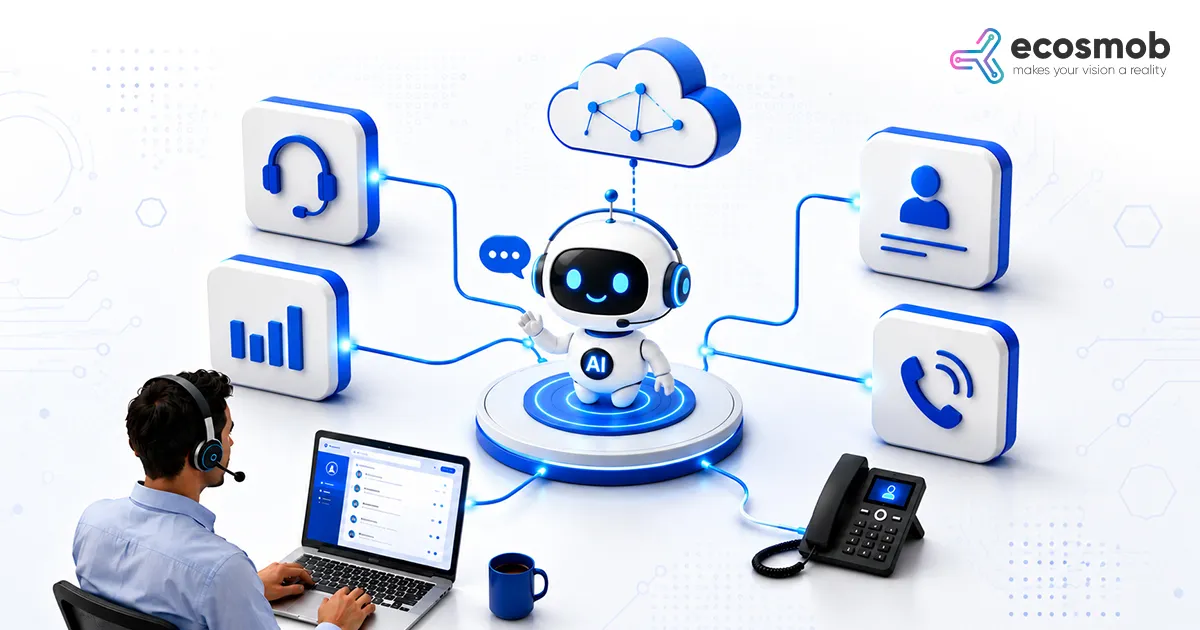
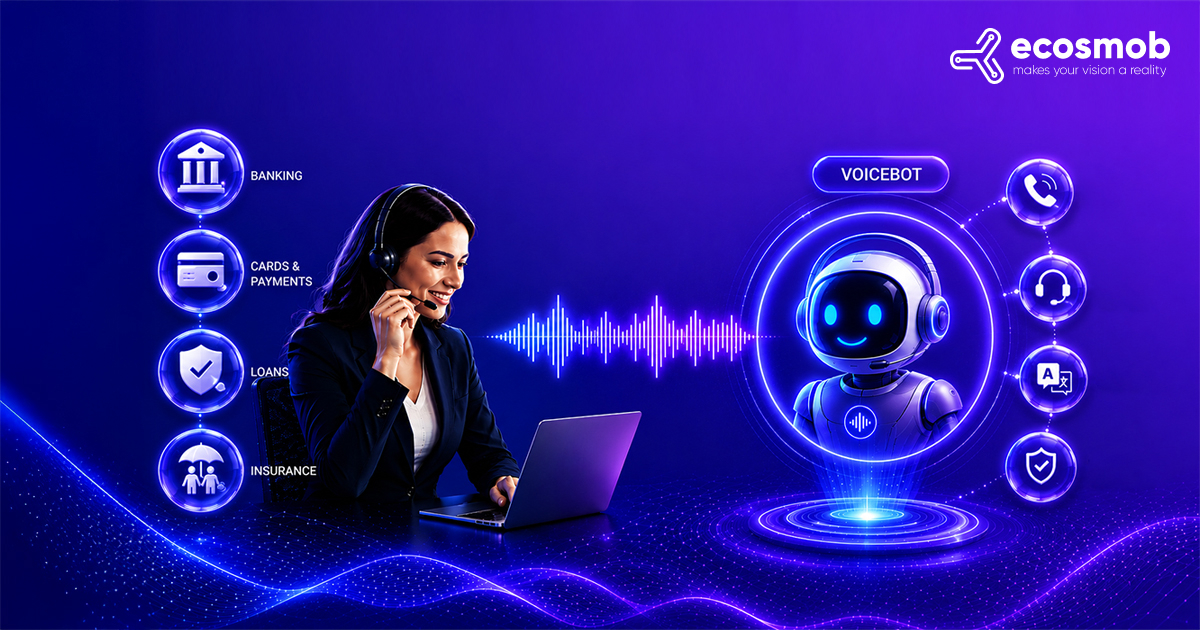
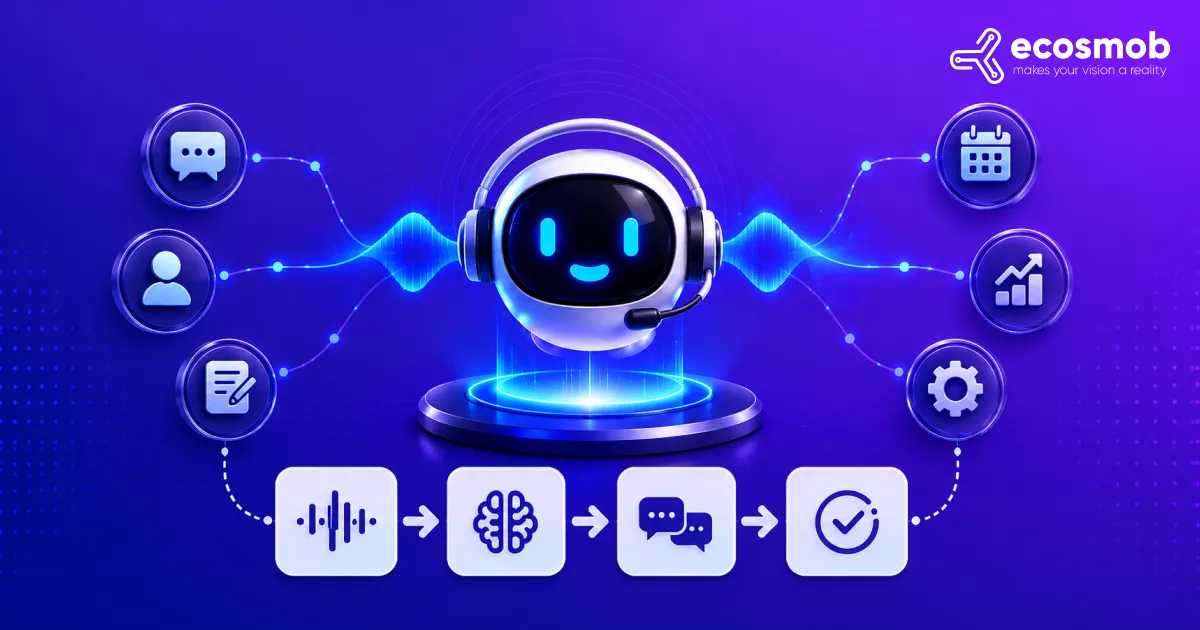
 AI call handling is the use of AI-driven voicebots, NLP, and automation to manage customer calls.
It goes beyond basic routing to answer queries, cut wait times, and provide 24/7 support.
In 2026, businesses will face mounting pressure to deliver speed, personalization, and always-on availability.
Customers simply won’t wait, and that’s why AI call handling is no longer optional; it’s essential.
1. Rising Customer Expectations
Customers don’t want to wait in long queues or repeat their concerns to multiple agents. They expect quick, personalized, and always-available service. AI call handling bridges this gap by responding instantly, offering context-aware answers, and providing 24/7 call center automation without additional staffing pressure.
2. Scalability Needs
Call spikes can happen anytime, during sales campaigns, festive seasons, or emergencies. How does AI handle unpredictable call spikes without compromising CX? By scaling up virtual agents instantly, AI ensures that no caller is left waiting and the quality of support remains steady, even during peak demand.
3. Cost Efficiency
Hiring, training, and retaining large customer service teams can be expensive.
How does AI call handling directly reduce operational costs at scale?
It automates routine calls, eliminates the need for additional staff during high-volume periods, and reduces infrastructure costs while still improving service delivery.
4. Workforce Augmentation
AI doesn’t replace humans; it empowers them. By automating repetitive and straightforward tasks, Artificial Intelligence-powered solutions free agents to focus on solving complex issues that require empathy, creativity, or negotiation skills. This balance leads to happier employees and more satisfied customers.
5. Data-Driven Insights
Every customer interaction is a goldmine of information. AI captures and analyzes this data in real-time, helping businesses identify trends, anticipate customer needs, and refine their services. Leaders can utilize these insights to make more informed decisions that directly enhance customer experience and operational efficiency.
6. Multilingual Support
Serving global or diverse customer bases can be challenging when language skills are limited. AI call handling in telecom or enterprise setups can support multiple languages, allowing the system to understand and respond in the customer’s preferred language with multilingual IVRs. This not only improves customer satisfaction but also expands your reach into new markets.
7. Seamless Integration
Integrating new tech shouldn’t mean overhauling your entire system. AI call handling solutions for enterprises integrate seamlessly with existing CRMs, UCaaS platforms, and telecom stacks, ensuring smooth and efficient adoption. This allows businesses to leverage AI without disrupting current workflows or losing valuable data.
In short, AI call handling solutions in 2026 aren’t just about handling calls; they’re about transforming the way enterprises connect with their customers.
✅ They scale when you need them,
✅ offers multilingual support,
✅ seamless integration
✅ save costs where it matters, and
✅ deliver the kind of consistent, intelligent support that customers now expect as standard.
So, we’ve seen why AI call handling has become a must-have for businesses in 2026. But knowing why you need it is only half the story; the real game-changer lies in how to Get Started with AI Call Handling
Let’s have a look at it!
Need real-time insights from calls with Ecosmob AI-powered voicebot solutions?
How to Get Started with AI Call Handling?
Getting started with AI call handling doesn’t have to be overwhelming. The key is to approach it step by step, so your enterprise can enjoy the benefits without disrupting existing operations.
1. Assess Your Customer Support Needs
Begin by identifying which parts of your support system could benefit most from automation.
Are there repetitive queries, long hold times, or peak-hour spikes that slow down service?
Knowing your pain points helps you focus AI where it matters most!
2. Identify Integration Points
AI works best when it seamlessly connects with your current tools.
- Check how AI works with your UCaaS platforms, CRM, or telecom stack.
- How seamlessly can AI call handling integrate with existing UCaaS, CRM, and telecom stacks?
A proper integration ensures smoother workflows and data consistency across systems.
3. Choose a Trusted AI Call Handling Provider
Partnering with the right provider is crucial. Ecosmob’s AI voicebot connector is designed to help enterprises implement AI call handling without overhauling existing infrastructure, while ensuring reliability, scalability, and compliance.
4. Pilot the Solution
Start with a small pilot project to test performance. Monitor metrics like call resolution times, customer satisfaction, and operational efficiency. This approach lets you refine the AI’s behavior before scaling it enterprise-wide.
5. Optimize and Scale
Once the pilot proves successful, gradually expand the AI call handling solution across departments and use cases. Continuous monitoring and feedback help improve accuracy, enhance customer experience, and ensure your team maximizes ROI.
With this structured approach, AI call handling becomes a strategic asset rather than just a tech upgrade. Enterprises gain faster response times, reduced costs, and happier customers, all while freeing human agents for more complex, high-value interactions.
But, the real question then becomes: how can businesses leverage a solution that’s intelligent, adaptable, and tailored to their unique workflows?
That’s where Ecosmob’s AI-driven solutions come into play, delivering practical, enterprise-ready benefits for every call.
Wondering how Ecosmob’s AI call handling can cut your wait times in half?
How Ecosmob’s AI-driven Solutions Benefit Call Handling?
When it comes to making AI call handling truly work for enterprises, Ecosmob’s AI-driven solutions stand out by blending intelligence with practicality. Instead of just automating calls, we help businesses create smarter interactions, whether it’s routing a customer to the right team, answering FAQs in seconds, or scaling effortlessly during peak hours.
The result?
✅ Faster response times,
✅ reduced operational costs, and
✅ a customer experience that feels less like dealing with a machine and more like being understood.
All these improvements add up to more than just efficiency; they reshape how customers perceive your brand.
AI call handling delivers both speed and understanding. It sets the stage for the ultimate question:
What’s the Bottom Line for Your Business?
AI call handling is no longer a futuristic concept; it’s a business necessity in 2026. By ensuring faster response times, reducing costs, and enhancing customer satisfaction, enterprises can position themselves to stay ahead of the competition. As customer expectations rise, investing in AI call handling is the smartest way to remain future-ready.
Key Takeaways:
- AI call handling is a critical solution in 2026, enabling businesses to meet customer expectations, scale efficiently, and reduce operational costs while offering 24/7 support.
- Enterprises benefit from faster response times, consistent and personalized experiences, multilingual support, and seamless integration with existing workflows.
- Ecosmob’s AI-driven solutions provide intelligent, adaptable, and enterprise-ready call handling that enhances customer experience and empowers human agents for high-value tasks.
Ready to explore Ecosmob’s AI voicebot connector today and future-proof your customer support. Contact us here!
Looking to scale customer support without scaling costs with Ecosmob AI solutions?
FAQs
What’s the difference between AI call handling and traditional IVR systems?
AI call handling uses conversational AI, speech recognition, and NLP to understand natural speech and route or resolve calls. Traditional IVR is menu-based (press 1 for X, press 2 for Y) and is far more rigid and limited in handling complex or variable inputs.
Can AI call handling handle every call without human agents?
Not always. AI is best suited for handling routine, repetitive, or standard queries. Complex, emotionally sensitive, or highly technical issues are typically escalated to human agents, but AI ensures the handoff is seamless with context preserved.
How accurate is an AI voicebot in understanding spoken queries?
Modern AI voicebots, backed by advanced speech recognition and continuous training, reach high levels of accuracy, often correctly understanding a majority of customer intents. Accuracy improves over time as the system learns from interactions.
Will implementing AI call handling disrupt my existing call center operations?
When integrated properly, AI call handling complements existing systems. It usually coexists with human agents, routing certain calls to bots and only escalating when needed. The goal is gradual adoption, not full disruption.
How long does it take to deploy an AI call handling solution?
That depends on complexity, call volume, integration needs, and training data. A basic pilot setup might take weeks, while full-scale rollout across many departments or languages may take a few months.