











QUICK SUMMARY
Get insights into the top 10 IVR solution providers in the USA, complete comparison across features, cost, scalability, and customer satisfaction. Understand the latest trends shaping the future of IVR technology, including AI, cloud, and voice biometrics. See why Ecosmob stands out as a trusted and customizable IVR partner for businesses of all sizes.
A day before yesterday, I was scrolling through some Quora threads about IVR systems, just out of curiosity, and I stumbled upon an interesting question: “Who are the best IVR solution providers?” Now, that got me thinking. Why not answer it here, in a little more depth, covering all the crucial elements and aligning with today’s business communication requirement.
Additionally, instead of focusing solely on IVR providers, let’s consider something more advanced and relevant to today’s customer service expectations: Conversational IVR.
So here we go: Who are the best conversational IVR solution provider in USA?▶️⏩
Before we dive into the list, let’s quickly understand why conversational IVR has become a game-changer for businesses and organizations across industries.
In today’s customer-centric business environment, traditional Interactive Voice Response (IVR) systems are rapidly evolving into more sophisticated conversational IVR solutions.
Gone are the days when callers had to “press 1 for support” or “press 2 for billing.” Today, customers expect more human-like, intelligent, and frictionless interactions.
 That’s where conversational IVR, powered by natural language processing (NLP) and AI, comes in.
But why are businesses and organizations making this transition, and what makes conversational IVR so essential for modern customer service?
The Growing Market Size of Conversational IVR
The numbers speak for themselves. Organizations implementing conversational IVR systems are experiencing remarkable returns on investment.
According to a report by MarketsandMarkets, the global IVR market is projected to grow from $5.5 billion in 2023 to $7.8 billion by 2028, with North America leading the way due to rapid adoption in the banking, healthcare, telecom, and retail sectors.
A McKinsey study revealed that one company saved approximately $100 million annually by effectively utilizing its IVR system compared to handling those calls with human agents. When they redesigned their system using a customer-centric approach, they achieved an additional 2-5% increase in call-containment rates.
According to a Capgemini study, conversational AI features in advanced IVR systems can improve customer experience by up to 20%. This improvement stems from the system’s ability to understand natural language, providing more personalized and efficient service that makes it more likely for customers to have their issues resolved quickly.
As customer expectations continue to evolve, adopting a conversational IVR isn’t just about keeping up, it’s about staying ahead. And to do that, you need the right technology partner by your side.
But before we dive into the top providers, let’s take a step back and understand the foundation of it all, what exactly is an IVR, and how does it work in both traditional and conversational forms?
What’s Coming Next? 👀
- Understand the basics of IVR and why it matters for modern businesses.
- Get to know how IVR systems streamline customer communication.
- See how a well-designed IVR can enhance the caller experience and efficiency.
Want a custom IVR demo for your business needs?
What is an IVR?
Let’s break it down simply!
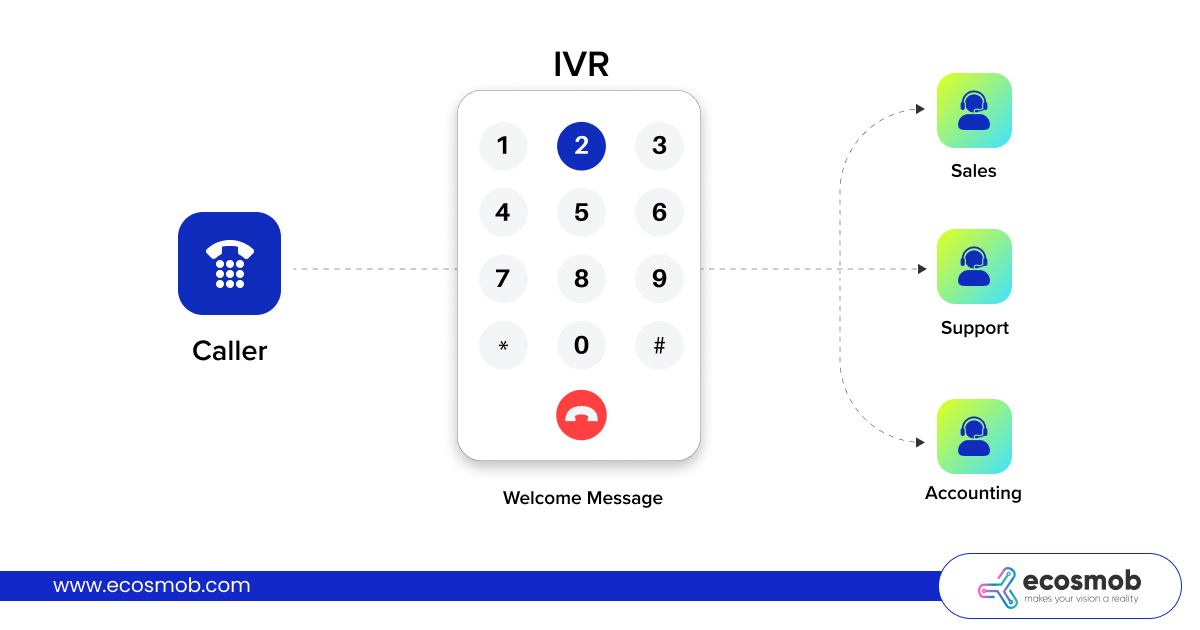
IVR stands for Interactive Voice Response. It’s that automated phone system you often interact with when you call a business. You know the drill, “Press 1 for sales, press 2 for support…”
Yep, that’s IVR in action.💯
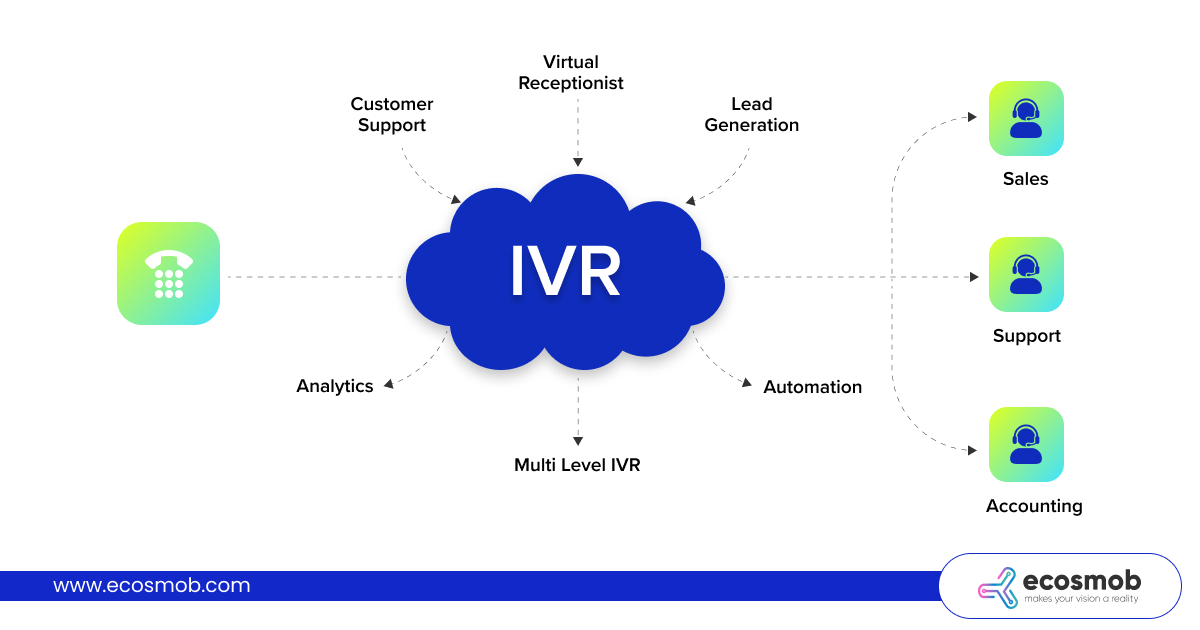
But IVR isn’t just about pushing buttons anymore. At its core, it’s a technology that allows incoming callers to access information or route their call to the right department using either keypad inputs (DTMF tones) or, more recently, their voice. It works alongside a company’s phone system and often connects to databases or CRMs to serve up relevant info.
Originally, IVRs were used to reduce the load on live agents by handling routine queries, like checking account balances, booking appointments, or tracking orders. Now, with the rise of conversational AI and natural language processing (NLP), IVRs have evolved into something far more intuitive, able to understand full sentences, detect intent, and even learn from previous interactions.
So, whether you’re confirming a flight, paying your utility bill, or rescheduling a delivery, there’s a good chance you’re interacting with an IVR.
From simple menu trees to innovative, voice-first interfaces, IVRs have come a long way. But that brings us to a very important question…
But, what exactly is it about IVRs, especially conversational ones, that businesses (and even customers!) are starting to love?
Let’s break it down.🤝
What Makes Conversational IVR So Appealing?
Let’s be honest, no one enjoys being stuck in a never-ending phone menu, repeating “customer support” over and over until you’re finally connected to the right person. That’s where conversational IVR flips the script.
Unlike traditional IVR systems that require you to press buttons or listen to lengthy options, conversational IVR allows you to speak naturally, just as you would when talking to a human. And that’s exactly what makes it so appealing.
 1. It’s Faster and More Intuitive⏩
Customers don’t have to waste time navigating multiple options. With conversational IVR, they can say things like “I want to check my balance” or “I need to reschedule my appointment” and get an immediate response. It reduces friction and gets people where they need to go, fast.
2. 24/7 Availability Without Burnout⏳
Businesses love it because it never sleeps. A conversational IVR can handle hundreds of calls at once, 24/7, without coffee breaks or sick days. That means improved responsiveness and consistent service around the clock.
3. Personalized Interactions🥰
When integrated with a CRM, conversational IVRs can greet customers by name, recall previous interactions, and offer personalized options, something traditional IVRs cannot do.
4. Reduces Call Center Workload↙️
It filters out routine calls, like order status, appointment confirmations, or FAQs, freeing up human agents for more complex issues. That translates to better resource management and happier agents.
5. Improves Customer Satisfaction😃
When customers don’t have to repeat themselves or jump through hoops to get help, satisfaction naturally goes up. And when customers are happy, loyalty follows.
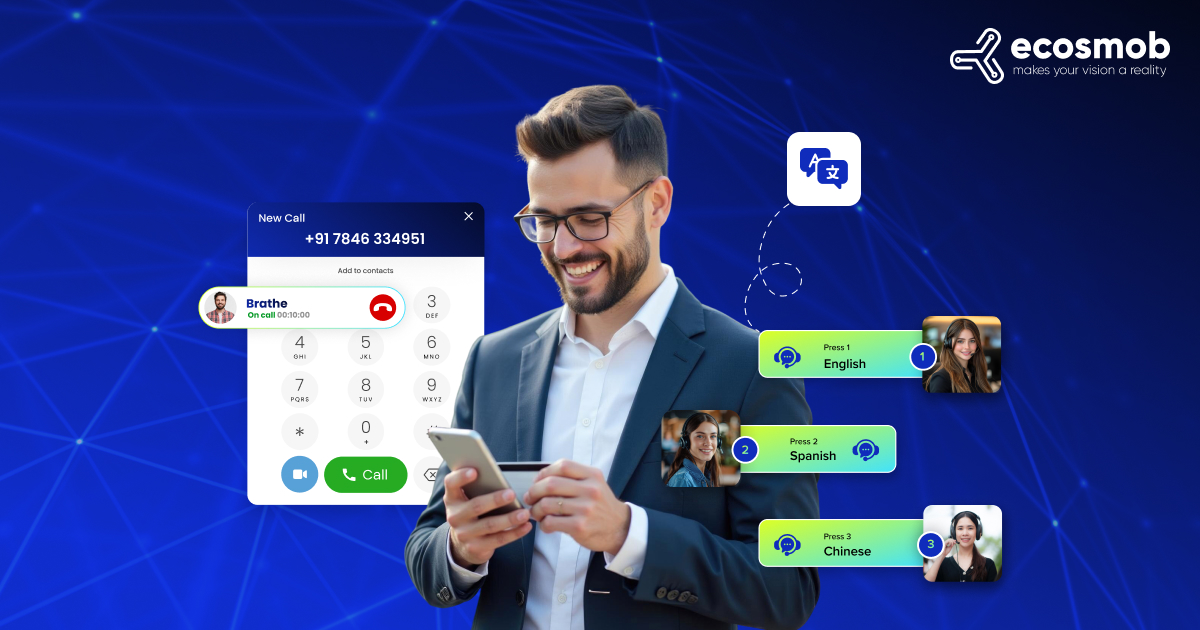
6. Supports Multilingual Conversations💬
With AI-powered language recognition, conversational IVRs can understand and respond in multiple languages, making them ideal for global or diverse customer bases.
In short, conversational IVR isn’t just a tech upgrade, it’s a total experience upgrade. It brings together convenience, efficiency, and personalization in one smart, scalable solution.
It’s clear that conversational IVR offers more than just automation, it delivers a smarter, faster, and more human-centric approach to customer service. But not all conversational IVRs are created equal.
So,
What to Look for in an Ideal Conversational IVR
So, you’re convinced that conversational IVR is the way to go, but how do you choose the right one? 🤔
With so many providers claiming to be “intelligent” or “AI-powered,” it’s easy to get lost in the noise. Let’s break down the key features and factors that truly define an ideal conversational IVR solution.
1. Natural Language Understanding (NLU)
The whole point of conversational IVR is to understand natural speech, not just keywords. Look for a solution with strong NLU capabilities so users can speak in full sentences, slang, or varied phrasings and still be understood accurately.
2. Omnichannel Integration
An ideal system shouldn’t live in a silo. It should integrate smoothly with your existing CRM, helpdesk tools, live chat, messaging apps, and other communication channels to deliver a unified customer experience.
3. Personalization Capabilities
The ability to use customer data, like previous purchases, call history, or preferences, to personalize the interaction is a must. Personalized IVRs can greet callers by name and offer relevant options based on their profile or behavior.
4. Scalability and Flexibility
Whether you’re a growing startup or an established enterprise, your IVR should be able to scale with your needs. That includes adding more languages, handling call volume spikes, or expanding to new regions without breaking the system.
5. Multilingual Support
If your customer base is diverse, your IVR should be too. Look for systems that support multiple languages natively, not just via clunky add-ons.
6. AI Training and Analytics
Good conversational IVRs improve over time. Choose a platform that offers built-in analytics, machine learning, and feedback loops so it can constantly learn from interactions and refine its performance.
7. Ease of Customization
You don’t want to call tech support every time you want to change a menu option. A good IVR platform should offer an intuitive dashboard or drag-and-drop interface for making real-time updates.
8. Security and Compliance
Don’t overlook the backend. Make sure the solution follows data protection regulations like HIPAA, PCI-DSS, or GDPR (depending on your industry), and offers secure storage, call encryption, and fraud prevention tools.
Choosing the right conversational IVR isn’t just about ticking boxes, it’s about finding a solution that fits your business goals, customer needs, and future vision. When you know what to look for, you’re already halfway there.
Now that we know what defines an ideal conversational IVR, the next step is identifying the companies that deliver on those promises. The U.S. market is full of vendors claiming to offer “intelligent” or “AI-powered” IVR, but only a few truly stand out for their innovation, scalability, and customer-centric approach.
Does your IVR support future growth?
Top 10 IVR Solution Providers in USA
When it comes to streamlining business communications, choosing the right IVR system is a game-changer. With so many IVR solution providers in the market, finding the one that fits your business needs, whether it’s affordability, user-friendliness, or deep integrations, can feel overwhelming. That’s why we’ve rounded up the top IVR systems in the USA that are redefining customer interactions. From global platforms to specialized IVR companies in USA, this comparison highlights what makes each one tick, while showcasing why Ecosmob Technologies remains a strong contender in this competitive space.
Best Suited For🎯
Choosing the best IVR system depends heavily on your business type and scale. Some IVR solution providers cater specifically to small businesses, while others are designed for large enterprises with complex call flows. As one of the leading IVR phone system providers, Ecosmob’s IVR stands out for its customizability, making it suitable for startups, SMEs, and contact centers alike. Let’s see how other IVR companies in USA stack up.
| IVR Provider | Best Suited for |
| Ecosmob | SMEs, contact centers, and enterprises seeking highly customizable IVR solutions |
| Twilio | Developers and tech teams needing programmable voice flows |
| Zendesk | Customer support-driven organizations |
| Talkdesk | Contact centers and enterprise-level businesses |
| Nextiva | SMBs wanting simple cloud IVR solutions |
| RingCentral | Mid-to-large organizations using unified comms |
| Aircall | Sales and support teams in growing startups |
| CloudTalk | SMEs focused on international calling |
| Dialpad | Hybrid teams need AI-powered call routing |
| GoTo Connect | Remote and hybrid workforces need voice integrations |
If you’re in an SME, a contact center, or an enterprise seeking a customized solution tailored to your business needs, Ecosmob seems like the ideal fit. Their solutions and niche expertise make them a standout for this segment.
Customer Satisfaction💯
Customer satisfaction is often the clearest indicator of a solution’s success. Among the top IVR systems, Ecosmob receives praise for its responsiveness, flexible deployments, and feature-rich cloud IVR solutions. Other IVR providers in USA have their strengths too, but the user experience varies.
| IVR Provider | Customer Satisfaction |
| Ecosmob | 4.7 – praised for support and custom workflows |
| Talkdesk | 4.6 – great for enterprise support centers |
| Ringentral | 4.5 – well-rounded user interface |
| Twilio | 4.4 – powerful but needs dev skills |
| Zendesk | 4.3 – good for existing Zendesk users |
| Nextiva | 4.3 – Solid for small businesses |
| Dialpad | 4.2 – AI features appreciated |
| Aircall | 4.1 – Intuitive but feature-limited |
| CloudTalk | 4.0 – good international reach |
| GoTo Connect | 3.9 – decent but less customizable |
Based on user feedback and reviews, Ecosmob wins hearts with top-notch customer experience. But is it the most scalable option?
Let’s find out next.
Scalability⚖️
As your business grows, so should your communication tools. That’s why scalability is one of the most important factors when evaluating the top IVR systems. Whether you’re a startup scaling fast or an enterprise expanding to global markets, you’ll want an IVR solution provider that can grow with you. Ecosmob’s IVR stands tall as a scalable option among the IVR companies in USA, offering flexible deployment models, multi-language support, and seamless integration with third-party tools, making it a strong contender in the world of cloud IVR solutions.
| IVR Provider | Scalability |
| Ecosmob | 4.8 – Easily scales for SMEs to enterprises |
| Twilio | 4.7 – Infinitely scalable via APIs |
| Talkdesk | 4.6 – Built for enterprise call volumes |
| ringCentral | 4.5 – Great for mid-to-large businesses |
| Zendesk | 4.4 – Good for scaling support teams |
| Nextiva | 4.3 – Moderate scaling for SMBs |
| Dialpad | 4.2 – Flexible scaling for hybrid teams |
| CloudTalk | 4.1 – Decent for international scale |
| Aircall | 4.0 – Good for growing startups |
| GoTo Connect | 3.9 – Basic scalability |
Whether you’re a startup with growth ambitions or an enterprise handling thousands of daily calls, Ecosmob proves to be the most scalable. Its customizable architecture and cloud-native approach make it ready to grow as fast as your business does.
Cost Comparison💰💲
Every business has a different budget. Some IVR companies offer pay-as-you-go plans, while others require monthly or annual commitments. Ecosmob, being a flexible IVR service provider, provides tailored pricing that adapts to the client’s specific IVR needs, making it one of the more cost-effective IVR companies in USA.
| IVR Provider | Estimated Monthly Cost (for basic plan) |
| Talkdesk | Enterprise pricing – request a quote |
| Twilio | Pay-as-you-go – highly scalable |
| Ecosmob | Custom pricing – often more affordable for SMEs |
| Zendesk | Add-on to Zendesk Support varies |
| Dialpad | Starts at $23/user/month |
| GoTo Connect | Starts at $24/user/month |
| CloudTalk | Starts at $25/user/month |
| Aircall IVR | Starts at $30/user/month |
| Nextiva | Starts at $30/user/month |
| RingCentral | Starts at $32.99/user/month |
In terms of pricing, Ecosmob offers the best balance of value and functionality with its customized but affordable IVR solutions. But how does it perform when it comes to overall rating?
Overall Rating🌟
Looking at the best IVR solutions holistically, combining usability, support, innovation, and pricing, shows us which systems go the extra mile. As a top IVR solution provider in USA, Ecosmob continues to earn its place in the top tier with its customizable approach and expert support team.
| IVR Provider | Overall rating |
| Nextiva | 4.7⭐ |
| Ecosmob | 4.6⭐ |
| RingCentral | 4.5⭐ |
| Talkdesk | 4.5⭐ |
| Zendesk | 4.4⭐ |
| Twilio | 4.3⭐ |
| Aircall | 4.2⭐ |
| CloudTalk | 4.2⭐ |
| Dialpad | 4.1⭐ |
| GoTo Connect | 4.0⭐ |
Balancing innovation, cost-efficiency, reliability, and customer satisfaction, Ecosmob secures the second position in the overall rating. It’s a complete conversational IVR package for businesses that want smart automation without complexity.
Pros➕ and Cons➖
Every system has strengths and trade-offs. Whether you’re evaluating for features, cost-efficiency, or ease of use, understanding the pros and cons helps narrow your search. Here’s how the top IVR solution providers compare. Ecosmob, as one of the most versatile IVR solution providers in USA, offers high flexibility with almost no vendor lock-in.
| IVR Provider | Pros | Cons |
| Ecosmob | Highly customizable, multilingual, 24/7 support | Requires consultation for pricing |
| Twilio | Developer-focused, scalable | Steep learning curve |
| Talkdesk | Excellent analytics, AI-driven | Enterprise-level pricing |
| RingCentral | Unified platform | It may be costly for small teams |
| Zendesk | Native with Zendesk support | Less flexible outside that ecosystem |
| Nextiva | Easy to set up, affordable | Limited advanced features |
| Aircall | Clean UI, quick onboarding | Few custom call flow options |
| Dialpad | AI tools, transcriptions | Lacks advanced call routing for some plans |
| CloudTalk | International numbers, call tagging | Not ideal for large-scale operations |
| GoTo Connect | Remote-friendly, integrated comms | Basic IVR features only |
There’s no one-size-fits-all solution when it comes to IVR, but understanding what each IVR solution provider in USA brings to the table makes decision-making a lot easier. Whether you’re a startup needing flexibility or an enterprise looking for advanced call routing, the top IVR systems listed here cover a wide range of needs.
Let your customer interactions shine with a smart, efficient, and reliable IVR phone system tailored to your specific needs.
1. Ecosmob
Ecosmob’s IVR solution is known for its deep customization, multilingual capabilities, and seamless integration options. Tailored for businesses of all sizes, it stands out among IVR companies in USA due to its consultative approach and scalable architecture. As a trusted IVR solution provider in USA, Ecosmob delivers smart, cloud-based IVR systems that adapt as your needs evolve.
Highlights:
✅Custom IVR call flows and prompts
✅Multilingual and multi-level IVR support
✅Flexible deployment (cloud/on-premise/hybrid)
✅Easy integration with CRM and PBX systems
✅24/7 technical support and maintenance
Is your current IVR holding you back?
2. Twilio
Twilio IVR is a developer-friendly, API-driven platform ideal for tech-savvy businesses. It allows complete customization through code, making it a favorite among startups and SaaS providers. Twilio is one of the most flexible cloud IVR solutions in the market.
Highlights:
✅Programmable IVR via Twilio Studio or APIs
✅Global telephony coverage
✅Real-time call routing and response
✅Pay-as-you-go pricing
✅Seamless integration with other Twilio services
3. Zendesk
Part of the Zendesk suite, this IVR is tailored for customer support centers that already use Zendesk’s help desk. It’s not the most customizable, but it’s efficient and fits well into ticket-based support workflows.
Highlights:
✅Integrated with Zendesk Support
✅Pre-built call flows for customer service
✅Call routing based on ticket priority or language
✅Voicemail-to-ticket functionality
✅Works well in omnichannel environments
4. Talkdesk
Talkdesk offers enterprise-level IVR features and AI-powered call routing. Built for scalability, it’s one of the leading IVR phone system providers for large contact centers. The platform focuses on optimizing the customer experience.
Highlights:
✅AI-powered voice interactions
✅Visual flow builder for IVR setup
✅Speech analytics and real-time coaching
✅Enterprise-grade security and compliance
✅Seamless CRM and workforce integrations
5. Nextiva
Nextiva’s IVR is ideal for small to mid-sized businesses seeking a simple and effective cloud-based IVR solution. It’s easy to set up and use, with reliable support and unified communications features built in.
Highlights:
✅Drag-and-drop call flow builder
✅Smart call routing for support or sales
✅Integrated with Nextiva’s UCaaS platform
✅Real-time analytics dashboard
✅Voicemail-to-email and call forwarding
6. RingCentral
RingCentral offers a strong IVR module within its unified communications platform. It’s best suited for mid-to-large teams that want voice, messaging, and video under one roof.
Highlights:
✅Multi-level IVR tree support
✅Intuitive admin dashboard
✅Integrated UC features (chat, video, phone)
✅Call routing based on department, time, or location
✅Scalable to thousands of users
7. Aircall
Aircall is a lightweight, modern IVR system designed for startups and small teams. Its interface is clean and easy, but it doesn’t offer the depth of customization found in more enterprise-level solutions.
Highlights:
✅Simple IVR setup for non-technical users
✅Integration with HubSpot, Salesforce, etc.
✅Real-time coaching tools
✅Click-to-dial browser extensions
✅Analytics and live feed monitoring
8. CloudTalk
CloudTalk’s IVR system is built for global teams managing customer support or sales across different regions. It’s feature-rich but best for SMBs rather than enterprises.
Highlights:
✅International phone numbers
✅Multi-level IVR and smart call routing
✅Real-time dashboards and call tagging
✅Voicemail transcription
✅CRM and helpdesk integrations
9. Dialpad
Dialpad uses AI to power its voice routing, offering insights, transcripts, and intelligent agent support. It works well for distributed teams and businesses focused on hybrid collaboration.
Highlights:
✅AI-based voice recognition and routing
✅Real-time transcription and call summaries
✅Unified messaging and video calling
✅Simple IVR setup via web portal
✅Integration with Google Workspace and Microsoft 365
10. GoTo Connect
GoTo Connect provides a reliable IVR system as part of its cloud phone service. It’s ideal for remote teams and growing businesses that don’t require deep customization.
Highlights:
✅Multi-level IVR and call queuing
✅Built-in video conferencing
✅Voicemail and call forwarding features
✅Admin dashboard with live monitoring
✅Simple pricing for small businesses
Choosing the right IVR comes down to your business needs and growth plans. From simplicity to advanced features, the top IVR systems we’ve covered offer a range of great options.
As businesses continue to evolve, so do their communication tools, and IVR is no exception. From AI-driven interactions to voice biometrics and omnichannel integration, the world of IVR is undergoing a major transformation. Let’s take a look at the new emerging trends in IVR technology and solutions that are shaping the future of customer engagement.
Emerging Trends and Future Scope in IVR Technology
As digital transformation accelerates across industries, IVR technology is evolving beyond basic automation to become a critical part of intelligent customer engagement. Modern IVR solutions are now powered by AI and machine learning, enabling more human-like conversations and predictive routing based on user behavior. Cloud-based IVRs offer unmatched flexibility and scalability, allowing businesses to adapt in real-time.
Features like voice biometrics, speech-to-text, and natural language processing (NLP) are pushing IVRs closer to becoming virtual assistants. Additionally, the future scope lies in integrating IVR with omnichannel platforms, CRM systems, and real-time analytics to deliver seamless, personalized experiences across every touchpoint. As a result, IVR companies in USA and globally are focusing on making their systems smarter, more adaptive, and customer-centric.
Key Emerging Trends & Future Scope in IVR Technology🚀
- AI-powered IVRs for intelligent, context-aware interactions
- Natural Language Processing (NLP) enabling conversational IVR experiences
- Voice biometrics for secure and fast caller authentication
- Cloud IVR solutions offering scalability, flexibility, and remote access
- Omnichannel integration connecting IVR with chat, email, and social media
- Real-time analytics and reporting to optimize call flows and CX
- Self-service automation for tasks like payments, bookings, and inquiries
- Low-code/no-code IVR builders for easier deployment and management
- Personalized call flows based on customer history and preferences
- Multilingual support to serve diverse customer bases globally
With rapid innovation shaping the IVR landscape, it’s clear that interactive voice response is no longer a static tool, it’s a dynamic technology driving better customer experiences. Keeping up with these trends will help businesses not only stay relevant but also deliver smarter, faster, and more efficient communication.
Wrapping Up
In today’s fast-paced, customer-driven world, streamlining communication is no longer a luxury, it’s a necessity. Businesses and organizations, regardless of size, need reliable, intelligent, and scalable IVR systems to handle growing customer expectations and ensure round-the-clock service. From reducing wait times to boosting efficiency and personalization, IVR systems have become indispensable in modern business communications.
Key Takeaways from This Blog
- IVR systems are evolving rapidly with the integration of AI, cloud, and speech technologies, making them smarter and more efficient.
- Comparing the top IVR solution providers in USA helps identify the best fit for your unique business needs, whether it’s cost, scalability, or customization.
- Choosing a flexible and forward-thinking IVR partner, such as Ecosmob, ensures long-term success, adaptability, and exceptional customer experiences.
Why Choose Ecosmob for Your IVR Needs?
Ecosmob Technologies stands tall across all critical factors, including scalability, customization, cost-effectiveness, customer satisfaction, and the adoption of emerging technologies. Whether you’re a startup, enterprise, or call center, Ecosmob offers tailored IVR solutions designed to grow with your business. With expertise in cloud IVR solutions, AI integration, multilingual support, and 24/7 service, Ecosmob ensures your business stays ahead of the curve. If you’re looking for an IVR service provider that delivers innovation with reliability, Ecosmob is your trusted partner in building smarter conversations and seamless voice experiences.
FAQs
What is IVR, and how does it work?
IVR (Interactive Voice Response) is an automated phone system that allows callers to interact using voice commands or keypad inputs to access information or reach the right department, without speaking to a human agent.
Is IVR only for large businesses or enterprises?
Not at all. IVR systems are scalable and used by businesses of all sizes, ranging from startups and small businesses to large enterprises. Many cloud IVR solutions are affordable and flexible for SMEs.
Can I integrate an IVR system with my existing CRM or helpdesk software?
Yes, most modern IVR providers offer easy integrations with popular CRMs like Salesforce, HubSpot, and helpdesk platforms like Zendesk, Freshdesk, and more.
How much does an IVR system cost in the USA?
Costs vary based on features, provider, and scale. Entry-level IVR systems may start around $20–30 per user/month, while enterprise-level or custom IVR systems could require a tailored quote.
What are the key benefits of using an IVR system?
An IVR helps reduce wait times, route calls efficiently, handle high call volumes, and offer 24/7 customer service, improving both customer satisfaction and business efficiency.