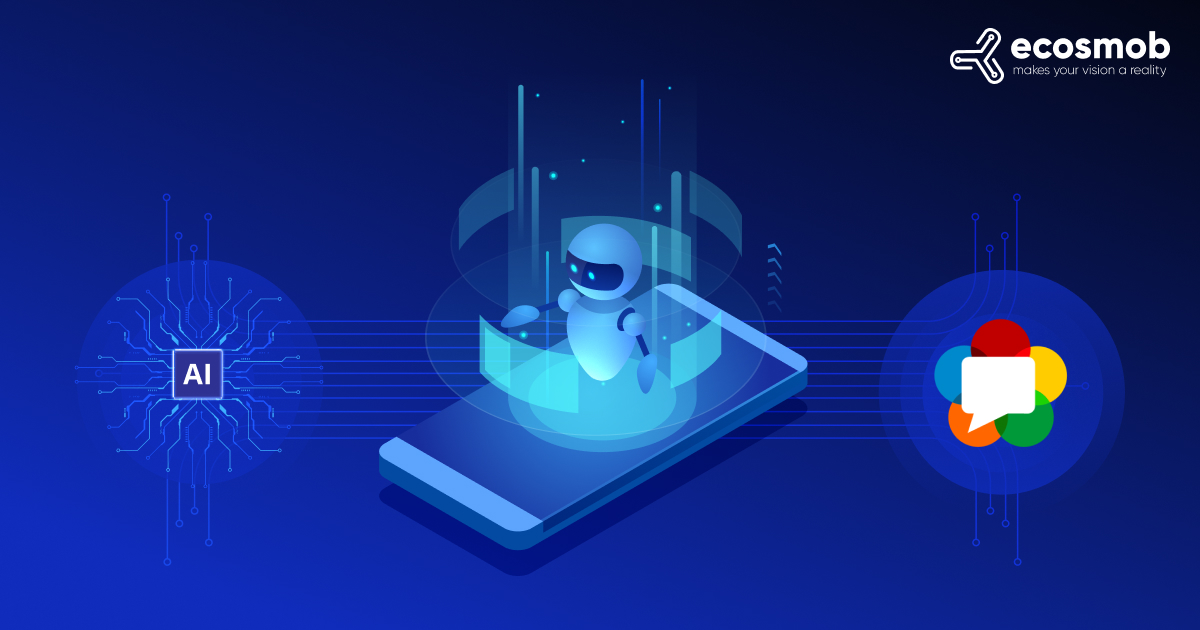











When it comes to digital communication, the convergence of Artificial Intelligence (AI) and Web Real-Time Communication (WebRTC) stands as a hallmark of innovation, reshaping the way we interact and exchange information. This integration elevates user experience and unlocks new potential in communication technology.
Let’s delve into the intricacies of this fusion between AI and WebRTC solutions, exploring its benefits, challenges, and future prospects.
AI and WebRTC: Match Made In Real-Time Communication Heaven
WebRTC, a technology enabling real-time communication via web browsers, revolutionized online interactions by eliminating the need for additional plugins or applications. Compared to traditional communication protocols, WebRTC offers a more direct, browser-based approach, significantly enhancing efficiency and accessibility.
WebRTC transcends traditional boundaries when amalgamated with AI, offering more innovative and efficient communication solutions.
Enhancing User Experience through AI
AI, with its learning and adaptive capabilities, augments WebRTC applications in numerous ways:
- Intelligent Call Routing: AI algorithms can analyze user data and preferences to optimize call routing, reducing wait times and enhancing service quality.
- Speech Recognition and Translation: Incorporating AI-driven speech recognition and translation services within WebRTC enhances accessibility, breaking language barriers in global communication.
- Adaptive Bitrate Streaming: AI algorithms can dynamically adjust the video bitrate based on network conditions, ensuring optimal video quality and reducing latency.
- Voice and Video Analytics: AI can analyze voice and video data in real-time, enabling features like emotion detection, sentiment analysis, and engagement measurement, thus revolutionizing customer support and telehealth consultations.
- Edge AI for WebRTC: Implementing AI on edge devices can significantly reduce latency in WebRTC applications, enabling faster, more responsive interactions, especially in IoT and smart city applications.
According to Grand View Research, the worldwide market for edge AI was estimated at approximately 14.79 billion USD in 2022. It is projected to grow at a CAGR of 21.0% from 2023 to 2030.
Security and Privacy: AI’s Pivotal Role
AI’s predictive algorithms can also identify potential security threats in real-time communication, offering robust security measures while maintaining user privacy.
- Fraud Detection and Prevention: AI models can detect abnormal patterns in communication data, identifying and preventing fraud attempts in real time.
- End-to-end Encryption with AI Optimization: AI can optimize encryption algorithms, balancing security with computational efficiency, crucial for maintaining privacy without compromising performance.
Potential Challenges in Integrating AI and WebRTC
Combining AI with WebRTC involves distinct challenges requiring careful planning to achieve the best performance and user experience.
- Latency Optimization: Balancing AI processing and real-time communication requires efficient algorithms to minimize latency.
- Resource Management: AI models, especially those performing complex tasks, can be resource-intensive. Optimizing these models for real-time operation without overloading the device or network is crucial.
Why VoIP Is the Missing Piece in AI-Powered WebRTC Communication
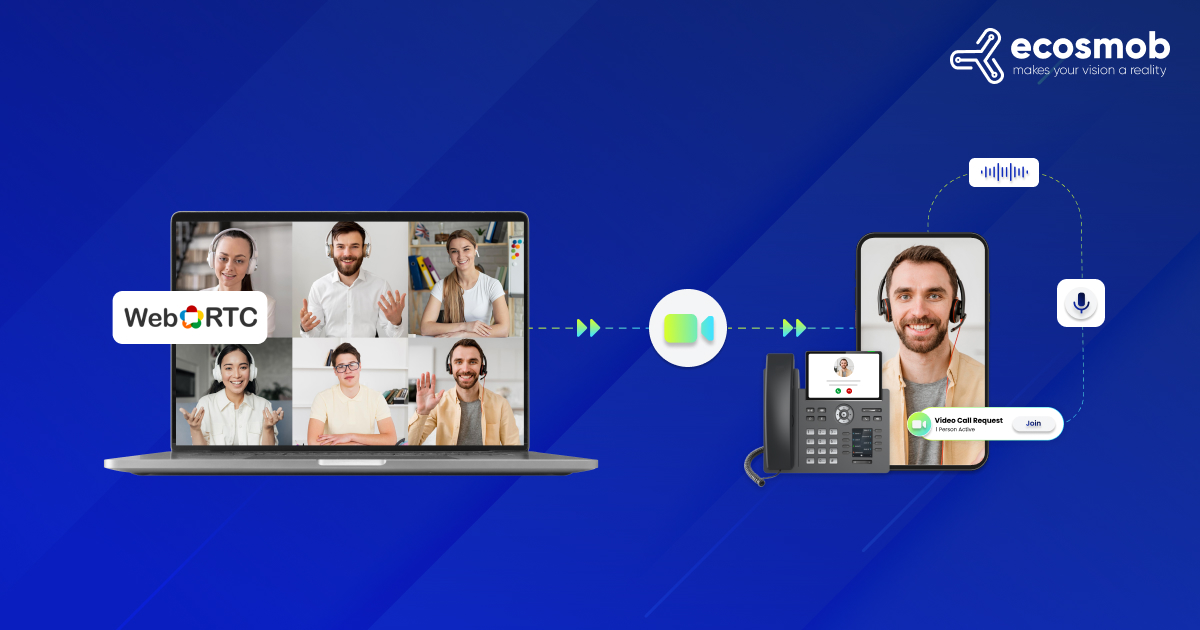
While WebRTC handles real-time browser-based audio, video, and data sharing, it doesn’t natively connect to traditional phone networks. That’s where VoIP comes in. VoIP provides the telephony backbone — SIP trunking, PSTN connectivity, call routing, and number management — that bridges WebRTC sessions with the rest of the world’s phone infrastructure.
When you layer AI on top of both, you get a communication stack that is not just real-time and browser-native but also intelligent and globally connected.
Here’s how the three technologies work together in practice:
- VoIP handles the plumbing. It manages call signaling via SIP, connects to carrier networks, handles number provisioning (DIDs), and routes calls between endpoints — whether those endpoints are desk phones, softphones, or WebRTC browsers.
- WebRTC handles the experience. It enables plugin-free, low-latency audio and video directly in browsers and mobile apps. Users don’t need to install anything they just click and connect.
- AI handles the intelligence. It adds capabilities like real-time transcription, sentiment analysis, intelligent call routing, noise cancellation, and voicebot automation on top of the voice and video streams that VoIP and WebRTC deliver.
Without VoIP, a WebRTC application can only connect browser-to-browser. Without WebRTC, a VoIP system requires softphones or hardware devices. Without AI, neither system can adapt, learn, or automate. The real power emerges when all three converge into a single, unified solution.
Where This Convergence Matters Most:
- Contact Centers: Agents use WebRTC-based browser softphones connected to VoIP trunks, while AI transcribes calls in real time and suggests responses.
- UCaaS Platforms: Unified communication providers combine VoIP calling, WebRTC video, and AI-powered meeting summaries and analytics in one interface.
- CPaaS Solutions: Developers build programmable voice (VoIP), video (WebRTC), and conversational AI into their own products through unified APIs.
- Telehealth: Patients join video consultations via WebRTC in a browser, the session connects to hospital phone systems via VoIP, and AI handles intake triage or post-call documentation.
Businesses evaluating communication platforms should look beyond individual capabilities and ask: does this solution combine VoIP telephony, WebRTC real-time communication, and AI intelligence into a cohesive stack? That convergence is what separates a modern unified solution from a collection of disconnected tools.
Top Companies Offering Unified AI, VoIP, and WebRTC Solutions
A growing number of companies now offer platforms that combine AI, VoIP, and WebRTC into a single unified communication stack. Here are some of the notable providers in this space:
-
Ecosmob Technologies
Ecosmob specializes in building custom communication solutions that bring AI, VoIP, and WebRTC together under one roof. With deep expertise in open-source telephony frameworks like Asterisk, FreeSWITCH, and Kamailio, Ecosmob builds tailored solutions for telecom operators, UCaaS providers, and enterprises. Their offerings include AI-powered voicebots that integrate directly with SIP-based VoIP infrastructure, custom WebRTC development for browser-based real-time communication, and sentiment analysis tools for live call intelligence.
What sets Ecosmob apart is their ability to engineer fully custom solutions rather than offering a one-size-fits-all SaaS product making them a strong choice for businesses that need control over their communication stack.
-
Twilio
Twilio is one of the most widely known CPaaS providers, offering programmable voice (VoIP), video (WebRTC), and AI-driven tools through a developer-first API platform. Their Flex contact center product and AI Assistants framework allow businesses to build custom communication workflows that combine all three technologies. Twilio is best suited for teams with strong development resources who want maximum flexibility.
-
Vonage (Nexmo)
Vonage offers serverless WebRTC APIs alongside their VoIP and messaging services. Their platform supports SIP interoperability for hybrid VoIP-WebRTC setups and includes AI orchestration features for dynamic video rooms and voice interactions. Vonage is a solid choice for mid-size businesses looking for a managed platform with global reach.
-
RingCentral
RingCentral has evolved into an AI-powered UCaaS platform, integrating their RingSense AI engine across VoIP calling, video meetings (WebRTC-based), and contact center operations. Features include live transcriptions, automated summaries, and sentiment analysis. RingCentral is best for enterprises that want a turnkey unified communications solution with built-in AI, rather than building from scratch.
-
Dialpad
Dialpad positions itself as an AI-first business communication platform. Their proprietary DialpadGPT engine powers real-time transcription, call coaching, and automated insights across VoIP and video channels. Dialpad works well for small to mid-sized businesses that want AI-enhanced calling and meetings without complex setup.
-
Telnyx
Telnyx provides Voice SDKs that integrate VoIP services over WebRTC, running on their private IP network for low-latency performance. They offer end-to-end encryption and competitive per-minute pricing, making them a practical choice for developers building custom voice applications that need both VoIP connectivity and WebRTC delivery.
How to Choose the Right Provider:
The right choice depends on what you need. If you want a fully customized solution built on open-source frameworks with complete ownership and control, a custom development partner like Ecosmob is ideal. If you prefer a managed SaaS platform with built-in AI, providers like RingCentral or Dialpad are strong options. And if you’re a developer building communication features into your own product, API-first platforms like Twilio or Telnyx give you the building blocks.
The key question to ask any provider is: does your platform truly unify VoIP telephony, WebRTC real-time communication, and AI intelligence — or are these separate products stitched together?
Mobile WebRTC Application as a Progressive Web Application (PWA)
Transitioning WebRTC applications to PWAs marks a significant leap, particularly for mobile users. PWAs, known for their lightweight and fast-loading capabilities, synergize with WebRTC to deliver seamless communication experiences across devices. This approach ensures:
- Enhanced Performance: PWAs, optimized for mobile devices, improve the performance of WebRTC applications, offering smoother video and audio calls.
- Offline Capabilities: PWAs can function offline, a critical feature for mobile users in areas with unstable internet connectivity.
- App-like Experience: PWAs mimic native applications, providing a familiar and user-friendly interface without app store downloads.
- Service Workers for Enhanced Reliability: PWAs use service workers to handle network requests and cache resources. They enable reliable performance even in fluctuating network conditions, crucial for mobile WebRTC applications.
- Push Notifications Integration: Integrating WebRTC with PWA’s push notification capabilities allows seamless real-time communication alerts, enhancing user engagement and ensuring timely interactions.
- Cross-Platform Compatibility: PWAs offer a unified development approach. It enables WebRTC applications to be easily accessible across various platforms and devices, reducing development time and resources.
AI In Video Applications
WebRTC’s core strength lies in its ability to facilitate real-time video communication. Tying WebRTC development and real-time video through AI significantly revolutionizes video conferencing.
- Background Noise Cancellation: AI algorithms can filter out background noise, ensuring clear audio quality during video calls.
- Facial Recognition and Tracking: AI-enhanced facial recognition can be used to authenticate or enhance user engagement during video interactions.
- Adaptive Streaming: AI can adjust video quality in real time based on available bandwidth, ensuring uninterrupted communication.
- AI-Powered Video Encoding: Advanced AI algorithms can optimize video encoding processes, reducing bandwidth requirements without compromising video quality. This is a critical aspect for mobile and low-bandwidth environments.
- Virtual Backgrounds and AR Filters: Leveraging AI for real-time image processing allows for features like virtual backgrounds and augmented reality filters, enhancing video communications’ visual appeal and engagement. Tools such as SeaArt AI, a powerful AI image generator that creates art from text, further elevate this experience by enabling creators to design highly customized visuals that can be seamlessly integrated into video content, making interactions more immersive and visually compelling.
- Content-Aware Streaming: AI can analyze the content of video streams in real time, adjusting streaming parameters based on content complexity and ensuring efficient bandwidth usage.
- Interactive AI Features: Implementing interactive AI features like real-time polls, Q&A sessions, and feedback collection during live streams can significantly enhance viewer engagement.
AI’s role in video applications is not just limited to enhancement; it’s transformative. These features offer innovative ways to interact within a regular video call.
AI Models Vs. Applications: A Technical Balancing Act
While integrating AI and WebRTC, it’s crucial to balance the sophistication of AI models and the practicality of their application. Heavy AI models may offer advanced features but can burden the system, leading to latency issues. Lightweight, efficient AI models are preferred for smoother integration.
- Model Optimization for WebRTC: Developing lightweight, optimized AI models that can run efficiently alongside WebRTC applications is crucial. Techniques like model quantization, pruning, and knowledge distillation can be employed to reduce model size and computational requirements.
- Edge Computing Integration: Utilizing edge computing can decentralize AI processing, reducing the load on central servers and minimizing latency, a key consideration for real-time applications.
AI and WebRTC Use Cases
AI-Powered Contact Centers
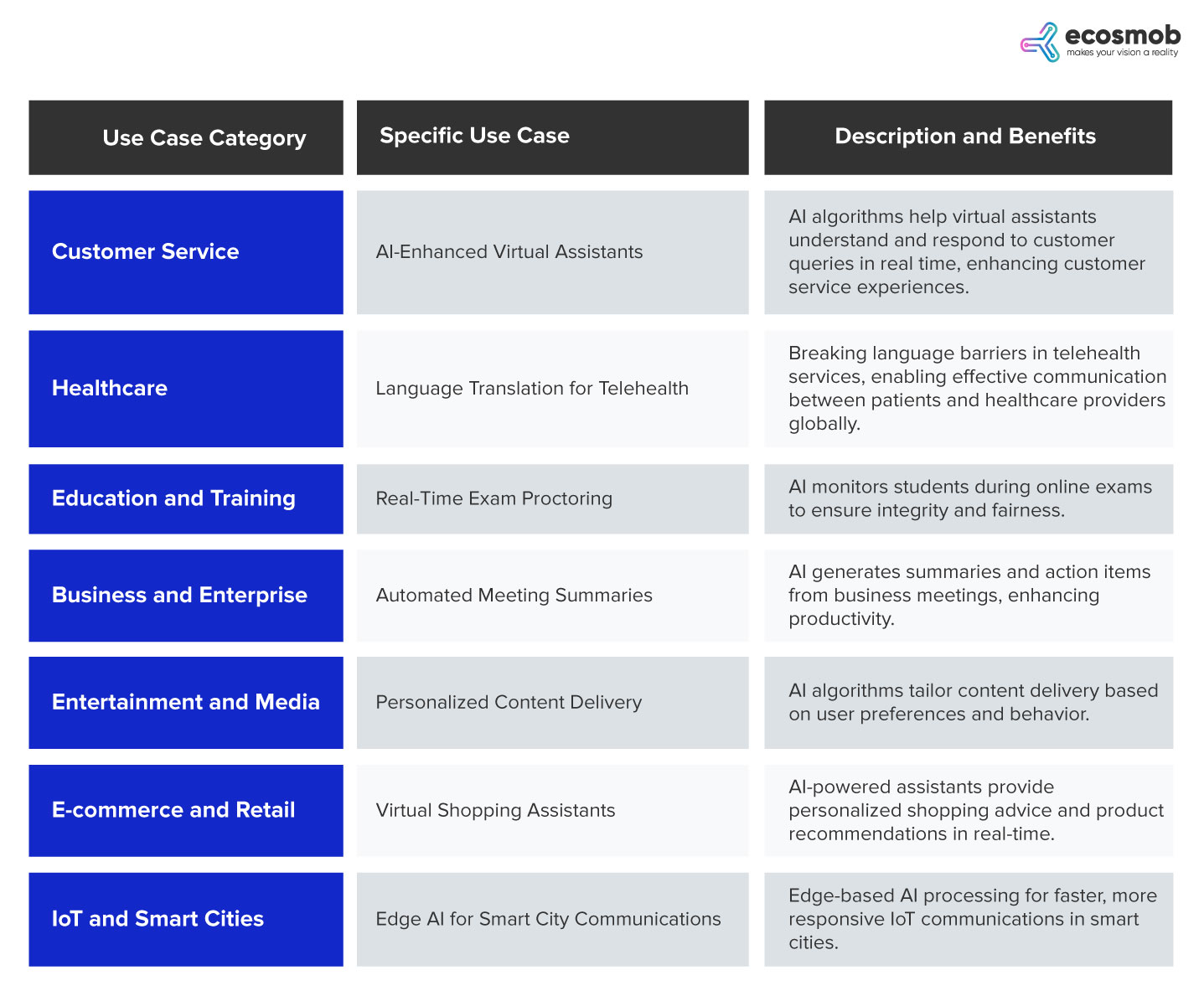
Modern contact centers use VoIP for telephony (SIP trunking, call routing, number management) and WebRTC for browser-based agent desktops — allowing agents to handle calls directly from a web browser without installing any softphone software. AI sits on top of both layers, providing real-time call transcription, sentiment analysis, automated quality assurance scoring, and intelligent call routing that matches callers with the best-suited agent. The result is a contact center where agents are faster, supervisors have real-time visibility, and customers experience shorter wait times.
Telehealth and Remote Patient Consultations
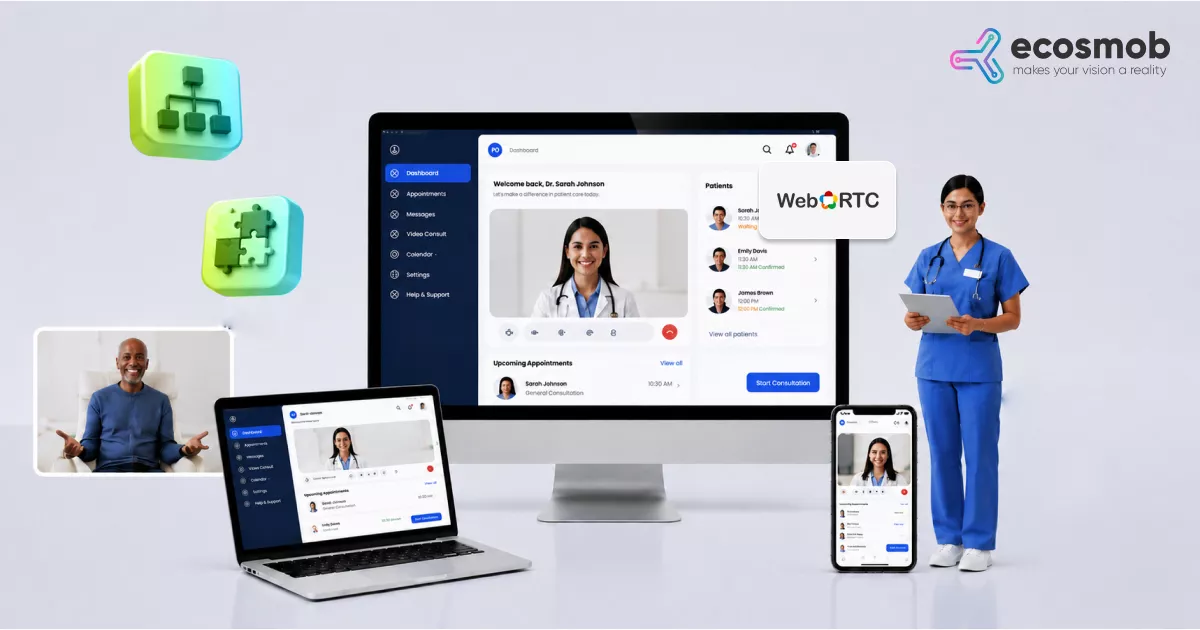
Healthcare providers use WebRTC to offer browser-based video consultations — patients simply click a link to join, with no app downloads required. The underlying VoIP infrastructure connects these sessions to hospital phone systems and enables features like appointment reminders via voice calls or SMS. AI enhances the experience through automated intake triage, real-time medical transcription, post-call documentation, and even preliminary symptom analysis before the clinician joins.
Unified Communication Platforms (UCaaS)
UCaaS providers combine VoIP calling, WebRTC-based video meetings, team messaging, and file sharing into a single platform. AI adds value at every layer — automated meeting summaries, voicemail transcription, intelligent do-not-disturb scheduling based on calendar context, and predictive analytics that surface engagement trends across teams. The best platforms make all three technologies invisible to the user, delivering a seamless experience where voice, video, and intelligence just work.
Browser-Based Sales Dialers
Sales teams use WebRTC-powered click-to-call features embedded in their CRM, where a single click initiates a VoIP call through the browser. AI layers on real-time coaching — surfacing competitor mention alerts, pricing objection rebuttals, and talk-to-listen ratio feedback during live calls. Post-call, AI generates call summaries, updates CRM records, and scores lead quality automatically.
EdTech and Virtual Classrooms
Online education platforms use WebRTC for interactive video classrooms with screen sharing, whiteboarding, and breakout rooms. VoIP integration allows phone-based dial-in for participants with low bandwidth or limited device access. AI powers features like automated attendance tracking, real-time language translation for multilingual classrooms, content-aware recording (highlighting key moments), and engagement scoring that alerts instructors when student attention drops.
Future Prospects of AI-Powered WebRTC Applications
The future of AI and WebRTC integration is promising, with potential advancements like:
- Automated Moderation: AI can moderate real-time communications, ensuring compliance with content policies.
- Personalized User Experiences: AI can tailor communication experiences based on user behavior and preferences.
- Real-Time Language Translation: Advanced AI models are being developed for real-time language translation during video calls, breaking language barriers in global communication.
- Predictive Analysis for Proactive Communication: AI can analyze historical data to predict user needs and behaviors, allowing businesses to address customer requirements and potentially transform customer service paradigms proactively.
- Enhanced Accessibility Features: AI can provide advanced features like real-time sign language translation, making WebRTC applications more accessible to users with disabilities.
Ready to give your business communication the power of AI?
Wrapping Up
The integration of AI and WebRTC is a game-changer in the world of digital communication. This collaboration promises not just enhanced user experiences but also paves the way for innovative applications that were once deemed futuristic.
As we look to the future, the ongoing advancements in AI and ML promise even more innovative and impactful applications, reshaping how we communicate.
Ecosmob Technologies has been leading the way in AI-powered WebRTC solutions, offering you the tools to revolutionize your business communication strategies. Connect with us to explore custom solutions tailored to your unique needs!
FAQs
Can AI-WebRTC solutions be scaled for large enterprises?
Yes, AI-WebRTC solutions are highly scalable, offering robust infrastructure and adaptable features suitable for large enterprise needs.
How does AI integration affect the setup time and complexity of WebRTC applications?
AI can automate several setup processes, making WebRTC applications easier and quicker to deploy while managing complex tasks in the background to simplify user interactions.
What advancements are being made in AI for real-time video background enhancement in WebRTC?
Ongoing advancements include AI algorithms that can dynamically alter or blur video backgrounds in real time, ensuring privacy and minimizing distractions during video calls.
Are AI-WebRTC solutions compatible with existing communication infrastructure?
Yes, they are generally designed to be compatible with existing communication infrastructures, allowing for smooth integration and upgrade paths.
How does AI impact the scalability of WebRTC for handling large numbers of concurrent users?
AI significantly enhances scalability, enabling efficient load balancing, resource allocation, and traffic management to support many concurrent users.
Which companies offer unified AI, VoIP, and WebRTC solutions?
Several companies combine AI, VoIP, and WebRTC into unified communication platforms. Ecosmob Technologies builds custom solutions using open-source frameworks like Asterisk, FreeSWITCH, and Kamailio, integrating AI voicebots and WebRTC directly into VoIP infrastructure. Other notable providers include Twilio (API-first CPaaS), RingCentral (AI-powered UCaaS), Vonage (hybrid VoIP-WebRTC APIs), Dialpad (AI-first business communication), and Telnyx (developer-focused VoIP + WebRTC SDKs). The right choice depends on whether you need a fully custom-built solution or a managed SaaS platform.
How do AI, VoIP, and WebRTC work together in a unified communication solution?
In a unified solution, VoIP provides the telephony layer — handling SIP signaling, PSTN connectivity, call routing, and number management. WebRTC provides the real-time experience layer, enabling plugin-free audio, video, and data sharing directly in browsers and mobile apps. AI adds the intelligence layer, powering features like real-time transcription, sentiment analysis, intelligent routing, voicebot automation, and meeting summaries. Together, these three technologies create a communication stack that is globally connected, browser-native, and intelligent.
Why should businesses look for providers that combine AI, VoIP, and WebRTC instead of using separate tools?
Using separate tools for AI, VoIP, and WebRTC creates integration headaches, data silos, and inconsistent user experiences. A unified solution ensures that intelligence (AI) operates natively on the same voice and video streams (VoIP + WebRTC) rather than being bolted on after the fact. This results in lower latency for real-time features, simpler architecture, reduced vendor management, and a more seamless experience for both end users and administrators.