













QUICK SUMMARY
Telephony has historically resisted containerization because SIP and RTP are stateful, real-time protocols that hate the ephemeral nature of containers. However, running VoIP Kubernetes workloads is now the standard for modern carriers who need auto-scaling and rapid feature deployment.
This blog details the architectural changes required for physical to cloud native VoIP migration, specifically addressing how to handle RTP media, ensure zero-downtime rolling upgrades, and calculate the ROI of leaving bare metal behind.
For decades, telecom engineers swore by physical servers. The logic was sound: Voice is real-time. It needs direct hardware access, predictable interrupts, and zero jitter. Virtualization layers introduced latency, and containers seemed too unstable for five-nines reliability.
But today, physical servers are the bottleneck. If you need to scale up for a Black Friday spike, you can’t order and rack a new server in 10 minutes. If you want to deploy a new feature, you can’t risk patching a monolithic active-active cluster that holds 50,000 live calls.
Migrating telephony workloads to Kubernetes isn’t just about saving rack space; it’s about survival. It allows you to treat your voice infrastructure like software (mutable, scalable, and resilient). But you cannot simply “Dockerize” Asterisk and push it to a cluster. You need a specific architectural pattern to handle the unique demands of SIP signaling and RTP media.
When to Migrate Telephony to Kubernetes?
You should trigger a VoIP Kubernetes migration when your operational costs (OpEx) of managing hardware exceed the engineering cost of building a platform.”
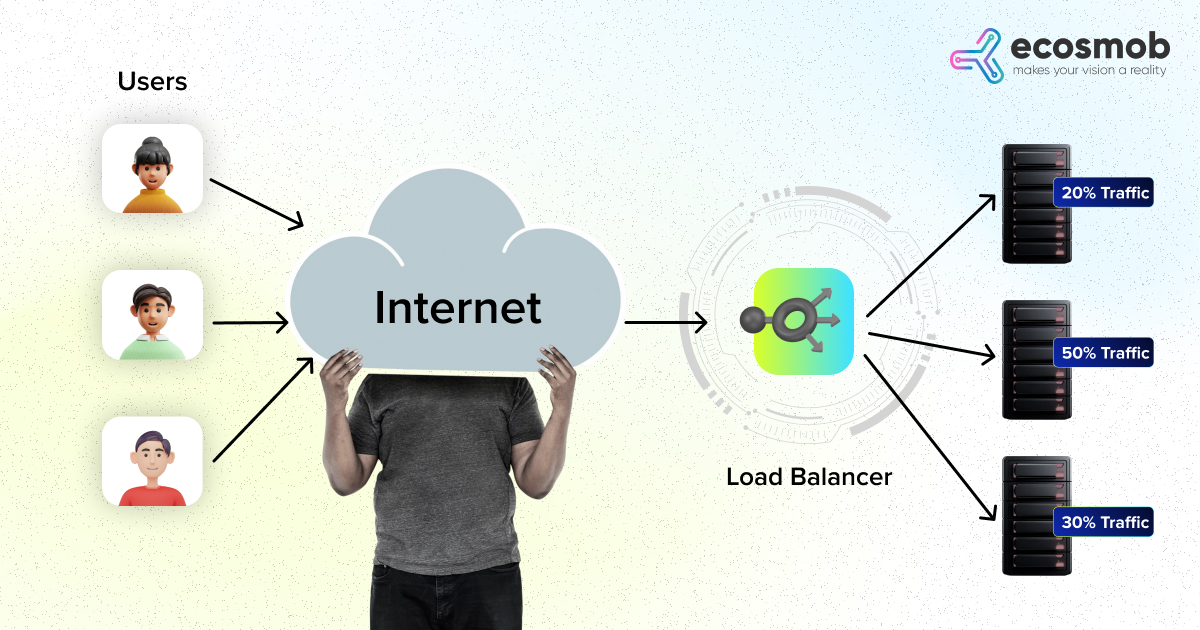
Look at the scalability wall. Physical servers impose a “Step Function” cost model.
- Scenario: You are at 80% capacity. You need 10% more.
- Physical: You must buy a whole new server (100% cost for 10% gain).
- Kubernetes: You add a node to the cluster or auto-scale pods (Linear cost for linear gain).
Calculating the ROI of Migrating Telephony Infrastructure to Kubernetes
Don’t just measure hardware savings. The real ROI comes from “Day 2” operations.
- Feature Velocity: How much faster can you ship? (K8s teams often ship 10x faster).
- Resiliency: What is the cost of your last outage? (Self-healing pods recover in seconds, not hours).
- Utilization: Physical servers often run at 15% CPU utilization. K8s “bin-packing” can drive this to a much higher number, effectively shrinking your hardware footprint.
Physical Servers vs. Kubernetes ROI Comparison
| Metric | Physical Servers | Kubernetes (Cloud-Native) |
| Scaling Unit | Entire Server (Weeks to deploy) | Single Pod (Seconds to deploy) |
| Utilization | Low | High |
| Recovery Time | Hours (Manual failover/Repair) | Seconds (Auto-restart) |
| OpEx Focus | Maintenance & Hardware refresh | Engineering & Feature dev |
Stuck with rigid hardware capacity?
Architecting SIP and RTP for Kubernetes
This is where most engineers may fail. VoIP containerization is hard because SIP is a control protocol (Port 5060), but RTP is a dynamic media stream (Ports 10000-20000).
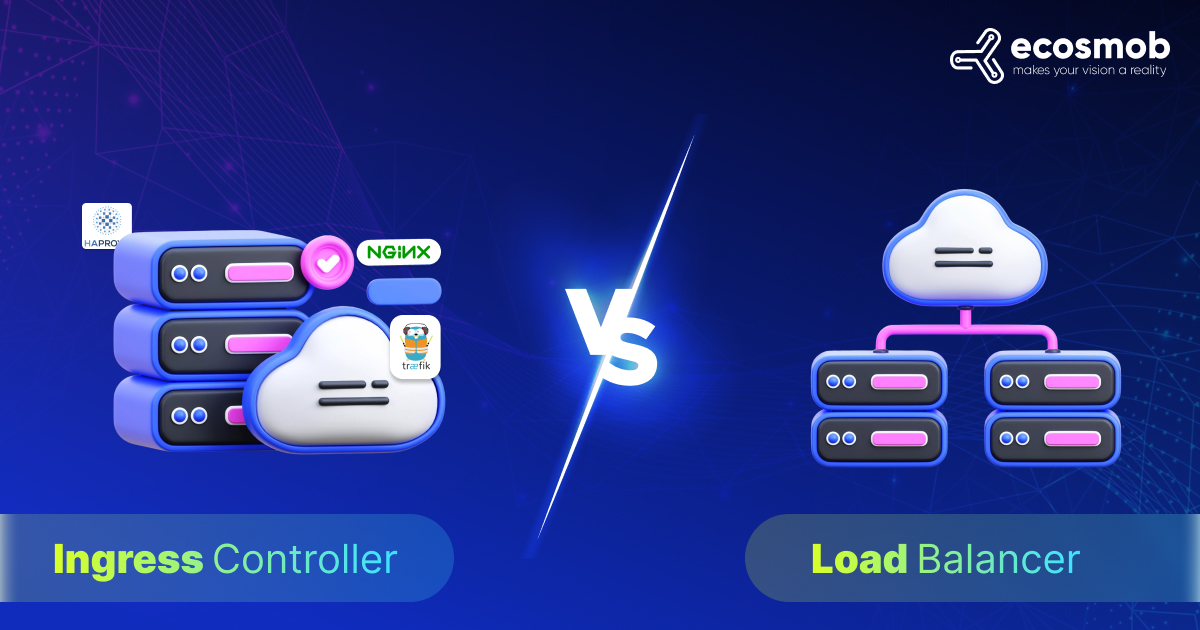
Standard Kubernetes Ingress controllers only understand HTTP/HTTPS. They will drop your voice packets.
The solution lies in the “Edge Proxy” pattern.
You must separate your cluster into two layers:
- The Edge (SIP-Aware Ingress): Do not use a standard K8s Ingress. Deploy a SIP Proxy (like Kamailio or OpenSIPS) as a DaemonSet using hostNetwork: true.
- Why? This binds the proxy directly to the physical network card, bypassing the NAT layers that destroy VoIP audio. It acts as the “Traffic Cop,” dispatching calls to internal media pods.
- The Core (Media Pods): Deploy your Media Servers (FreeSWITCH/Asterisk) as StatefulSets.
- Why stateful? Telephony is not stateless. If Pod A is handling a call, that call must stay on Pod A. StatefulSets give you stable network IDs (e.g., media-0, media-1).
Handling RTP Audio
You cannot use standard Service IPs (ClusterIP) for RTP because of the double-NAT problem.
- Method A (Multus CNI): Use the Multus CNI plugin to give each pod a secondary, direct interface to the physical network.
- Method B (NodePort Ranges): Expose a massive range of NodePorts (10000-20000) and configure your SIP proxy to advertise the Node’s public IP in the SDP (Session Description Protocol).
Ecosmob Expert Tip
To fix this, enable the Static CPU Manager Policy in your Kubelet configuration. This gives your voice containers “exclusive” CPU cores. The Linux kernel will literally pin your FreeSWITCH process to Core 1 and Core 2, preventing any other pod from touching them.
This guarantees the same deterministic performance as bare metal.
Achieving Zero-Downtime Rolling Upgrades
On physical servers, upgrades usually mean a maintenance window at odd hours. In Kubernetes, you can upgrade at noon without dropping a single call.
Kubernetes attempts to kill pods quickly, and you must tell it to wait.
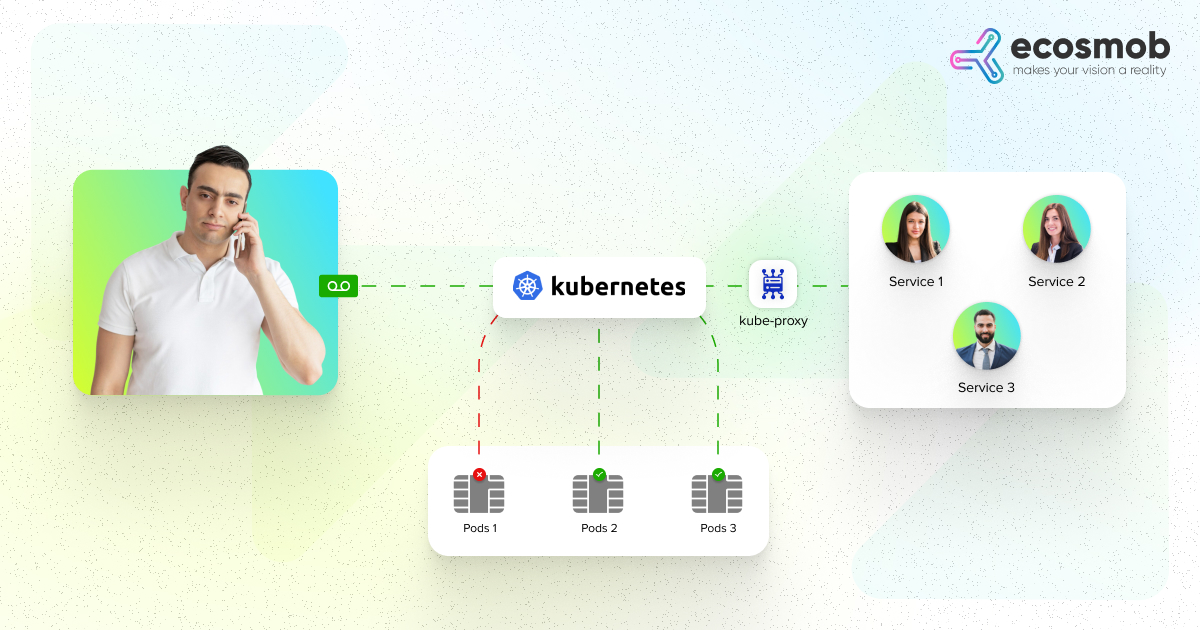
- Readiness Probes: When you want to upgrade, K8s marks the old pod as “Not Ready.” The Service Load Balancer stops sending new calls to it.
- PreStop Hook: Configure a preStop hook script in your container.
- Script Logic: “Check active call count. If > 0, wait 10 seconds. Repeat.”
- This keeps the container alive until the last user hangs up.
- TerminationGracePeriodSeconds: Set this to a high value (e.g., 3600 seconds/1 hour) in your deployment YAML. This ensures K8s doesn’t force-kill the pod while a long conference call is active.
Can’t ship features fast enough?
Common Migration Mistakes
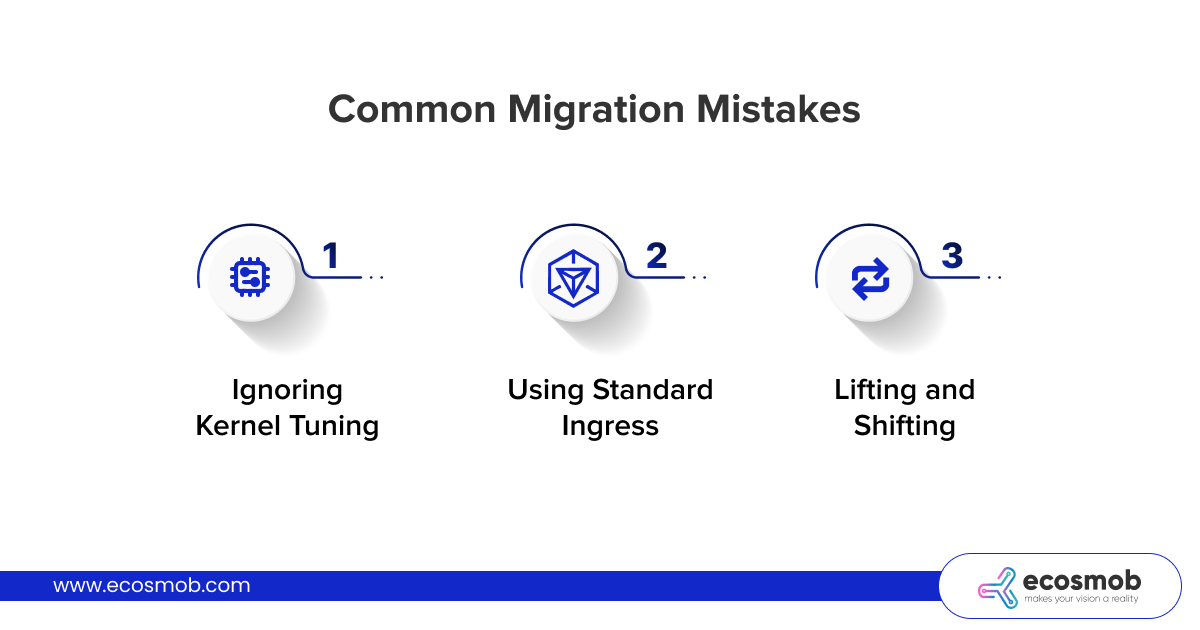 Here are some common VoIP Kubernetes migration mistakes we have observed over the years:
- Ignoring Kernel Tuning: Default Linux settings are bad for VoIP. You must tune sysctl parameters (like net.core.rmem_max for UDP buffers) on the underlying nodes.
- Using Standard Ingress: Trying to shove SIP traffic through an AWS ALB or Nginx Ingress will result in broken registration and one-way audio. You need a cloud-native ingress controller designed specifically for SIP (like Ecosmob’s SIP Ingress Controller!)
- Lifting and Shifting: Taking a 10GB VM image and running it as a container is not “Cloud Native.” It’s just a heavy container. You must decompose the monolith.
The transition from physical hardware to Kubernetes VoIP is inevitable for any provider that wants to compete on speed and scale. It replaces the slow, expensive process of “Rack and Stack” with the instant agility of kubectl scale.
While the networking hurdles are real (specifically around SIP NAT and RTP routing), they are solved problems. By adopting the Edge Proxy pattern and respecting the stateful nature of voice, you can build a platform that is not only cheaper to run but infinitely easier to manage.
Ready to containerize your voice platform? Contact our K8s VoIP experts!
FAQs
How do you architect Kubernetes for SIP signaling and RTP media workloads?
SIP signaling requires a stable ingress, typically handled by a SIP Proxy (Kamailio) running as a DaemonSet to bind to the host network. RTP media requires a direct path to the pod to avoid latency; this is often achieved using the Multus CNI plugin to give pods a secondary network interface that bypasses the standard Kubernetes overlay network.
Can Kubernetes support rolling upgrades without dropping calls?
Yes, but not out of the box. You must configure preStop hooks that check for active calls and prevent the pod from shutting down until it is empty. You also need to set a long terminationGracePeriodSeconds (e.g., 1 hour) to ensure long-duration calls are not cut off during the drain process.
How to calculate ROI for migrating telephony infrastructure to Kubernetes?
ROI is calculated by comparing the "Step Function" cost of buying physical servers (CapEx) against the linear scaling cost of cloud resources (OpEx). Additionally, factor in the "Day 2" savings: reduced downtime (due to self-healing pods) and increased engineering velocity (deploying features daily instead of quarterly).
Why do physical servers limit VoIP scalability at higher call volumes?
Physical servers have a hard capacity ceiling. Once you reach that limit, you must physically purchase and install new hardware, which takes weeks. This forces you to over-provision hardware "just in case," leading to wasted capital. Kubernetes allows you to scale up instantly to meet demand and scale down to save money.
What are the common mistakes when containerizing VoIP applications?
The most common mistakes are failing to tune the underlying Linux kernel for UDP performance, attempting to use standard HTTP Ingress controllers for SIP traffic, and failing to configure CPU pinning, which leads to "noisy neighbor" jitter issues.