











QUICK SUMMARY
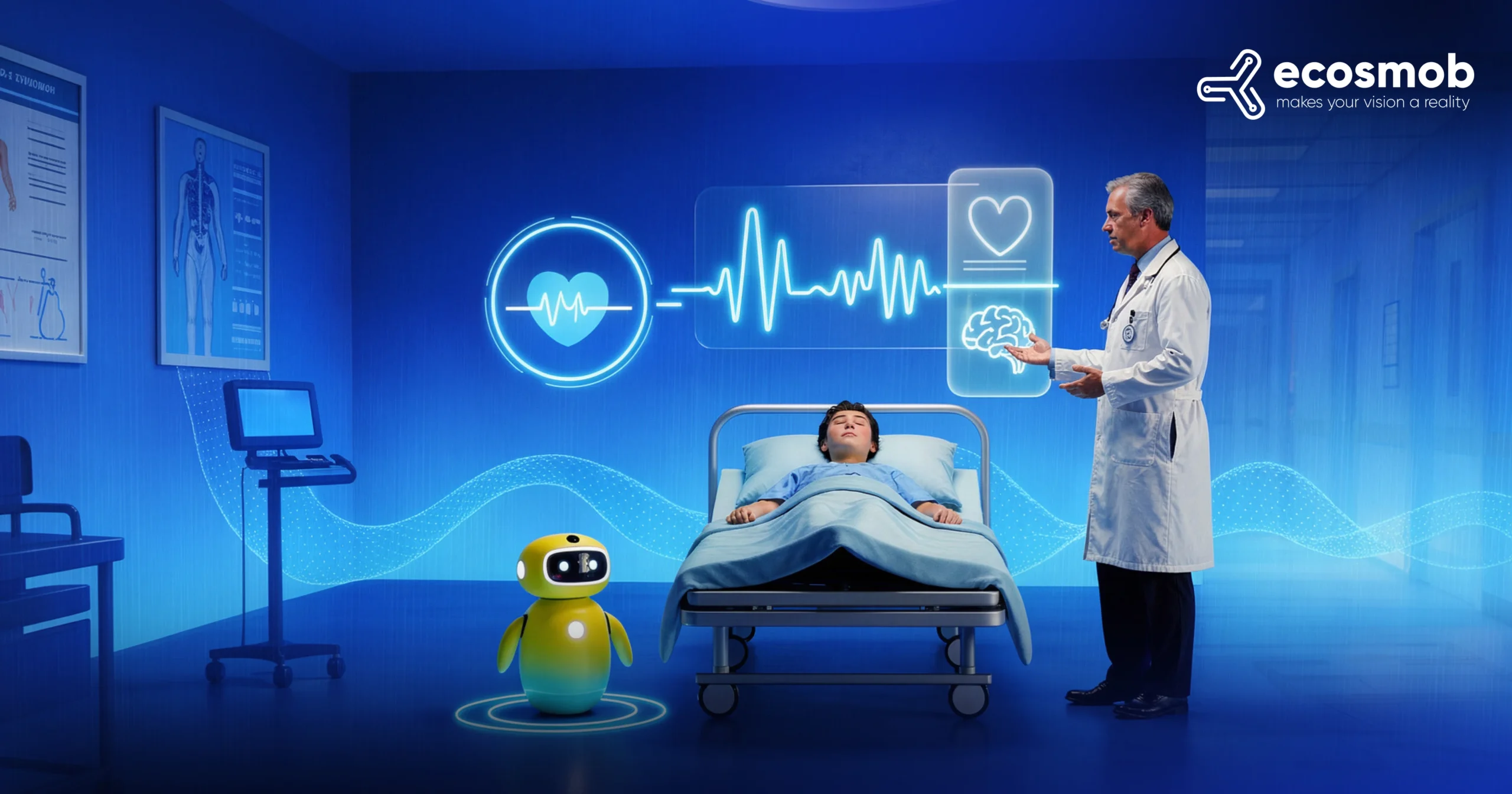
AI as a doctor might be an exaggeration, but a nurse? Oh yes! It can flag changes early, guide next steps, and keep a constant watch without pause.
AI in healthcare isn’t a future promise, it’s already driving real decisions every day. From faster diagnoses to smoother operations, this blog breaks down 10 real-world examples with measurable impact.
Google “AI in healthcare” and you’ll drown in buzzwords. You’ll see “AI does this” and “AI has done that.” But what’s real?
The real shifts aren’t in headlines, they’re happening inside hospitals where decisions are already faster and more data-driven. A scan gets flagged early, a drug moves to testing in months, and a patient is monitored at home.
These shifts are redefining care every day.
What’s changing isn’t just technology, it’s decision-making. AI isn’t replacing doctors; it’s reducing friction and improving outcomes.
As you scale this, you need a compliant, trust-centered platform that keeps data secure without slowing down decision-making.
Most content talks about possibilities and what AI solutions could do. This blog shows proof: real implementations and measurable impact.
What Can AI Do in Healthcare?
AI is actively working across diagnostics, drug discovery, surgical procedures, patient monitoring, and hospital operations, improving both clinical decisions and operational efficiency.
AI solutions are embedded within real healthcare workflows, enabling faster analysis, early detection, and more coordinated care delivery at scale.
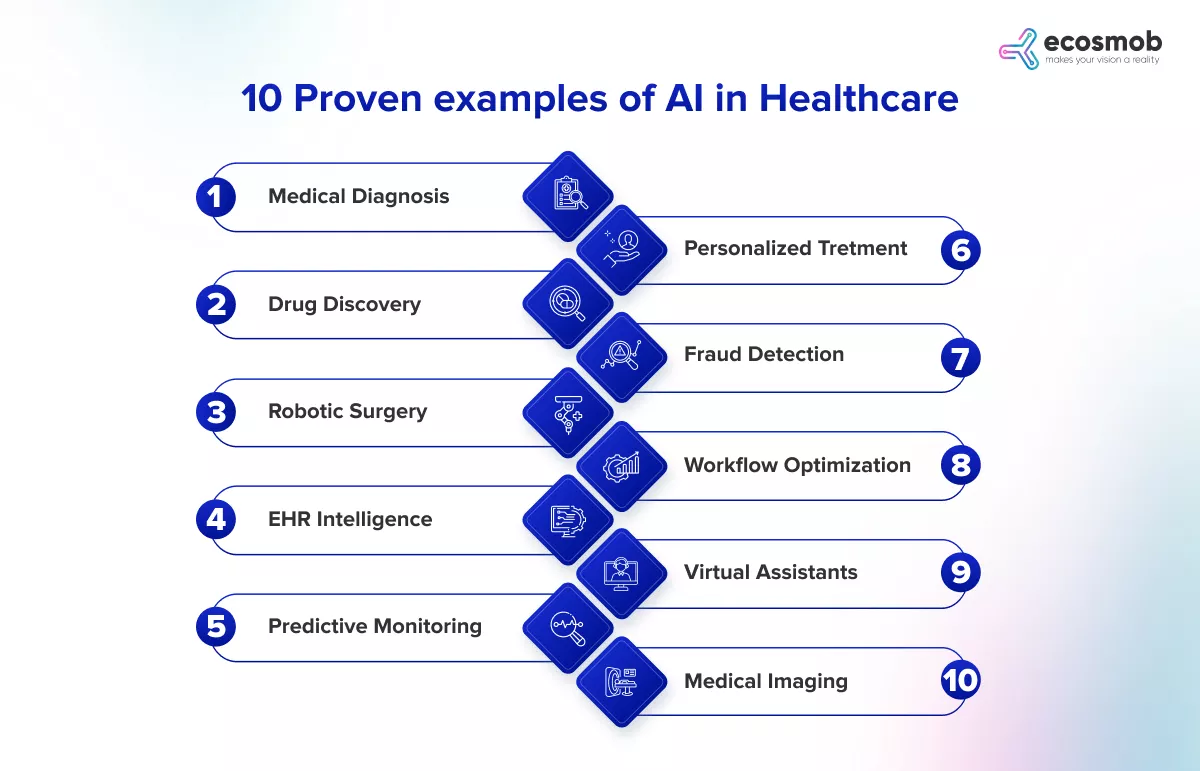
1. AI in Medical Diagnosis
When radiologists review hundreds of scans daily, the risk isn’t a lack of expertise, it’s cognitive overload. AI steps in as a second layer of precision.
Google developed Google Health, an AI system for breast cancer detection that analyzes mammograms and flags abnormalities earlier and more consistently. It was trained on large-scale datasets to detect subtle patterns that are often missed during manual review, helping standardize screening accuracy across populations.
What changed:
- Reduced false positives and false negatives
- Improved consistency across large-scale screening
A study published in Nature found that Google’s AI model reduced false positives by 5.7% (US) and 1.2% (UK), and false negatives by 9.4% (US) and 2.7% (UK) compared to radiologists.
Business Impact:
Healthcare providers can significantly reduce diagnostic errors while increasing throughput without overburdening radiologists. Earlier and more accurate detection lowers downstream treatment costs and improves patient survival rates. It also helps optimize resource allocation by minimizing unnecessary follow-ups and repeat scans, ultimately improving both operational efficiency and patient trust.
From first query to follow-up, AI keeps patient care consistent and connected.
2. AI in Drug Discovery
Drug discovery used to be a decade-long gamble. AI is turning it into a data-driven pipeline.
Insilico Medicine used AI models to identify and design drug candidates for fibrosis by analyzing molecular structures and predicting viable compounds. Their AI platform rapidly shortlisted potential molecules, significantly reducing the need for early-stage lab experimentation.
What changed:
- AI analyzed molecular structures and predicted viable compounds
- Reduced dependency on trial-and-error lab processes
According to a study in Nature Biotechnology, AI-enabled drug discovery can reduce early-stage discovery timelines from 4–5 years to under 1 year.
Business Impact:
Pharmaceutical companies can drastically reduce R&D expenditure while accelerating time-to-market for new drugs. Faster discovery cycles improve competitive advantage and allow organizations to respond quickly to emerging diseases. This also increases the probability of successful clinical outcomes, reducing financial risk associated with failed trials and enabling more efficient capital allocation.
3. AI in Robotic Surgery
Surgery is precision under pressure. AI helps remove variability.
Intuitive Surgical developed robotic-assisted systems that enhance visualization and control, allowing surgeons to perform minimally invasive procedures with higher precision and stability.
What changed:
- AI-assisted systems improve motion accuracy
- Reduced human error in complex procedures
AI-assisted surgical systems contribute to improved precision and reduced complications in minimally invasive procedures (widely documented across clinical studies).
Business Impact:
Hospitals can improve surgical success rates while reducing post-operative complications and readmissions. Shorter recovery times free up hospital beds faster, increasing capacity and revenue potential. At the same time, improved surgical outcomes enhance institutional reputation and patient satisfaction, which directly impacts long-term patient retention and trust.
4. AI in Electronic Health Records (EHR)
EHRs used to store data. Now they interpret it.
Epic Systems uses AI to analyze patient records in real time, identifying risk patterns and suggesting clinical interventions based on historical and live data.
What changed:
- Real-time analysis of patient history
- Predictive alerts for clinicians
As these systems evolve, maintaining HIPAA in healthcare call center environments becomes critical to ensure secure handling of patient interactions and records.
AI-driven systems can analyze large patient datasets to identify patterns and support clinical decision-making.
Business Impact:
Healthcare providers gain better control over patient outcomes through proactive care, reducing costly readmissions and improving care continuity. Clinicians spend less time navigating data and more time making decisions, improving productivity. This also strengthens compliance and reporting capabilities, reducing regulatory risks and enhancing operational transparency.
5. AI in Predictive Analytics & Remote Monitoring
The biggest shift in healthcare is moving from reaction to prediction.
Philips Healthcare developed AI-powered monitoring systems that continuously track patient vitals and detect early signs of deterioration, even outside hospital settings.
What changed:
- Early detection of deterioration
- Continuous monitoring outside hospitals
This shift is closely tied to advancements in video conferencing in healthcare, enabling real-time patient evaluation without physical visits.
A research says, remote patient monitoring can reduce hospitalizations by up to 38% and emergency visits by 51%.
Business Impact:
Providers can reduce the burden on critical care units while improving patient outcomes through early intervention. Continuous monitoring lowers the need for frequent in-person visits, optimizing resource utilization and reducing operational costs. It also enables scalable care delivery models, allowing healthcare systems to serve more patients without proportionally increasing infrastructure.
6. AI in Personalized Treatment
Healthcare is shifting from standardized protocols to individualized care.
Tempus uses AI to analyze clinical and molecular data to recommend personalized cancer treatments, aligning therapies with each patient’s genetic profile.
What changed:
- Data-driven treatment selection
- Better matching of therapies to patients
Research published in Nature Medicine shows AI-driven precision medicine improves treatment response rates, particularly in oncology.
Business Impact:
Healthcare providers can improve treatment effectiveness while reducing the cost and time associated with ineffective therapies. Personalized care increases patient satisfaction and trust, leading to better adherence and outcomes. It also enables more efficient use of expensive treatments, ensuring resources are allocated where they deliver the most value.
7. AI in Fraud Detection
Healthcare loses billions not to disease, but to inefficiencies and fraud.
IBM Watson Health uses AI to analyze billing and claims data, identifying anomalies and suspicious patterns across massive datasets.
What changed:
- Automated fraud detection across large datasets
- Identification of unusual claims patterns
The FBI estimates healthcare fraud costs the US over $100 billion annually, and AI significantly improves detection rates through pattern recognition.
Business Impact:
Organizations can significantly reduce financial leakage by identifying fraudulent activities early. Automated monitoring lowers the cost and effort of manual audits while improving compliance with regulatory standards. This not only protects revenue but also strengthens trust with stakeholders and insurers.
8. AI in Hospital Workflow Optimization
Hospitals don’t fail because of lack of care, they fail because of bottlenecks.
Qventus uses AI to optimize patient flow, staffing, and resource allocation by predicting demand and identifying operational inefficiencies.
What changed:
- Reduced wait times
- Improved bed and staff utilization
Industry analyses, including McKinsey insights, indicate that AI-driven workflow optimization can improve hospital operational efficiency significantly, often in the range of 20–30%, depending on implementation.
Business Impact:
Hospitals can increase patient throughput without expanding infrastructure, directly improving revenue potential. Better resource allocation reduces staff burnout and improves operational stability. At the same time, shorter wait times and smoother experiences enhance patient satisfaction and overall care quality.
9. AI in Virtual Health Assistants
Healthcare access is limited by human availability. AI removes that constraint.
Babylon Health uses AI-powered chatbots to provide symptom checking and triage support, enabling instant patient interaction at scale.
What changed:
- Instant patient interaction
- Reduced burden on healthcare staff
This is where chatbot assistance in healthcare becomes essential, handling high-volume patient queries without compromising response quality.
Accenture insights suggest that AI-powered virtual assistants can handle a significant portion of routine healthcare interactions, particularly in areas like patient queries, triage, and scheduling.
Business Impact:
Healthcare providers can scale patient support without increasing staff costs, improving accessibility and response times. This reduces operational pressure on frontline teams and allows human resources to focus on complex cases. It also enhances patient engagement by providing immediate, consistent communication.
10. AI in Medical Imaging
Time is everything in critical care. AI speeds it up.
Aidoc uses AI to analyze CT scans and detect critical findings, automatically prioritizing urgent cases for faster review by radiologists.
What changed:
- Faster scan analysis
- Automated prioritization of critical cases
Studies show AI-assisted imaging can reduce time-to-diagnosis in critical cases by up to 30–50% (Radiology Journal).
Business Impact:
Healthcare providers can significantly improve response times in emergency scenarios, directly impacting patient survival rates. Faster prioritization ensures critical cases are not delayed, improving overall care efficiency. This also reduces backlog in imaging departments, allowing better utilization of diagnostic infrastructure and faster patient turnaround.
AI in healthcare is solving operational and clinical problems simultaneously.
The best care experience is the one patients don’t have to think about.
Common Challenges Healthcare Providers Face?
AI in healthcare doesn’t fail because of capability, it struggles because of complexity. Real environments bring fragmented data, legacy systems, compliance pressure, and teams that can’t afford disruption.
Fragmented and Unstructured Data
Patient data often lives across multiple systems, EHR Software, labs, billing platforms, and communication tools. These systems don’t always sync cleanly, making it difficult to create a unified, real-time view. Without structured and connected data, AI models struggle to deliver accurate and actionable insights.
Integration with Legacy Systems
Healthcare infrastructure isn’t built overnight. Many providers rely on legacy systems that weren’t designed for AI or real-time processing. Integrating new capabilities without disrupting existing workflows becomes a technical and operational challenge.
Regulatory and Compliance Pressure
Handling healthcare data means operating under strict regulations. Ensuring compliance with standards like HIPAA requires secure data handling, encrypted communication, and complete audit trails. Any gap here can slow down adoption or increase risk.
Workflow Disruption and Team Adoption
Even the most advanced solution fails if it complicates daily work. Clinicians and staff are already managing high workloads. If AI tools add friction instead of reducing it, adoption becomes a challenge.
Scalability Across Departments
What works in one department doesn’t always translate across the organization. Scaling AI from a pilot use case to full deployment often exposes gaps in infrastructure, data flow, and coordination.
The challenge isn’t adopting AI, it’s making it work within real healthcare environments. That’s why selecting the right solution becomes a critical decision.
What to Look for in an AI Healthcare Solution
Choosing an AI solution isn’t about features, it’s about fit. The right system doesn’t just perform well in isolation, it works seamlessly within your existing ecosystem and improves how care is delivered.
Seamless Interoperability
An effective solution should integrate smoothly with EHRs, communication systems, and existing platforms. It should enhance current workflows, not create new silos or require complete system overhauls.
Real-Time Data Processing
Healthcare decisions often depend on timing. The ability to process and act on data instantly, whether it’s patient vitals or operational insights, is essential for delivering timely care.
Built-In Security and Compliance
Security isn’t an add-on, it’s foundational. The solution must support data privacy, encryption, access controls, and compliance with healthcare regulations, ensuring trust across all stakeholders.
Scalability Across Use Cases
A solution should grow with the organization. What starts as a single use case, like monitoring or triage, should scale across departments without requiring significant rework.
Customization for Real Workflows
Every healthcare provider operates differently. The right solution adapts to existing workflows, whether it’s patient engagement, care coordination, or operational management, rather than forcing teams to change how they work.
Ease of Use and Adoption
Technology should simplify work, not complicate it. Intuitive interfaces, minimal training requirements, and smooth integration into daily routines are key to long-term adoption.
The right solution fits into your workflows and strengthens them, not disrupts them. That raises the natural question decision-makers care about.
You focus on patients. Let AI quietly handle what slows you down.
How Ecosmob Helps You Turn AI Into Real Outcomes?
Most AI strategies fail at the same point: execution. Models exist, but they don’t connect with systems. Insights exist, but they don’t translate into action.
That’s where Ecosmob comes in.
Ecosmob focuses on embedding AI directly into communication and healthcare workflows, not as an add-on, but as an operational layer that delivers outcomes.
And, what does this look like in practice?
- AI-powered Voice & Chat Automation
Intelligent voicebots and chatbots handle patient interactions, appointment scheduling, and triage at scale.This includes deploying voice agents in healthcare that manage conversations with patients while ensuring compliance and contextual accuracy. - Real-time Data Processing
AI models are integrated into systems to analyze patient data and trigger timely actions. For high-volume interaction layers, solutions like an AI voicebot for L1 support help automate first-level patient queries and reduce operational load. - CPaaS + AI Integration
Seamless communication infrastructure that connects AI insights with patient engagement channels. - Custom AI Workflows
Built around your use cases, whether it’s remote monitoring, alerts, or care coordination.
Healthcare doesn’t need more tools. It needs systems that work together.
Ecosmob bridges that gap by combining AI, communication, and real-time decision-making into one cohesive ecosystem.
AI delivers value only when it’s embedded into workflows, not isolated as technology. The next step isn’t exploring AI, it’s implementing it where it creates a measurable impact.
The Bottom Line?
Across diagnosis, treatment, operations, and patient engagement, one pattern stands out: AI isn’t replacing healthcare systems, it’s refining them quietly, precisely, and at scale. The real shift isn’t just technology, it’s how decisions are made faster, errors are reduced, and workflows become more predictable and efficient.
But these results don’t come from adopting AI as a concept. They come from integrating it into the right workflows and supporting it with the right infrastructure.
That’s where Ecosmob fits in, helping healthcare providers connect AI with real-time communication, data flow, and operational systems so improvements don’t stay theoretical, they show up in everyday care delivery.
FAQs
What are real-world examples of AI in healthcare?
Real-world examples include AI in medical diagnosis, drug discovery, robotic surgery, EHR optimization, predictive analytics, remote patient monitoring, fraud detection, and virtual health assistants. Companies like Google Health and Tempus are already applying these technologies in clinical environments.
How is AI used in medical diagnosis?
AI analyzes medical images such as X-rays, CT scans, and MRIs to detect diseases earlier and more accurately. For example, Google Health has developed models that assist in identifying breast cancer in mammograms with improved accuracy.
What are the benefits of AI in healthcare?
AI improves accuracy, reduces operational costs, speeds up diagnosis and treatment, and enables personalized care. It also helps healthcare providers make faster and more informed decisions.
How does AI improve patient care?
AI enables continuous monitoring, early risk detection, and personalized treatment recommendations. Tools like remote monitoring systems and virtual assistants ensure timely intervention and better patient engagement.
What role does AI play in drug discovery?
AI accelerates drug discovery by analyzing molecular data, predicting drug interactions, and identifying viable compounds faster. Companies like Insilico Medicine use AI to reduce development timelines significantly.