The best global voice AI providers with telecom support combine low-latency conversational intelligence with carrier-grade global telephony infrastructure (including native SIP trunking, PSTN connectivity, and regional points of presence).
Almost everyone building with voice AI starts the exact same way. You open a web dashboard, test an agent over your office Wi-Fi, and it feels fast. The responses land in a few hundred milliseconds, interruptions work, and the voice sounds convincingly human.
Then you plug that setup into an actual phone number, dial it from an ordinary mobile phone, and the conversation starts falling apart.
Audio packets get dropped across carrier handoffs. The bot takes over a second to respond because your media server is sitting halfway across the world from where the call originated. Worse, the moment you speak up to correct the bot, it keeps droning on because the audio buffer didn’t flush fast enough.
Tough news? A smart language model can’t fix bad telecom routing. When you take voice AI to production across multiple countries, your SIP trunks, jitter buffers, and local Points of Presence (PoPs) dictate your customer experience far more than prompt tweaks ever will.
Let’s dig into how the major platforms handle live phone lines and how to pick the right architecture for your team.
The Top 5 Global Voice AI Providers With Telecom Support
When you compare these platforms, look past their dashboards. The real differences come down to how they route audio packets, how flexibly they integrate with your existing telecom carriers, and how cleanly they handle conversational interruptions.
Here is an honest look at five leading platforms running international telephony workloads today.
1. Retell AI
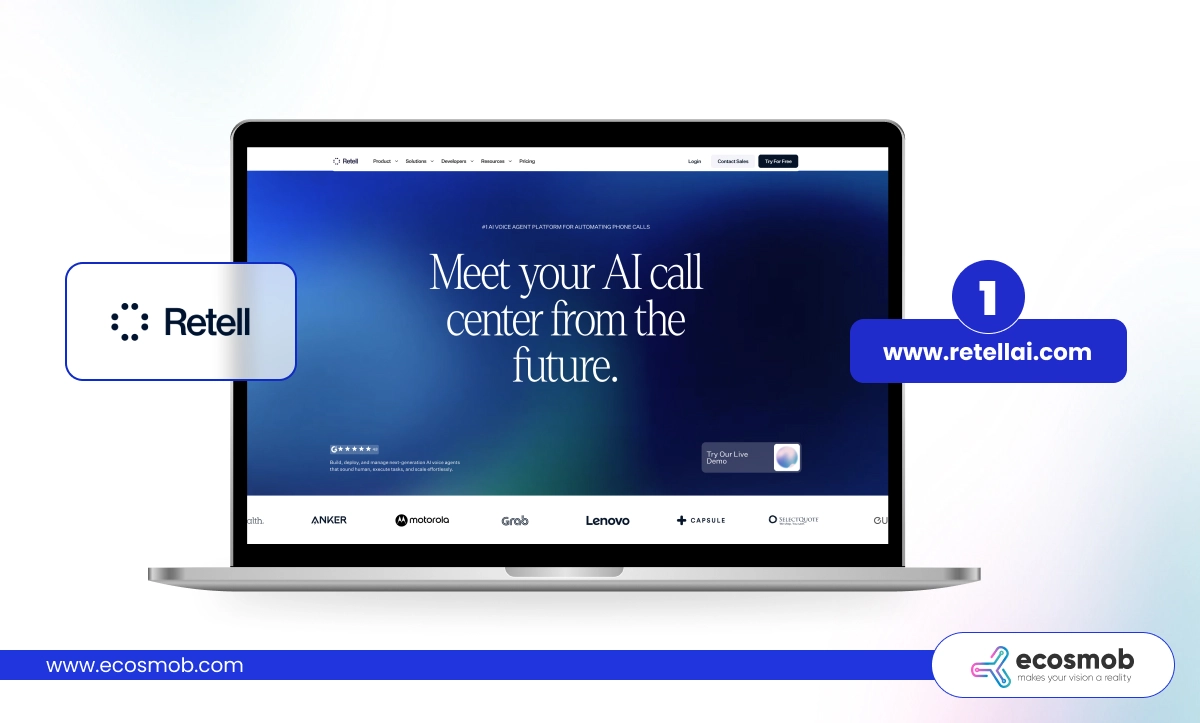
Retell built an orchestration platform specifically for teams that want reliable conversational agents up and running without having to write custom state machines or low-level audio streaming glue.
Best for: Production-Ready Inbound Support
Telecom & SIP Layer:
Retell lets you buy standard DIDs directly or bring your own carrier trunks over SIP URIs. If you already have active numbers on Twilio, Telnyx, or your own edge SBC, connecting them takes just a few minutes.
Turn-Taking & Interruption:
Their local voice activity detection (VAD) handles conversational barge-in smoothly. When a human speaks, the outbound audio stream stops within roughly 100ms.
Key Features:
- Clean Bring-Your-Own-Carrier (BYOC) SIP trunk support.
- Easy model switching between OpenAI, Claude, and specialized open-source models.
- Adjustable background noise filters and interruption thresholds.
- Real-time webhooks for live database and CRM lookups.
Where It Wins Outright:
Mid-market support teams that need a dependable inbound voice agent with solid turn-taking mechanics and minimal setup friction.
The Catch:
Everything runs inside Retell’s managed cloud. If your architecture requires low-level kernel tweaks on your media switches, you won’t have that level of access.
2. Vapi
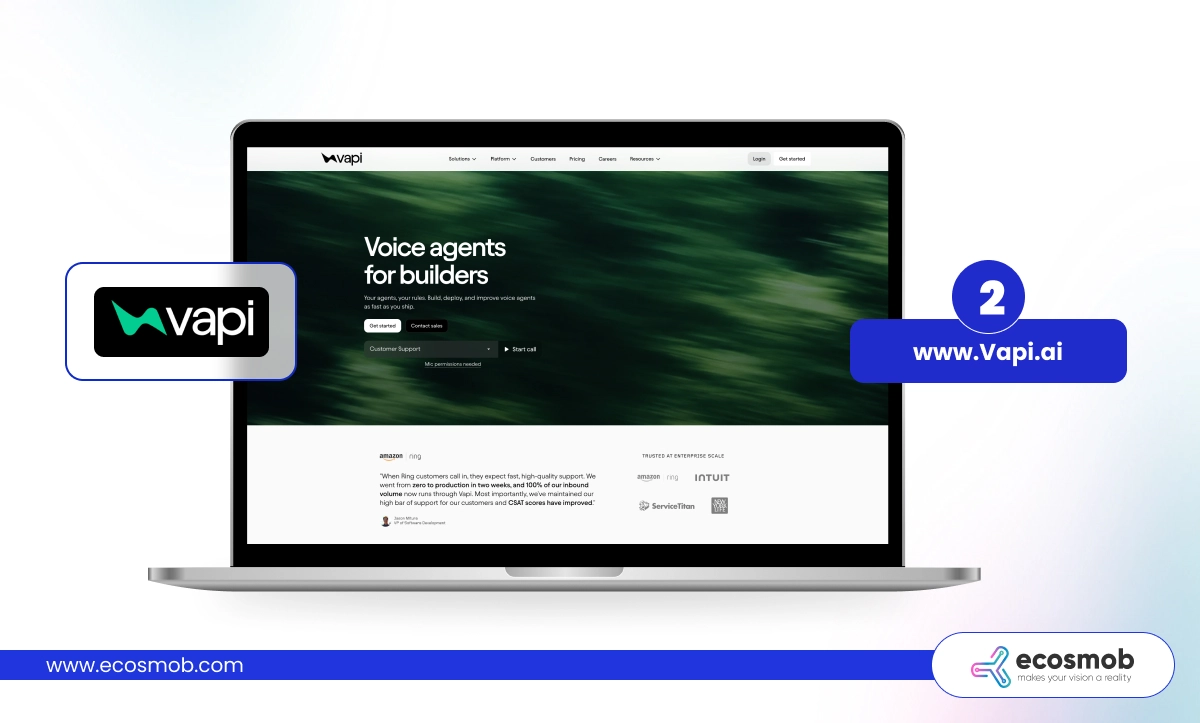
Vapi is built for engineering teams that want to configure every single layer of their voice stack through code rather than buying a locked-in bundle.
Best for: Modular Stack Control
Telecom & SIP Layer:
Vapi offers native hooks for Twilio, Vonage, and custom SIP trunks. You can also inject custom SIP headers to pass session data or customer IDs during warm transfers.
Stack Modularity:
You can freely swap your Speech-to-Text (Deepgram, Azure), LLM provider (OpenAI, Anthropic, or your own self-hosted vLLM endpoint), and Text-to-Speech (Cartesia, ElevenLabs) on every single call.
Key Features:
- Fully modular architecture with hot-swappable STT, LLM, and TTS providers.
- Configurable SIP parameters and custom header injections.
- Fast tool calling for live CRM queries.
- Support for private, self-hosted LLM endpoints via custom base URLs.
Where It Wins Outright:
Developers building custom voice AI applications who want direct control over their model contracts and need to optimize latency per layer.
The Catch:
Flexibility means maintenance work. Your developers have to manage multiple vendor API limits, handle outages across separate providers, and monitor varying response times.
3. Bland AI
Bland AI built its engine around large-scale automated dialing, solving the operational headaches of making hundreds or thousands of calls simultaneously.
Best for: High-Volume Enterprise Outbound Operations
Telecom & SIP Layer:
Tailored for heavy concurrency, Bland includes call pacing logic, dynamic caller ID rotation to protect deliverability, Answering Machine Detection (AMD), and direct enterprise SIP trunk routing.
Conversational Logic:
They use a visual “Pathways” editor to map out branching conversation logic, variable inputs, and escalation rules without writing large state machines from scratch.
Key Features:
- High-concurrency outbound dialing infrastructure with automated AMD.
- Visual conversational pathway builder for complex branch logic.
- Dedicated phone number management and custom enterprise SIP routing.
- Fast post-call data extraction for updating CRM records.
Where It Wins Outright:
High-volume outbound operations (like dispatch updates, appointment reminders, or customer outreach) where dialing thousands of numbers across different area codes is routine.
The Catch:
The platform is built around structured conversational paths. If you need open-ended, free-form customer support, building that in a pathway editor gets complicated quickly.
4. Telnyx
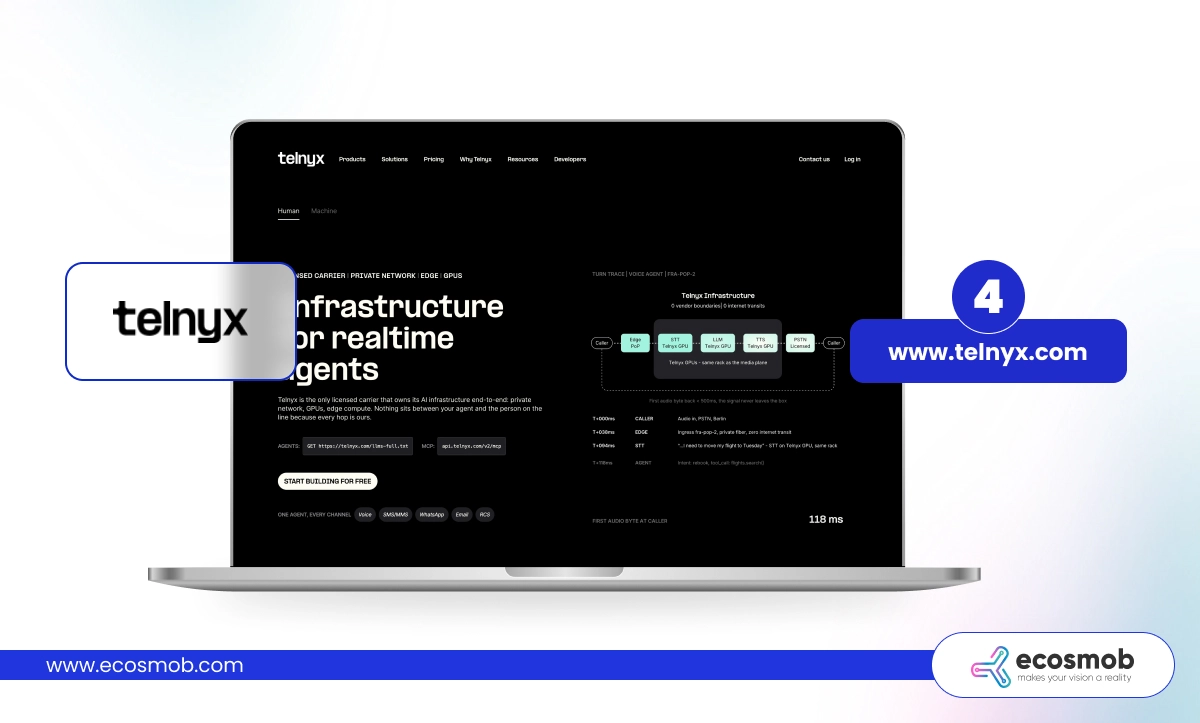
Telnyx stands out because they aren’t just a software layer. They are an actual licensed global telecommunications carrier with a private fiber network running across more than 80 countries.
Best for: Integrated Voice AI and Tier-1 Carrier Telephony
Telecom & SIP Layer:
Because Telnyx owns the physical switches, PSTN interconnects, and local number pools, voice traffic stays on their private backbone instead of bouncing across random public internet hops.
Integrated Edge Inference:
They place GPU clusters directly inside their telecom Points of Presence (PoPs). That means speech recognition and model inference happen on the same physical hardware that terminates your SIP calls.
Key Features:
- Tier-1 private global IP network with native SIP trunking.
- Co-located edge GPUs for local AI inference and minimized transit hops.
- “SIP Attach” features to register voice agents as PBX extensions.
- Built-in regulatory compliance, including STIR/SHAKEN and global numbering.
Where It Wins Outright:
Companies that want direct carrier connections, unified billing for telephony and AI, local international numbers, and the lowest possible network hop count.
The Catch:
Their developer tools are solid and functional, but the prompt-testing interface feels more utilitarian compared to developer-first software platforms.
5. PolyAI
PolyAI builds enterprise virtual assistants specifically for large consumer brands in hospitality, banking, retail, and telecommunications.
Best for: Large-Scale Enterprise Inbound CCaaS Deployments
Telecom & SIP Layer:
PolyAI connects directly to legacy enterprise contact center suites (like Genesys, Cisco, Avaya, and NICE CXone) using standard SIP trunks and CTI bridges.
Acoustic Handling:
Their speech recognition models are tuned to filter out heavy background noise, handle strong accents, and manage multilingual conversations without dropping words.
Key Features:
- Full-service, vendor-managed setup with custom conversational design.
- Native integrations with major enterprise CCaaS platforms.
- Acoustic models built for noisy environments and regional accents.
- Enterprise compliance standards (SOC 2 Type II, HIPAA, GDPR, PCI-DSS).
Where It Wins Outright:
Large consumer enterprises that want a white-glove, fully managed deployment capable of handling messy, real-world customer calls.
The Catch:
This is not a self-serve developer tool. Deployments require enterprise contracts, multi-month timelines, and professional services engagements.
How The Best Global Voice AI Providers With Telecom Support Compare
Marketing pages rarely show how platforms perform under real telecom conditions. The real test is where their media servers run, how they handle SIP signaling, and how quickly their audio buffers clear during interruptions.
Here is how each platform stacks up architecturally.
| Platform | Primary Telecom Architecture | Global Media PoPs | Carrier Model | Interruption & Barge-In | Primary Target Audience |
| Retell AI | BYO SIP + Managed PSTN | US, EU | Aggregated Carriers | Sub-100ms VAD Cutoff | Support & Inbound App Teams |
| Vapi | Modular SIP / Twilio / BYOC | US, EU | Aggregated / Partner | Configurable VAD Parameters | Custom Software Developers |
| Bland AI | High-Concurrency Outbound SIP | US, EU, APAC | Aggregated Routing | Flow-Based Interruption | High-Volume Outbound Teams |
| Telnyx | Native Tier-1 Private IP Network | Global (80+ Countries) | Licensed Global Carrier | Co-located GPU Inference | Carrier-Grade Enterprise VoIP |
| PolyAI | Enterprise PBX / CCaaS Bridges | Multi-Region Dedicated | Direct Enterprise Interconnect | Accent/Noise Resilient VAD | Tier-1 Enterprise Call Centers |
What Actually Determines Voice AI Call Quality?
Conversational latency makes or breaks voice AI. That is one of the main markers of a voice AI platform’s call quality.
When a human finishes a sentence, they expect an answer within roughly half a second. Once that gap passes 700 milliseconds, callers think the line dropped or start talking again, causing awkward audio overlap.
To keep your bot sounding natural, you have to track where time is spent across every stage of a call:
- Carrier Transport (30ms–80ms): Audio travels from the caller’s mobile device to your carrier gateway. If your caller is in London but your server is in Virginia, you lose over 100ms right away just from physics and fiber distance.
- Edge Ingestion & VAD (20ms–50ms): Your media switch takes in 20ms audio frames and detects the exact moment the speaker goes quiet using Voice Activity Detection.
- Streaming Speech-to-Text (80ms–140ms): Audio frames stream over WebSockets to acoustic models (like Deepgram or Whisper), which convert spoken sound into text tokens on the fly.
- LLM Time-to-First-Token (100ms–250ms): The language model processes the context, triggers any necessary API calls, and outputs its very first word.
- Streaming TTS & Audio Egress (70ms–120ms): The text-to-speech engine synthesizes that first word into an audio frame, bundles it into RTP packets, and sends it back out to the phone line.
Ecosmob Expert Tip
Never split your SIP media server and your speech transcription service across different continents.
If your Session Border Controller terminates calls in Frankfurt but your STT API runs in US-East, every spoken sentence travels across the Atlantic twice before the bot even understands a word.
Pro Metric: Keeping your media proxies and speech models in the same regional cloud zone immediately cuts 80ms to 120ms off your response times.
Global Compliance and Telephony Regulations for Voice AI
Rolling out voice AI in multiple countries is as much a telecom compliance project as a software build. Telecom laws around automated calling and recording vary wildly from region to region.
Before dialing international lines, your team needs to account for three major regulatory frameworks:
- United States (TCPA & STIR/SHAKEN): High-volume outbound calling without verifiable consent leads to steep fines ($500 to $1,500 per call). Your outbound SIP trunks must also support A-level STIR/SHAKEN cryptographic signatures, or carriers will flag your calls as spam.
- European Union & United Kingdom (GDPR & ePrivacy): Spoken voice is legally protected biometric data. Recording calls or passing live audio to cloud AI providers requires a documented legal basis (like explicit consent or verified legitimate interest) along with automated data deletion policies.
- Middle East & APAC (Data Residency & VoIP Rules): Countries like the UAE, Saudi Arabia, and India have strict rules regarding VoIP termination and local data hosting, often requiring call media to stay inside domestic data centers.
Which Voice AI Provider’s Architecture Fits Your Requirements?
There is no single winner here. The right choice depends on:
- Your monthly call minutes
- Which countries you operate in
- How much telecom expertise you have in-house
Here is a practical breakdown based on real-world team setups:
| Monthly Call Volume | Geographic Footprint | Internal Engineering Capacity | Recommended Architectural Strategy |
| < 100,000 minutes | North America / Western Europe | Web & Application Developers | Retell AI or Vapi for fast deployment. |
| 100,000+ minutes (Outbound) | Multi-Region Outbound Campaigns | Integration & CRM Engineers | Bland AI for high concurrency and pacing. |
| Enterprise Inbound (Any Volume) | Multinational Enterprise | Enterprise CCaaS / PBX Admins | PolyAI for managed contact center rollouts. |
| 250,000+ minutes (High Scale) | Global / Distributed Traffic | Core VoIP & Telephony Engineers | The Custom Build Path (Own your media layer). |
The Custom Build Path (Owning Your Media Plane at Scale)
Once your platform handles serious call volume, paying third-party SaaS markups on every minute and token adds up quickly. You also remain limited by their server locations, their barge-in settings, and their maintenance windows.
When you reach enterprise scale, building a dedicated SIP media layer gives you full control over latency, reliability, and costs.
Here is what changes when you run your own media core:
- Direct Wholesale Carrier Routing: You connect directly with Tier-1 carriers, negotiate your own trunking rates, and manage local caller IDs without paying third-party markups.
- In-Memory Audio Conversion: Your edge proxies resample audio from standard 8kHz phone quality to 16kHz PCM directly in memory, shaving 30ms to 50ms off transcoding delays.
- Strict Data Privacy: Audio streams stay inside your private network, keeping customer conversations fully compliant with GDPR, HIPAA, and local data protection rules without sending audio to third-party SaaS wrappers.
This is the exact engineering bridge Ecosmob builds. We design, harden, and deploy custom Kamailio SIP routers, low-latency FreeSWITCH media pipelines, and self-hosted AI engines that don’t choke under carrier-grade concurrency.
Finding the best global voice AI providers with telecom support is an infrastructure decision first and an AI decision second. If your media layer suffers from high jitter or poor regional routing, even the smartest language model will struggle on live phone calls.
Focus on how platforms handle SIP trunking, where their media servers live, and how cleanly they manage interruptions. When your call volume reaches enterprise scale, owning your media plane gives you the control, low latency, and stability you need to deliver a great calling experience worldwide.
If you are planning an enterprise rollout and want an honest look at your SIP setup, our telecom engineers are here to help. Schedule a consultation with Ecosmob today!
Frequently Asked Questions
The best voice AI companies split into different categories depending on what you need: developer-focused API platforms (Retell AI, Vapi), high-volume outbound dialers (Bland AI), carrier-owned infrastructure providers (Telnyx), and managed enterprise contact center platforms (PolyAI).
There isn’t a single leader across the whole space. Telnyx leads in native carrier infrastructure, Retell AI and Vapi lead in flexible developer tooling, and specialized foundation model labs lead in core speech synthesis.
The best setup combines a fast language model with an optimized, localized media plane. What makes a call feel natural is sub-50ms Voice Activity Detection (VAD), minimal network transit between the caller and the server, and models tuned for fast Time-to-First-Token (TTFT) rather than raw parameter size.
For packaged software, tools like Retell, Vapi, and Bland offer fast ways to build applications. For companies that want to build proprietary, high-volume voice infrastructure, telecom engineering partners like Ecosmob design and deploy custom SIP media engines, SBC clusters, and private AI pipelines.
Telecom routing typically adds 60ms to 160ms of delay to every turn. Factors like audio resampling (8kHz to 16kHz), packet buffering, and the physical distance between the caller and the media server directly determine whether a bot responds naturally or leaves awkward silences.