












QUICK SUMMARY
This blog covers VoIP market growth, benefits, and top providers, comparing leading solutions across key business factors. The breakdown helps businesses identify which VoIP platform fits their scale, budget, and communication goals.
VoIP, for the conversations you skip sleep for.
A customer issue that can’t wait, a deal that needs one final call, or a team waiting on a quick conversation to move things forward.
These moments don’t wait, and they shouldn’t be slowed down by outdated phone systems.
Yet, many businesses still rely on traditional lines that struggle to keep up. Delays, dropped calls, and limited flexibility turn simple conversations into unnecessary friction.
VoIP has been powering business communication for years, but its value today goes far beyond basic calling. It enables faster response times, better customer experiences, and more efficient operations.
With AI-driven routing, real-time insights, and the rise of AI voice agents for efficiency, VoIP is making communication faster, smarter, and more reliable.
And when those conversations directly impact customer experience and revenue, choosing the right VoIP provider isn’t just a tech decision; it’s a business one.
Best VoIP Solutions for 2026 Compared by Features, Pricing, and Use Cases
The right VoIP platform should scale with your business, integrate with existing tools, stay reliable as demand grows, and deliver clear ROI. Based on these factors, along with customization, cost efficiency, scalability of infrastructure when call drops, customer satisfaction, and real-world performance, we’ve shortlisted the top 10 VoIP solution providers to watch in 2026.
Best Suited For
Not every VoIP platform serves the same purpose. This section highlights which providers fit specific business needs, from large-scale businesses to SMBs and enterprises with complex communication requirements.
| VoIP Provider | Best Suited for |
| Ecosmob Technologies | Businesses & enterprises needing fully AI-driven, customized, and scalable VoIP solutions |
| 8×8 | Large enterprises needing global reach and security |
| TeleCMI | Growth-stage teams seeking AI-driven communication & automation |
| Nextiva | Support-heavy teams focused on customer experience |
| Grasshopper | Entrepreneurs & very small teams needing simple virtual numbers |
| Vonage Business | Businesses needing flexible VoIP with CRM integrations |
| Ooma Office | Small businesses prioritizing affordability & simplicity |
| Dialpad | Teams looking for AI-powered voice intelligence & insights |
| Intermedia Unite | Organizations wanting unified communications & collaboration tools |
| Zoom Phone | Teams already using Zoom for meetings & video |
Customer Satisfaction
Adoption means little if users struggle post-deployment. These ratings reflect how providers perform in day-to-day usage, support quality, and overall customer experience.
| VoIP Provider | Customer Satisfaction |
| Ecsomob Technologies | High satisfaction for flexibility, stability, and long-term value |
| Nextiva | Consistently strong support & reliability |
| Dialpad | Modern, AI-forward experience |
| 8×8 | Trusted for security and uptime |
| TeleCMI | Innovative and automation-friendly |
| Zoom Phone | Familiar and easy adoption |
| Ooma Office | Affordable and dependable for SMBs |
| Intermedia Unite | Solid collaboration experience |
| Vonage Business | Feature-rich, mixed support feedback |
| Grasshopper | Simple and easy to use |
Cost Comparison
Pricing isn’t just about monthly fees. Here, we compare providers based on affordability, value delivered over time, and how well pricing aligns with business scale and usage.
NOTE: Ecosmob is a VoIP solution provider offering custom-built systems, while other providers listed offer packaged VoIP services.
| VoIP Provider | Cost Comparison |
| Zoom Phone | Low entry pricing for existing Zoom users |
| Ooma Office | Budget-friendly SMB plans |
| Ecosmob Technologies | Custom pricing optimized for long-term ROI & scale |
| TeleCMI | Usage-based AI plans |
| Dialpad | AI features at mid-range pricing |
| Vonage Business | Tiered pricing with add-ons |
| Nextiva | Premium bundled plans |
| 8×8 | Competitive entry, costly advanced plans |
| Intermedia Unite | Higher pricing for UC depth |
| Grasshopper | High cost relative to feature depth |
Based on Pros and Cons
Every platform has trade-offs. This comparison breaks down what each provider does well and where limitations may appear, helping you weigh practical fit over marketing claims.
| VoIP Provider | Pros | Cons |
| Dialpad | Native AI insights
HD voice & video |
Less architectural control |
| 8×8 | Security & compliance
Global presence |
Expensive advanced tiers |
| Ecosmob Technologies | Fully custom VoIP & UC
Cloud/on-prem/hybrid Built for scale |
Not plug-and-play |
| TeleCMI | AI agents & automation
170+ integrations |
AI onboarding needed |
| Nextiva | Analytics & support | High SMB pricing |
| Zoom Phone | Seamless Zoom usage | Limited VoIP depth |
| Vonage Business | CRM integrations | Setup complexity |
| Ooma Office | Affordable SMB plans | Limited scalability |
| Intermedia Unite | UC & collaboration | Costly |
| Grasshopper | Simple Setup | Feature-light |
Overall Rating
This score reflects a balanced view, combining features, reliability, scalability, and long-term viability, rather than focusing on a single strength.
| VoIP Provider | Overall Rating(Out of 5) |
| Ecosmob Technologies | ⭐ 4.6 |
| 8×8 | ⭐4. 5 |
| Nextiva | ⭐4.4 |
| Dialpad | ⭐4.3 |
| TeleCMI | ⭐4.3 |
| Zoom Phone | ⭐4.2 |
| Vonage Business | ⭐4.2 |
| Intermedia Unite | ⭐4.1 |
| Ooma Office | ⭐4.1 |
| Grasshopper | ⭐4.0 |
So far, we’ve compared them on paper. Next, let’s look at how these platforms are built and where Ecosmob adds value.
One glance should narrow your shortlist. But a shortlist without context is just guesswork.
Where does Ecosmob’s VoIP approach fit into your growth plans?
How We Evaluated These VoIP Solutions
Not all VoIP providers solve the same problem. Some optimize for simplicity, others for scale, and a few for deep customization.
Here’s what guided this list:
- Scalability and architecture flexibility
- AI capabilities (routing, analytics, automation)
- Integration ecosystem
- Pricing vs long-term ROI
- Customer experience and support
- Balance between plug-and-play and customization
This isn’t a popularity contest. It’s a fit-based evaluation.
Leading VoIP Solution Providers for Business Communication
Businesses today evaluate VoIP solutions based on how well they fit long-term needs, not just features. Custom-built VoIP solutions are often considered first for their flexibility, scalability, and control.
With that context, the following providers include both custom and prepackaged solutions to match different business needs.
1. Ecosmob Technologies
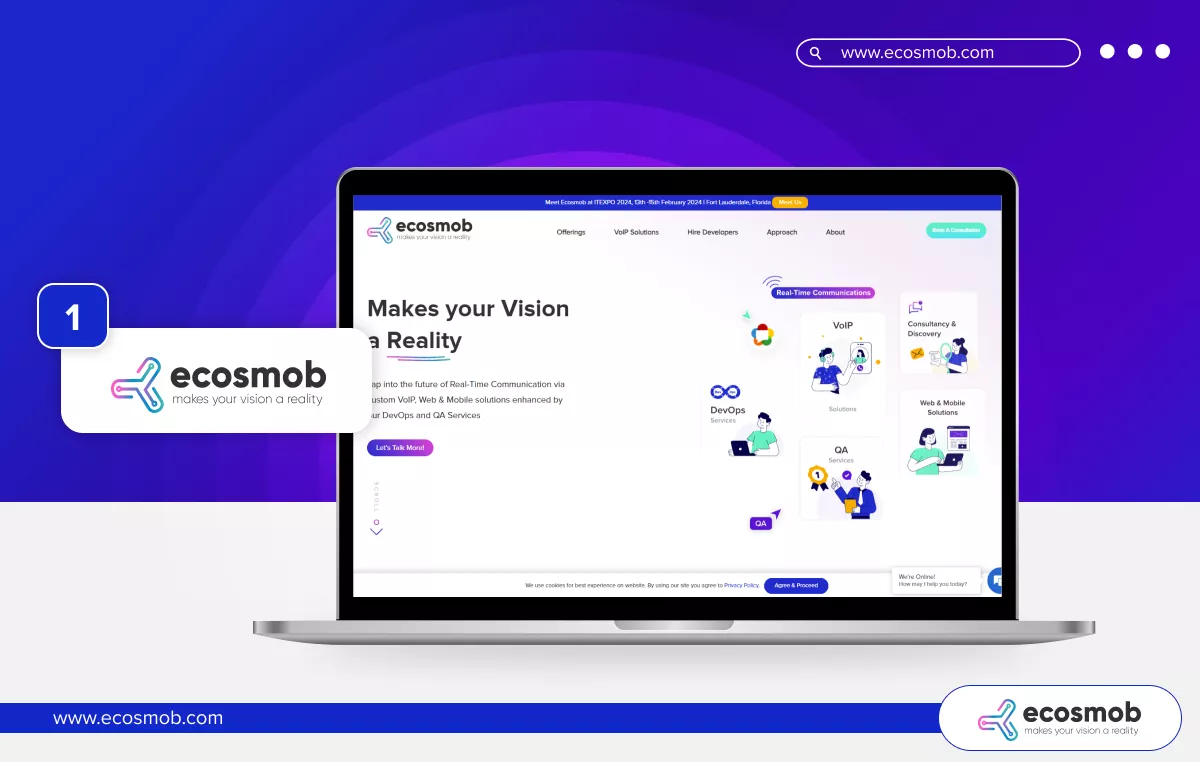
Ecosmob Technologies is a custom communication solutions provider building AI-driven VoIP and real-time systems for businesses with complex or evolving needs. Instead of prepackaged plans, it designs solutions at the infrastructure level, tailored to specific workflows and scale.
With 18+ years of telecom experience, Ecosmob helps ISPs, ITSPs, and enterprises modernize legacy systems, add AI automation, and scale without disruption. Its expertise covers custom VoIP platforms, AI voicebot solutions, migration, integrations, and DevOps and QA support.
| Company’s Name | Ecosmob Technologies |
| Headquarters | Ahmedabad, Gujarat, India |
| Established Year | 2007 |
| Website | Click here! |
Key Features & Highlights
- Custom VoIP Solutions tailored to business models and network requirements
- AI Voicebot & Chatbot Development for automated call handling, routing, and lead qualification
- Voicebot Connectors to integrate conversational AI directly into telecom stacks
- VoIP Infrastructure Migration Services with minimal disruption and zero downtime
- VoIP Integration Services connecting CRMs, third-party tools, and internal systems
- Real-Time Communication QA & Testing to ensure reliability, performance, and compliance
- Dedicated VoIP Engineers On-Demand for specialized development and scaling needs
- DevOps Support for cloud-ready deployment, automation, and system resilience
- AI Consultation and Automation Consultation to align communication systems with business goals
- AI Agents Creation for handling conversations, support, and workflow automation.
Custom VoIP that scales, or fixed plans that hit limits later?
2. TeleCMI
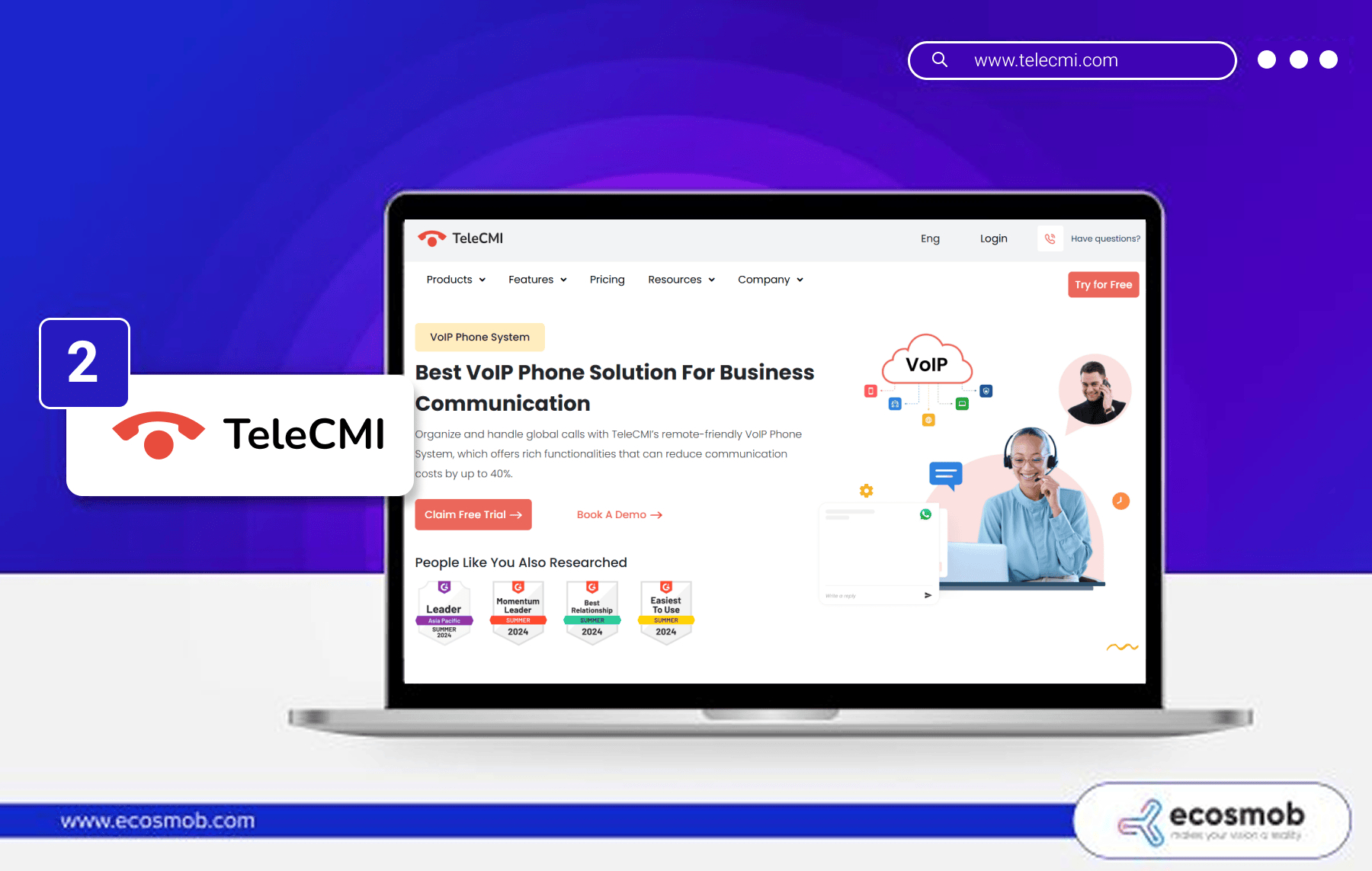
TeleCMI stands out with its AI-driven VoIP platform designed for modern contact-centric organizations. The system emphasizes voice intelligence, smart IVR, and real-time analytics integrated with CRM tools, making it a compelling choice for businesses that want actionable insights alongside communication. Its cloud native infrastructure supports scalable operations and automation.
| Company’s Name | TeleCMI |
| Headquarters | Chennai, India |
| Established Year | 2017 |
| Website | Click here! |
Key Features & Highlights
- AI agents & conversational IVR
- Voice intelligence & sentiment analytics
- 170+ CRM & business integrations
- Omnichannel support (Voice, SMS, WhatsApp)
- Cloud-native deployment
3. Nextiva
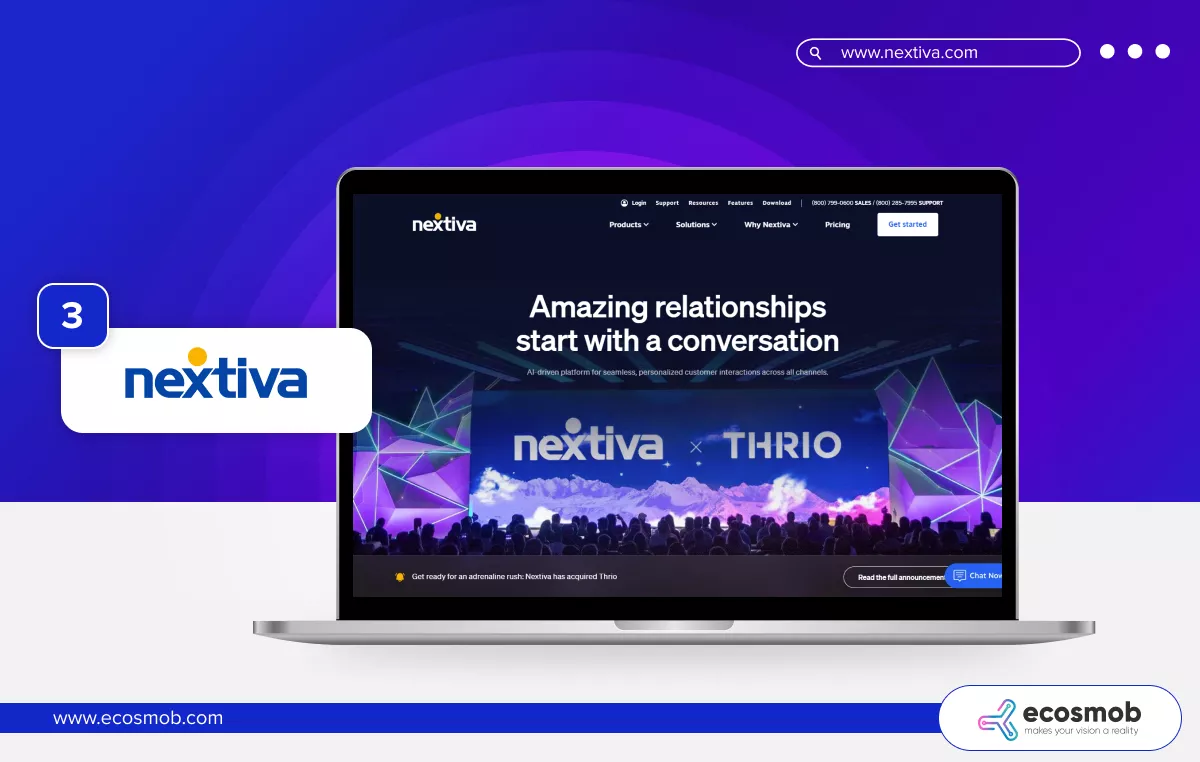
Nextiva is a US-based VoIP and customer experience platform best known for reliability and customer support. It caters primarily to mid-sized and enterprise businesses seeking stable, analytics-driven communication.
| Company’s Name | Nextiva |
| Headquarters | Scottsdale, Arizona, USA |
| Established Year | 2006 |
| Website | Click here! |
Key Features & Highlights
- Business VoIP & UCaaS
- Call analytics & reporting
- Auto-attendant & team messaging
- Strong customer support reputation
4. Grasshopper
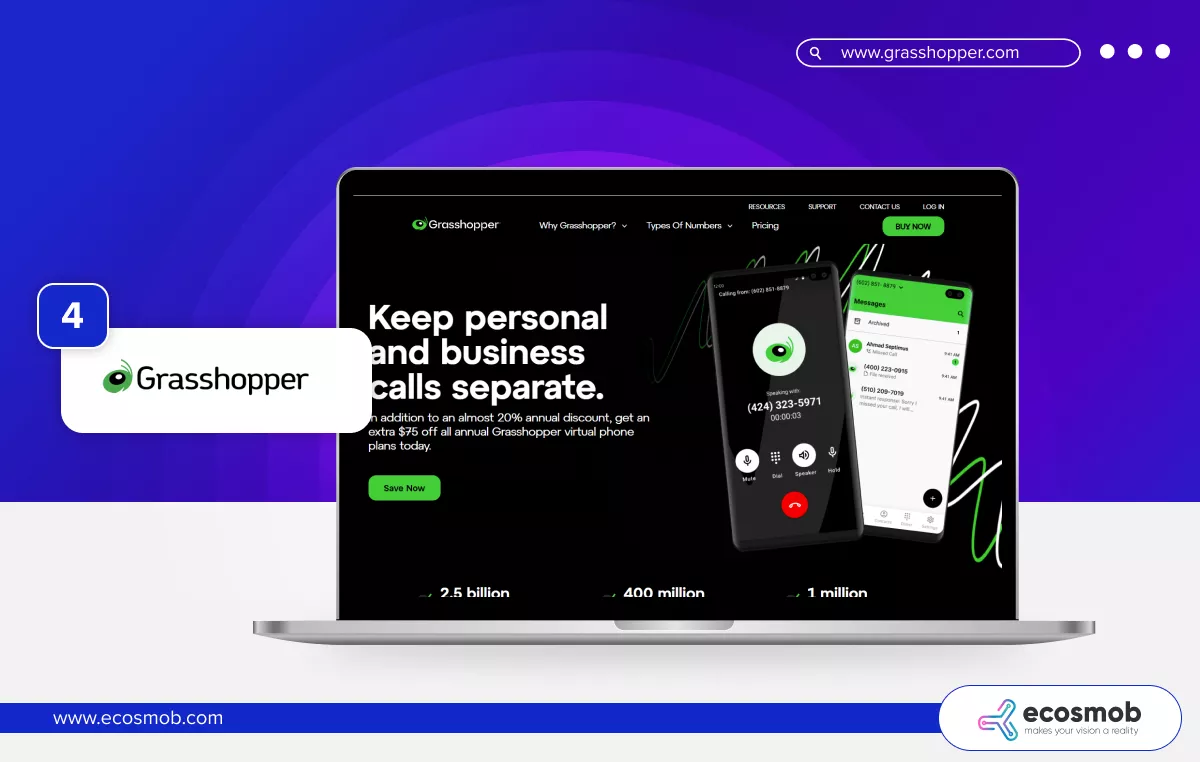
Grasshopper focuses on delivering a straightforward VoIP system that makes sense for entrepreneurs and small businesses. With virtual phone numbers, call routing, and voicemail features, it’s designed for simplicity rather than deep enterprise functionality, perfect if you want phone basics minus complexity.
| Company’s Name | Grasshopper |
| Headquarters | Boston, Massachusetts, USA |
| Established Year | 2003 |
| Website | Click here! |
Key Features & Highlights
- Virtual phone numbers
- Call forwarding & voicemail transcription
- Mobile & desktop apps
- Easy setup, no hardware required
After reviewing the top VoIP solutions, the next step is to understand their core business benefits.
5. Vonage Business
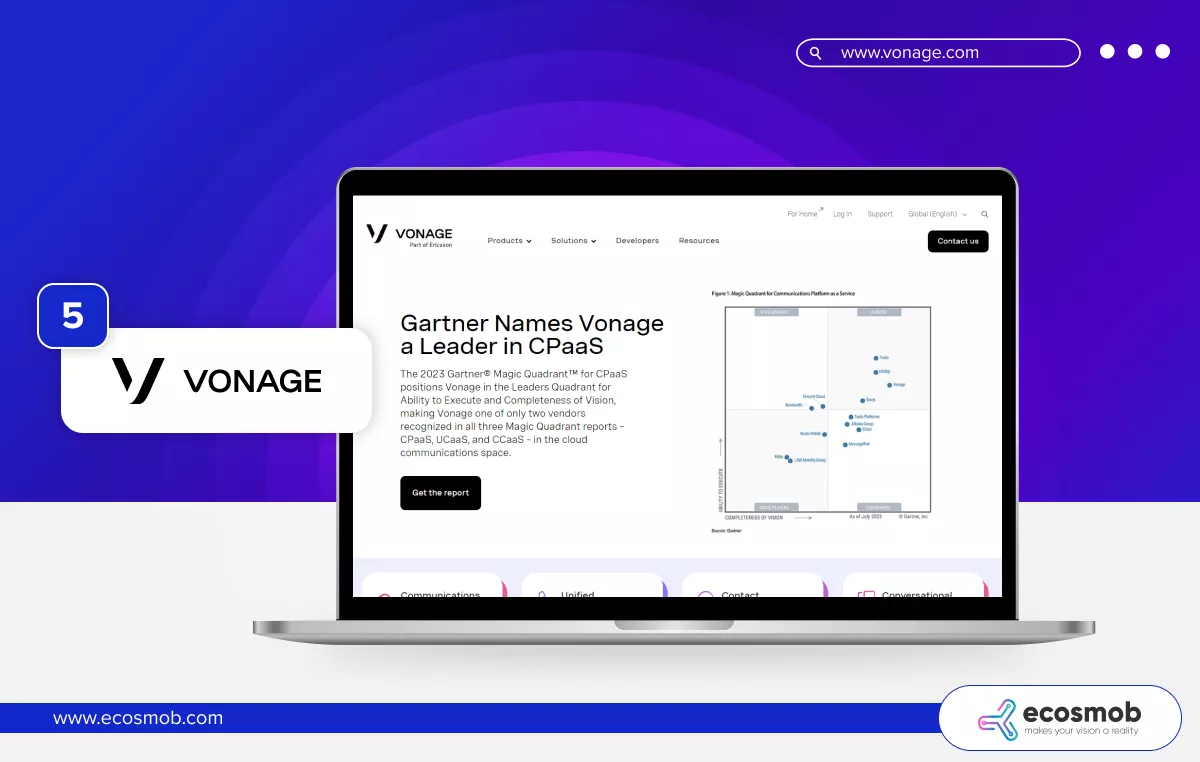
Vonage is a long-standing cloud communications provider that has evolved from consumer VoIP into robust business solutions. It supports voice, video, messaging, and APIs with CRM integrations, making it a strong pick for organizations that want flexibility and broad collaborative tools.
| Company’s Name | Vonage Business |
| Headquarters | Holmdel, New Jersey, USA |
| Established Year | 2001 |
| Website | Click here! |
Key Features & Highlights
- Business VoIP & UCaaS
- CRM integrations
- Call recording & video meetings
- API-driven customization
6. 8×8
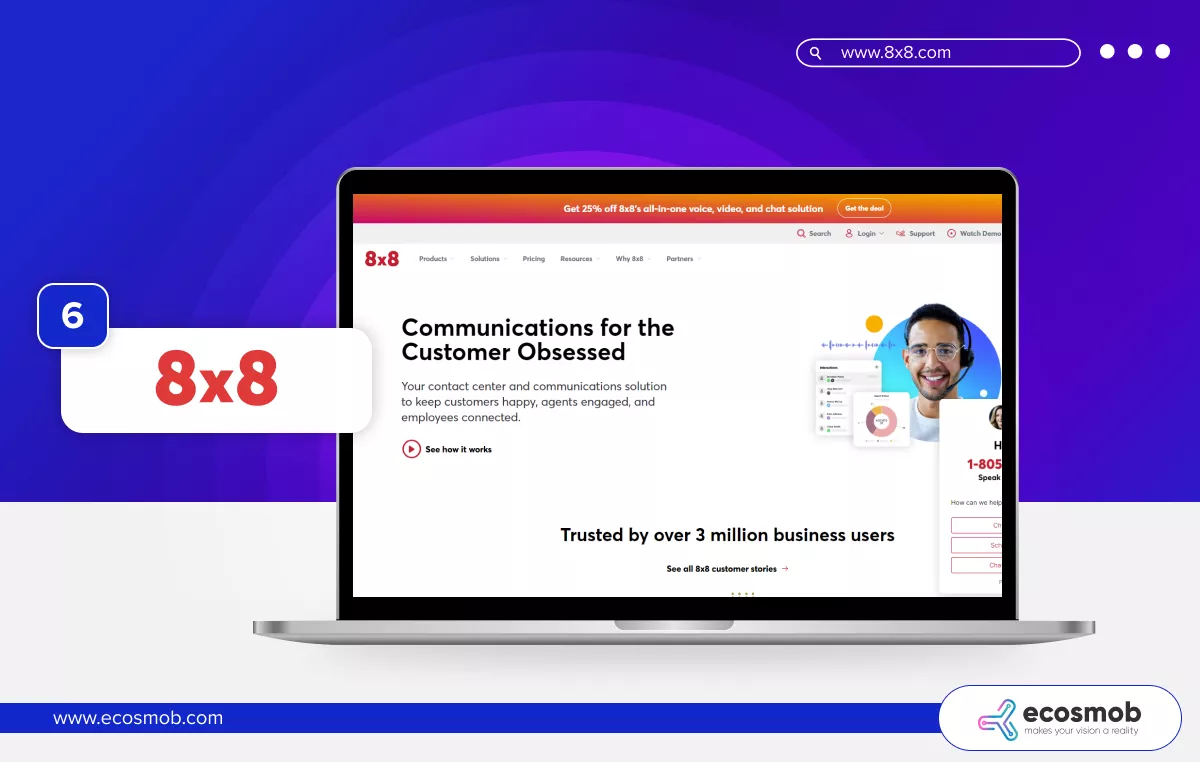
8×8 is a mature VoIP and unified communications provider with global operations. Its platform brings voice, video, messaging, and contact center features into a single cloud system. Known for global reach and enterprise-level services, 8×8 supports large international teams and high-volume communications.
| Company’s Name | 8×8 |
| Headquarters | Campbell, California, USA |
| Established Year | 1987 |
| Website | Click here! |
Key Features & Highlights
- Enterprise UC & CCaaS
- Global calling & compliance
- Strong security controls
- Scalable cloud infrastructure
7. Ooma Office
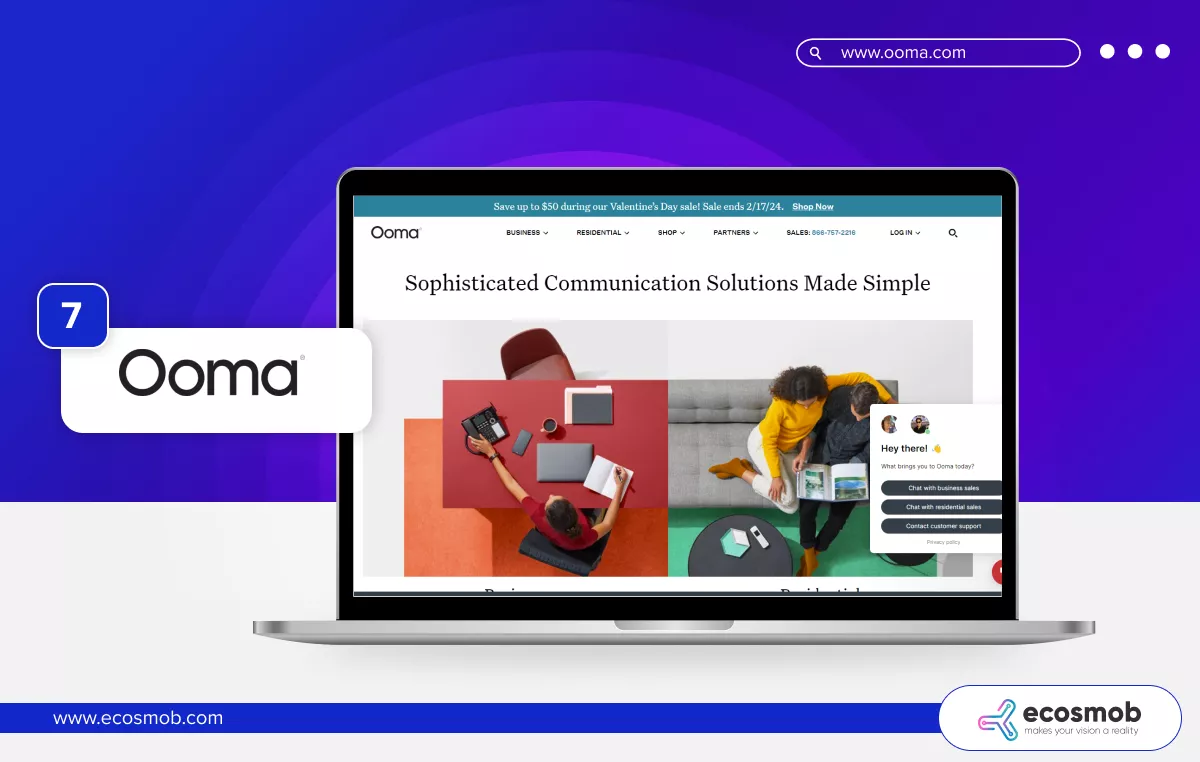
Ooma Office delivers cloud-based VoIP tailored for small and medium businesses, prioritizing ease of use and essential features such as virtual receptionists and conferencing. While not as feature-rich as some enterprise players, Ooma’s value makes it a solid contender for cost-conscious teams.
| Company’s Name | Ooma |
| Headquarters | Sunnyvale, California, USA |
| Established Year | 2004 |
| Website | Click here! |
Key Features & Highlights
- Virtual receptionist
- SMB-friendly pricing
- Voicemail-to-email
- Simple administration
8. Dialpad
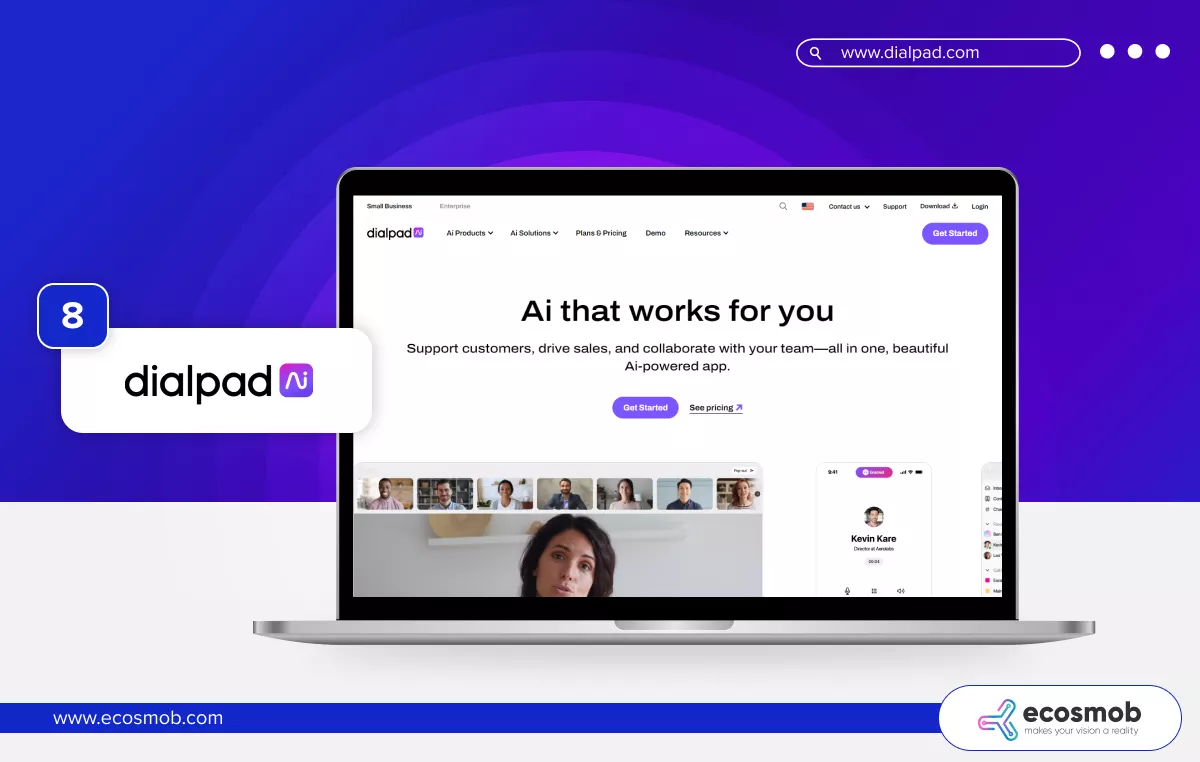
Dialpad specializes in combining VoIP with AI insights, think automated voice intelligence and analytics mixed into daily communications. It’s especially attractive if you want productivity features that adapt and learn from your teams.
| Company’s Name | Dialpad |
| Headquarters | San Francisco, California, USA |
| Established Year | 2011 |
| Website | Click here! |
Key Features & Highlights
- Real-time AI transcription
- Voice analytics & insights
- CRM integrations
- HD voice & video
9. Intermedia Unite
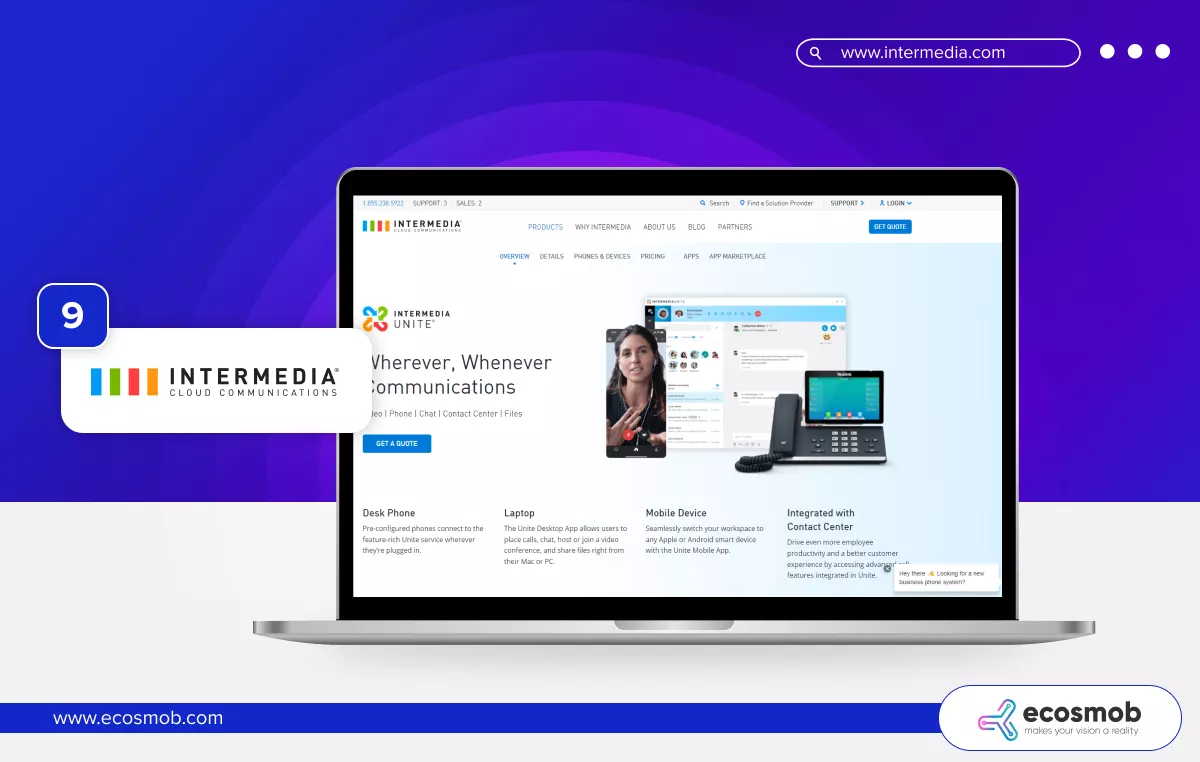
Intermedia Unite brings VoIP together with collaboration, messaging, file sharing, and video conferencing in a single service. It’s ideal for businesses seeking tight team collaboration and broad communication tools in a single platform.
| Company’s Name | Intermedia |
| Headquarters | Sunnyvale, California, USA |
| Established Year | 1993 |
| Website | Click here! |
Key Features & Highlights
- Unified communications suite
- Team collaboration tools
- File sharing & messaging
- Enterprise-grade reliability
10. Zoom Phone
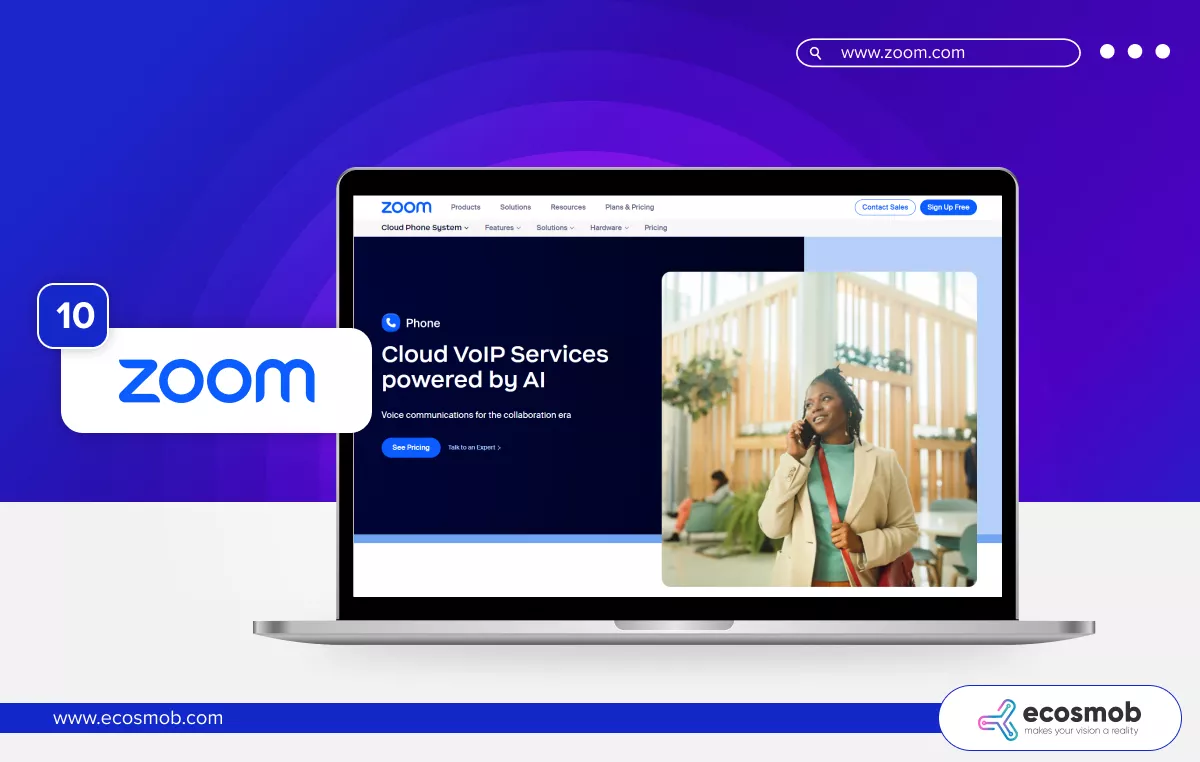
Zoom Phone integrates tightly with the Zoom Meetings ecosystem, giving teams a unified video and voice experience. For organizations already relying on Zoom’s conferencing tools, Zoom Phone offers a seamless transition from calls to meetings.
| Company’s Name | Zoom Video Communications |
| Headquarters | San Jose, California, USA |
| Established Year | 2011 |
| Website | Click here! |
Key Features & Highlights
- Native Zoom integration
- Cloud PBX functionality
- Voicemail transcription
- Easy adoption for existing Zoom users
What are the Benefits of Voice over IP Solutions
VoIP calls are made over the internet so companies save on hardware and long-distance charges while allowing teams to connect from anywhere. VoIP also supports integrations with tools like CRM and helpdesk systems, along with features such as call routing, recording, analytics, and video conferencing. With added benefits like reliability, security, and AI-driven insights, VoIP makes business communication more efficient and easier to manage.
1. Lower communication costs, without cutting corners
VoIP runs over the internet, so businesses avoid expensive hardware, long-distance charges, and rigid carrier contracts. You pay for what you use, and scaling up doesn’t come with surprise costs.
2. Flexibility that fits modern work models
Whether teams are remote, hybrid, or distributed across locations, VoIP ensures consistent communication. Calls can be handled from desktops, mobiles, or softphones without being tied to a physical office.
3. Easy scaling as your business grows
Adding new users, numbers, or features is straightforward. You don’t need new wiring or major setup changes, which makes VoIP ideal for growing teams and fast-moving businesses.
4. Better integration with business tools
Most VoIP platforms integrate with CRMs, ticketing systems, and collaboration tools. That means fewer context switches and smoother workflows across sales, support, and operations.
5. Stronger support for customer-facing teams
For support-heavy environments, VoIP solutions for call center use cases offer features such as intelligent call routing, IVRs, call recording, and real-time reporting. These tools help agents handle higher volumes while giving managers visibility into performance.
6. Built-in reliability and security
Modern VoIP systems offer encryption, failover options, and access controls, so flexibility doesn’t come at the cost of stability or security.
7. Control over architecture and data
Custom VoIP systems allow businesses to control call flows, analytics, integrations, and compliance, something fixed platforms often limit.
The real value of VoIP shows over time. Instead of outgrowing your phone system every few years, VoIP scales with your needs. It improves the customer experience, simplifies internal communication, and reduces the friction traditional telephony often creates.
With that in mind, the next step is to choose the right platform, as not all VoIP solutions are built the same way.
Let’s look at how these providers approach VoIP with AI!
How AI Is Transforming VoIP Performance and Efficiency in 2026
VoIP in 2026 isn’t just about making calls; it’s about understanding, automating, and improving every conversation in real time. That’s where AI steps in, quietly running the system behind the scenes.
Here’s how the top VoIP solutions differ when it comes to AI capabilities:
1. AI Call Routing
Modern VoIP platforms don’t just route calls; they decide where a call should go based on context.
AI-powered routing looks at customer history, intent, and agent availability to connect calls faster and more accurately.
2. Voice Intelligence
Voice intelligence goes beyond recording calls. It analyzes conversations to surface patterns, agent performance, and customer behavior, turning calls into usable data.
3. Sentiment Analysis
Some platforms can analyze sentiments and emotions during a call. This helps teams understand whether a conversation is going well or needs intervention, especially in support and sales scenarios.
4. Real-Time Transcription
Live transcription allows teams to follow conversations as they happen, making it easier to track details, ensure compliance, and improve response quality.
5. Predictive Analytics
AI can analyze past interactions to predict outcomes, like which leads are more likely to convert or which calls may escalate.
6. Automation (IVR and AI Bots)
From intelligent IVRs to AI voice agents, automation reduces manual effort. Calls can be handled, filtered, or resolved without human intervention when needed.
How Leading Providers Approach AI
- Dialpad focuses heavily on real-time AI insights, including transcription and live coaching during calls.
- TeleCMI leans into AI agents and automation, making it strong for businesses that want hands-off communication workflows.
- Ecosmob Technologies takes a deeper approach by embedding AI at the infrastructure level, powering routing, analytics, and system observability from the core.
AI is no longer an add-on; it’s the control layer. But features alone don’t tell the full story.
Who Can Rescue a Failing VoIP Project and Get it Back on Track
A failing VoIP project can be brought back on track by an experienced VoIP development partner with strong expertise in system architecture, SIP routing, and real-time communication. The right partner evaluates the existing setup, identifies gaps in performance or scalability, and implements structured improvements without disrupting ongoing operations.
At that point, the question changes from “What should we choose?” to “Who can fix this?”
Here’s what to look for in a VoIP project rescue partner:
1. Codebase Audit Capability
A strong partner should be able to dive into your existing system, SIP logic, routing flows, architecture, and identify what’s broken and why.
2. Ability to Work with Existing Infrastructure
Rebuilding from scratch isn’t always practical. The right team can stabilize and improve what you already have without disrupting live operations.
3. Timeline Recovery Planning
Fixing a project isn’t about rushing, it’s about restructuring timelines realistically. Look for phased recovery plans instead of quick fixes.
4. DevOps and Monitoring Integration
Tools like Grafana and Homer help track performance in real time. A good partner ensures visibility so issues don’t repeat.
5. AI-Based Optimization
AI can improve routing efficiency, analyze call patterns, and optimize performance over time, turning a failing system into a smarter one.
6. Experience with Migrations and Live Systems
Handling live communication systems requires precision. The partner should have experience working without causing downtime or data loss.
This is where Ecosmob Technologies stands apart, not just as a VoIP solutions provider, but as a rescue and rebuild specialist. Instead of replacing systems, they work at the infrastructure level to stabilize, optimize, and scale what already exists.
Rescue isn’t about speed; it’s about control under pressure.
Who actually supports your VoIP when traffic spikes at 2 AM?
The Growing VoIP Market
VoIP isn’t an emerging trend anymore; it’s a fast-scaling business standard. The global VoIP market was valued at USD 132.47 billion in 2023 and is projected to grow from USD 144.77 billion in 2024 to an estimated USD 326.27 billion by 2032, at a 10.8% CAGR. North America accounted for 46.11% of the market in 2023, indicating strong enterprise adoption.
This kind of growth doesn’t happen on hype. It reflects how organizations across industries are actively replacing legacy telephony with VoIP solutions that scale better, integrate faster, and align with modern work models, often by turning to VoIP software development services to build systems that actually fit their operational needs. For businesses still relying on traditional phone systems, the gap isn’t closing; it’s widening.
With that in mind, the next step is to choose the right platform, as not all VoIP solutions are built the same way.
Why Does Ecosmob Stand Out?
Ecosmob Technologies follows an AI-driven approach in which intelligence is embedded at the core of VoIP systems, shaping routing logic, monitoring, and analytics. The focus is on building VoIP platforms that can adapt and improve over time, rather than relying on static configurations.
- Purpose-built Voice over IP solutions designed around real business workflows
- Scalable architectures that grow without forcing rework or migrations
- Deep customization across integrations, routing, security, and analytics
- Strong alignment with VoIP solutions for call center environments, where performance and control matter most
Let’s wrap it up!
Conclusion
The VoIP market is crowded, with platforms competing on features and pricing, but only a few stand out when it comes to scalability, flexibility, and long-term ROI. Providers like Ecosmob, 8×8, Dialpad, and TeleCMI consistently align with these business needs, each bringing its own strengths.
Ecosmob helps businesses build AI-driven, customizable VoIP systems that adapt, scale, and offer deeper control across routing, integrations, and analytics.
There’s no one-size-fits-all solution, but for businesses treating VoIP as long-term infrastructure, the right choice can directly impact performance, efficiency, and growth.
FAQs
What is the best VoIP solution for businesses in 2026?
There isn’t a single “best” VoIP solution that fits everyone. The right choice depends on how your business operates. Some companies prioritize reliability and customer support, while others need advanced AI features or full control over their communication infrastructure. For example, platforms like Nextiva and 8×8 work well for stable, enterprise-grade communication, while Dialpad and TeleCMI stand out for AI-driven capabilities. If your needs are more complex or evolving, a custom solution like Ecosmob becomes a better fit.
How do I choose the right VoIP provider for my business?
Choosing the right provider starts with understanding your actual communication needs, not just comparing features. Think about how your team works, what tools you already use, and how much you expect to scale. A good VoIP system should integrate smoothly with your existing setup, stay reliable during peak usage, and offer flexibility as your business grows. It’s less about finding the most feature-rich option and more about finding one that fits naturally into your workflow.
What are the key features to look for in a VoIP solution?
A strong VoIP solution should go beyond basic calling. It should support features like intelligent call routing, call recording, analytics, and seamless integrations with tools like CRMs or helpdesk platforms. In 2026, AI features such as real-time transcription, automation, and insights are becoming just as important. These capabilities don’t just improve communication, they help teams work smarter and respond faster.
Are AI-powered VoIP solutions worth it?
AI-powered VoIP solutions are no longer optional for many businesses, they’re becoming essential. They help route calls more efficiently, provide insights into conversations, and automate repetitive tasks like handling common queries. This means your team spends less time managing calls and more time focusing on meaningful interactions. Over time, this directly improves both customer experience and operational efficiency.
What is the difference between cloud VoIP and custom VoIP solutions?
Cloud VoIP solutions are ready-made platforms that are easy to set up and use, making them ideal for businesses that want a quick and simple solution. Custom VoIP solutions, on the other hand, are built specifically around your business needs. They offer more control over features, integrations, and scalability, which becomes important as your operations grow more complex. The choice really comes down to whether you need simplicity or flexibility.